How indoor plants absorb nutrients: a complete guide
Many indoor gardeners assume watering alone keeps plants healthy, but nutrient absorption is far more complex. Plants rely on intricate root systems, specialized transport pathways, and symbiotic fungi to extract minerals from soil. Understanding how roots absorb nutrients transforms your approach to indoor plant care, enabling you to create conditions where your plants truly thrive.
Table of Contents
-
Essential Nutrients And Factors Influencing Their Availability
-
Practical Tips To Improve Nutrient Absorption For Indoor Plants
-
Enhance Your Indoor Gardening With Expert Nutrient Solutions
Understanding how indoor plants absorb nutrients
Roots are biochemical powerhouses that selectively harvest minerals dissolved in soil water. Indoor plants absorb nutrients through apoplastic and symplastic pathways that work together to regulate mineral intake. The apoplastic pathway moves water and dissolved nutrients passively through cell walls, requiring no energy.
The symplastic pathway is more selective. Here, nutrients must cross cell membranes via ion channels, carrier proteins, and ATP-powered pumps. This energy-intensive process allows plants to absorb minerals even when soil concentrations are lower than inside root cells.
The Casparian strip acts as a checkpoint in the root’s endodermis, blocking the apoplastic pathway and forcing all nutrients through the symplastic route. This barrier prevents harmful substances from entering while ensuring only beneficial minerals reach the plant’s vascular system. It’s quality control at the cellular level.
Three main mechanisms drive nutrient uptake:
-
Diffusion moves nutrients from high to low concentration areas
-
Osmosis regulates water movement across membranes
-
Active transport pumps minerals against concentration gradients using cellular energy
This selective absorption explains why simply adding more fertilizer doesn’t always help. Plants need the right conditions to activate these transport systems effectively.
The role of root structures and mycorrhizal fungi
Root anatomy determines how efficiently plants access soil nutrients. The epidermis forms the outermost absorptive layer, while the exodermis and cortex provide additional surface area for mineral uptake. Absorptive roots contain specialized tissues that facilitate both direct nutrient absorption and symbiotic relationships.
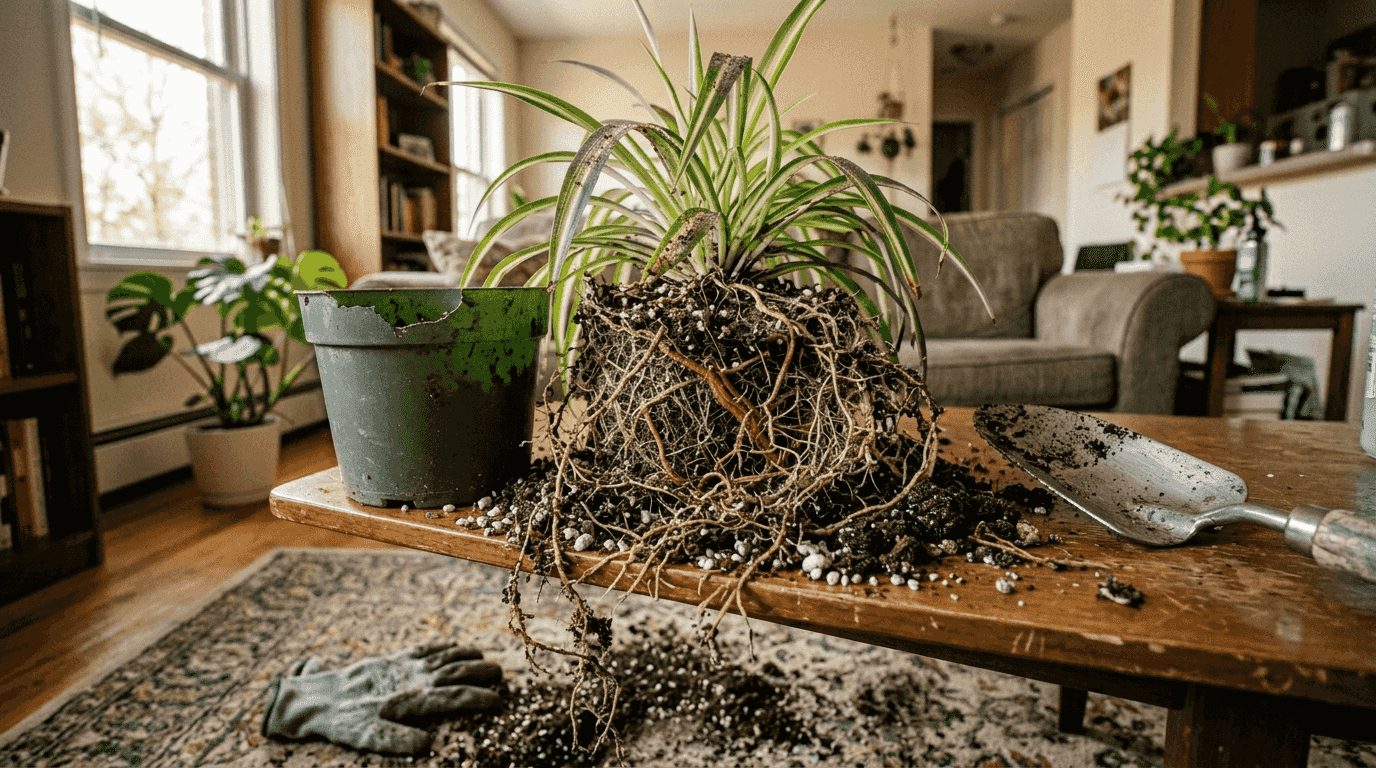
Mycorrhizal fungi form partnerships with over 90% of plant species, dramatically expanding the effective root zone. These fungi attach to root surfaces and extend thread-like hyphae deep into soil, accessing nutrients beyond the reach of roots alone. In exchange for sugars produced during photosynthesis, mycorrhizal fungi increase absorptive capacity especially for phosphorus, which moves slowly through soil.
This relationship matters particularly for container plants with limited soil volume. The fungi essentially act as an extension of the root system, improving access to water and immobile nutrients.
| Root Component | Primary Function | Impact on Nutrient Uptake |
| Epidermis | Direct mineral absorption | First contact point for dissolved nutrients |
| Root hairs | Surface area expansion | Increases absorption zone by 5-20 times |
| Cortex | Storage and transport | Moves nutrients toward vascular tissue |
| Mycorrhizal fungi | Extended absorption network | Accesses phosphorus and water beyond root reach |
Pro Tip: Avoid disrupting soil unnecessarily when repotting indoor plants, as this can damage beneficial mycorrhizal networks that take weeks to rebuild.
Essential nutrients and factors influencing their availability
Plants require 16 mineral elements for growth, divided into macronutrients needed in larger quantities and micronutrients required in trace amounts. Nitrogen, phosphorus, and potassium form the foundation of plant nutrition, supporting everything from leaf production to root development and disease resistance.
Soil pH dramatically affects which nutrients plants can access. Optimal indoor plant pH is 6.0 to 7.0 because this range keeps most minerals in soluble, plant-available forms. Outside this window, nutrients bind to soil particles or form insoluble compounds roots cannot absorb.
Fertilizer choice influences both immediate nutrient availability and long-term soil health:
| Fertilizer Type | Nutrient Release | Salt Buildup Risk | Soil Biology Impact |
| Synthetic | Immediate availability | High with overuse | Neutral to negative |
| Organic | Gradual, microbial-dependent | Low | Supports beneficial organisms |
| Slow-release | Controlled over weeks | Moderate | Depends on formulation |
Over-fertilization creates serious problems. Salt accumulation from excess fertilizer damages root cells, paradoxically making it harder for plants to absorb both water and nutrients. You’ll see symptoms like brown leaf tips, stunted growth, and wilting despite moist soil.
Key environmental factors affecting nutrient uptake:
-
Soil pH determines mineral solubility and availability
-
Salt concentration impacts water movement into roots
-
Soil texture and composition affect nutrient retention
-
Root health determines absorption capacity
-
Temperature influences metabolic activity and transport rates
Pro Tip: Test your potting mix pH twice yearly using an inexpensive soil probe, then adjust with sulfur to lower pH or lime to raise it gradually.
Practical tips to improve nutrient absorption for indoor plants
Optimizing nutrient uptake requires attention to multiple factors working together. Here’s how to create ideal conditions:
-
Match fertilizer formulation to plant species, using higher nitrogen for foliage plants and balanced ratios for flowering varieties
-
Maintain soil pH near 6.5 by testing regularly and adjusting with appropriate amendments
-
Follow fertilizer package directions precisely, reducing frequency rather than concentration if plants show stress
-
Water thoroughly but infrequently, allowing soil to partially dry between waterings to prevent root suffocation
-
Protect root health by avoiding physical damage during repotting and maintaining proper drainage
-
Support mycorrhizal colonization by minimizing fungicide use and adding compost to potting mixes
Container plants need more frequent feeding than garden plants because their roots exhaust limited soil nutrients faster. Small pots intensify this challenge, requiring careful monitoring to prevent both deficiency and toxicity.
Regular soil testing reveals pH drift and nutrient imbalances before visible symptoms appear. Simple home test kits work well for pH and major nutrients, while comprehensive lab analysis provides detailed micronutrient data for problem-solving.
Pro Tip: Alternate between organic and synthetic fertilizers seasonally to balance quick nutrient availability with gradual soil improvement and beneficial microbial support.
Leaching potted plants every few months prevents salt accumulation. Run water through the container until it drains freely from the bottom, flushing accumulated salts away. This simple practice maintains healthy root conditions and consistent nutrient absorption.
Enhance your indoor gardening with expert nutrient solutions
Understanding nutrient absorption is just the beginning. mitogrow’s biostimulant formulas work at the cellular level to boost nutrient uptake by up to 50%, helping your indoor plants make better use of available minerals. Unlike traditional fertilizers that simply add more nutrients, mitogrow activates your plants’ internal systems for more efficient absorption.
Our Pots and Planters formula is specifically designed for indoor growing conditions:
-
Supports healthy root development and function
-
Compatible with all fertilizer types and mycorrhizal fungi
-
Pet-safe and impossible to overdose
-
Visible improvements often within one to four weeks
Explore mitogrow’s indoor plant solutions to give your plants the cellular support they need to thrive, not just survive.
FAQ
How do indoor plants absorb nutrients from soil?
Indoor plants absorb nutrients through roots using both apoplastic and symplastic pathways that regulate mineral intake. The apoplastic route moves nutrients passively through cell walls, while the symplastic pathway uses energy to actively transport minerals across membranes. This dual system ensures selective absorption of beneficial minerals while excluding harmful substances.
What role do mycorrhizal fungi play in nutrient uptake?
Mycorrhizal fungi attach to roots and extend thread-like structures into surrounding soil, dramatically expanding absorption surface area. They’re particularly effective at accessing phosphorus and water beyond normal root reach. In exchange for plant sugars, these fungi deliver nutrients that would otherwise remain unavailable, creating a mutually beneficial relationship.
How can I improve nutrient absorption for my indoor plants?
Maintain soil pH between 6.0 and 7.0 for optimal nutrient availability in most species. Use balanced fertilizers according to package directions, avoid over-fertilizing, and ensure proper watering that allows partial soil drying between applications. Protect root health by using well-draining potting mixes and avoiding physical damage during repotting.
Why is over-fertilizing harmful to indoor plants?
Over-fertilization causes salt buildup in potting soil that damages delicate root cells and creates osmotic stress. High salt concentrations actually pull water out of roots rather than allowing absorption, leading to wilting despite moist soil. This accumulation also interferes with nutrient transport mechanisms, reducing uptake efficiency even when minerals are present.
Does water quality affect nutrient absorption?
Water quality significantly impacts nutrient availability and uptake. Hard water high in calcium and magnesium can gradually raise soil pH, while softened water adds sodium that accumulates to toxic levels. Chlorine and chloramine in tap water may harm beneficial soil microorganisms. Using filtered or aged tap water helps maintain ideal soil conditions for consistent nutrient absorption.
How often should I fertilize container plants?
Container plants require more frequent feeding than garden plants due to limited soil volume and nutrient reserves. Most indoor plants benefit from diluted fertilizer every two to four weeks during active growth, with reduced or eliminated feeding during dormant periods. Slow-release formulations provide steady nutrition for three to six months, reducing application frequency while maintaining consistent availability.