How plants adapt indoors: Science and biostimulant tips
Most plant lovers assume that moving a leafy friend to a sunny windowsill is all it takes for indoor success. The reality is more nuanced, and honestly, more fascinating. Plants don’t just tolerate indoor environments, they actively rewire themselves at the cellular level to survive them. Understanding this process, and knowing how to support it, is what separates thriving indoor ecosystems from a shelf full of struggling survivors. This guide walks you through the science of indoor adaptation, practical acclimatization steps, microclimate management, and how biostimulants can give your plants a genuine edge.
Table of Contents
- Understanding how plants adapt to indoor environments
- The acclimatization process: Gradual vs sudden transitions
- Microclimate management: Light, humidity, temperature and watering indoors
- Leveraging biostimulants to maximize indoor plant adaptability
- Expert strategies and troubleshooting for home gardeners
- Take your indoor plant care further with mitogrow
- Frequently asked questions
Key Takeaways
| Point | Details |
|---|---|
| Gradual acclimation is essential | Plants need 3–8 weeks to adjust indoors, avoiding shock with stepwise transitions. |
| Microclimate stability boosts adaptation | Maintaining steady light, humidity, temperature, and careful watering promotes healthy growth. |
| Biostimulants enhance resilience | Using biostimulants like seaweed or microbes can increase survival and growth rates in indoor plants. |
| Expert strategies solve common pitfalls | Recognizing stress signs and using targeted care techniques maximizes plant adaptation and vitality. |
| Species-specific care matters | Certain plants need more humidity or light, and not all adapt equally to indoor conditions. |
Understanding how plants adapt to indoor environments
When a plant moves indoors, it doesn’t simply adjust its schedule. It undergoes physiological acclimation involving real changes to how it photosynthesizes, manages water, and allocates energy. Leaves may grow thinner to capture more light. Stomata, the tiny pores on leaf surfaces, adjust their opening patterns to conserve moisture in drier indoor air. Sugar allocation shifts, with the plant prioritizing survival over growth.
These adaptation mechanisms include reduced growth under low light, increased respiration in warmer rooms, leaf drop, and enzyme modulation at the cellular level. That initial leaf drop you panic about? It’s often the plant making a calculated trade, shedding leaves it can no longer efficiently power.
“Indoor adaptation reprograms cells to function under entirely different energy budgets, it’s not failure, it’s survival intelligence at work.”
Here’s what’s actually happening inside your plant during those first weeks indoors:
- Photosynthesis rate drops to match lower light availability
- Leaf morphology shifts, with new leaves often growing larger and thinner
- Stomatal function adjusts to reduce water loss in low-humidity air
- Root activity slows as the plant recalibrates nutrient uptake
- Stress-responsive enzymes activate to protect cellular structures
The biggest misconception home gardeners carry is the “set and forget” mindset. Plants are not static decorations. They are living systems in constant negotiation with their environment, and the indoor world asks a lot of them.
The acclimatization process: Gradual vs sudden transitions
Abrupt moves are hard on plants. Imagine going from a bright greenhouse to a dim living room overnight. The shock triggers stress responses that can spiral into prolonged decline if not managed. The good news is that acclimatization steps are straightforward when you take them one at a time, and the process typically takes 3 to 8 weeks.
Here’s a practical sequence to follow:
- Start in a transitional spot. Place the plant in a bright, indirect light area near a window for the first week.
- Reduce light gradually. Move it slightly further from the light source every few days until it reaches its intended spot.
- Hold off on repotting. The root system is already stressed. Adding repotting shock on top is a recipe for setback.
- Ease up on watering. Indoor environments dry out more slowly than outdoor ones. Let the soil guide you, not a fixed schedule.
- Skip fertilizer for now. A stressed plant can’t efficiently use nutrients, and pushing fertilizer too early can cause more harm than good.
- Watch and respond. Some leaf drop is normal and expected. If it slows after week three or four, you’re on track.
Pro Tip: Resist the urge to intervene too aggressively during the first few weeks. Pruning, repotting, and fertilizing all add stress. Give your plant the gift of stillness while it recalibrates.
Most plants show the clearest signs of settling in around weeks four to six. Crispy tips and a few dropped leaves early on are part of the process, not a sign that you’ve failed your leafy friend.
Microclimate management: Light, humidity, temperature and watering indoors
Once your plant is acclimatized, the real work of maintaining a supportive indoor environment begins. The optimal indoor methodology involves gradually transitioning plants, maintaining stable temperature and humidity, supplementing light where needed, and adjusting watering to match indoor conditions.
Light is often the first limiting factor. Most indoor spaces offer far less light than plants evolved to use. Here’s how to work with what you have:
- South and west-facing windows offer the most natural light in the Northern Hemisphere
- Grow lights with a full spectrum (PAR 400 to 700 nm) can supplement low-light rooms effectively
- Rotate plants every week or two so all sides receive even exposure
- Clean leaves regularly so dust doesn’t block light absorption
Humidity is the silent struggle for many indoor plants. Low-light plant recommendations note that high-humidity lovers like Calathea and ferns need 60 to 70% relative humidity, while low-light tolerant plants can survive under 100 lux but grow slowly. Most homes sit around 30 to 50% humidity, which is fine for many plants but stressful for tropical species.
Pro Tip: Group humidity-loving plants together to create a shared moisture microclimate. Add a pebble tray with water beneath pots for passive humidity, or invest in a small humidifier for a dedicated plant corner.
Here’s a quick reference for common indoor plant types and their ideal conditions:
| Plant type | Light needs | Humidity | Watering frequency |
|---|---|---|---|
| Tropical foliage (Monstera, Pothos) | Bright indirect | 50 to 60% | Every 7 to 10 days |
| High-humidity (Calathea, Ferns) | Medium indirect | 60 to 70% | Every 5 to 7 days |
| Succulents and cacti | Bright direct | Below 40% | Every 14 to 21 days |
| Low-light tolerant (ZZ, Snake plant) | Low to medium | 40 to 50% | Every 10 to 14 days |
Temperature stability matters more than most gardeners realize. Avoid placing plants near heating vents, air conditioning units, or drafty windows. Sudden temperature swings trigger the same stress responses as abrupt light changes.
Leveraging biostimulants to maximize indoor plant adaptability
Biostimulants are substances that enhance plant growth and resilience by supporting natural biological processes, not by adding nutrients directly. Think of them as coaches rather than meal replacements. They help your plant use what’s already available more efficiently.
Common types include seaweed extracts, arbuscular mycorrhizal fungi (AMF), and beneficial microbes. Biostimulant research shows these substances boost survival rates, root length, chlorophyll content, and stress mitigation, with growth increases ranging from 18 to 75% depending on the plant type and biostimulant used.
It’s worth noting that biostimulant nuance matters. Lab studies sometimes overestimate results, and biostimulants vary significantly by type and formulation. Annuals, for example, generally fail to adapt indoors regardless of biostimulant support. The biggest wins come with perennial houseplants during transplanting and acclimatization windows.
“The most impactful window for biostimulant application is during transplant and the first four weeks of acclimatization, when cellular stress is highest and the plant’s response systems are most active.”
Key benefits to look for when choosing a biostimulant for indoor use:
- Pet-safe formulation so your whole household stays protected
- Compatibility with existing fertilizers so you don’t have to overhaul your routine
- Cellular energy support rather than just surface-level nutrient delivery
- Documented results from independent research or university trial
Expert strategies and troubleshooting for home gardeners
Even with the best setup, indoor plants hit rough patches. Knowing how to read the signals and respond quickly is what keeps a struggling plant from becoming a lost cause. Acclimatization strategies recommend prioritizing gradual acclimation, stable microclimates, biostimulant support during transplant, and consistent monitoring for stress signs.
Common mistakes and how to fix them:
- Overwatering: The number one indoor plant killer. Switch to soil-moisture-based watering instead of a fixed schedule.
- Too little light: If your plant is stretching toward the window (etiolation), it needs more light. Move it closer or add a grow light.
- Ignoring humidity: Crispy leaf edges on tropical plants almost always signal low humidity, not underwatering.
- Fertilizing a stressed plant: Wait until the plant shows new growth before introducing fertilizer.
- Skipping biostimulants at transplant: This is the highest-stress moment. It’s also the highest-impact window for biostimulant application.
Seasonal adaptation tips highlight the value of grow lights and microbial biohardening for tissue-culture plants, along with seasonal watering adjustments as light levels shift through the year. Winter is especially tough because heating systems drop indoor humidity and reduce light hours simultaneously.
Pro Tip: Download a free light meter app on your phone and measure the lux levels in your plant’s current spot. Most tropical houseplants need at least 1,000 to 2,500 lux to maintain healthy growth. If you’re below that, a simple grow light can transform your results.
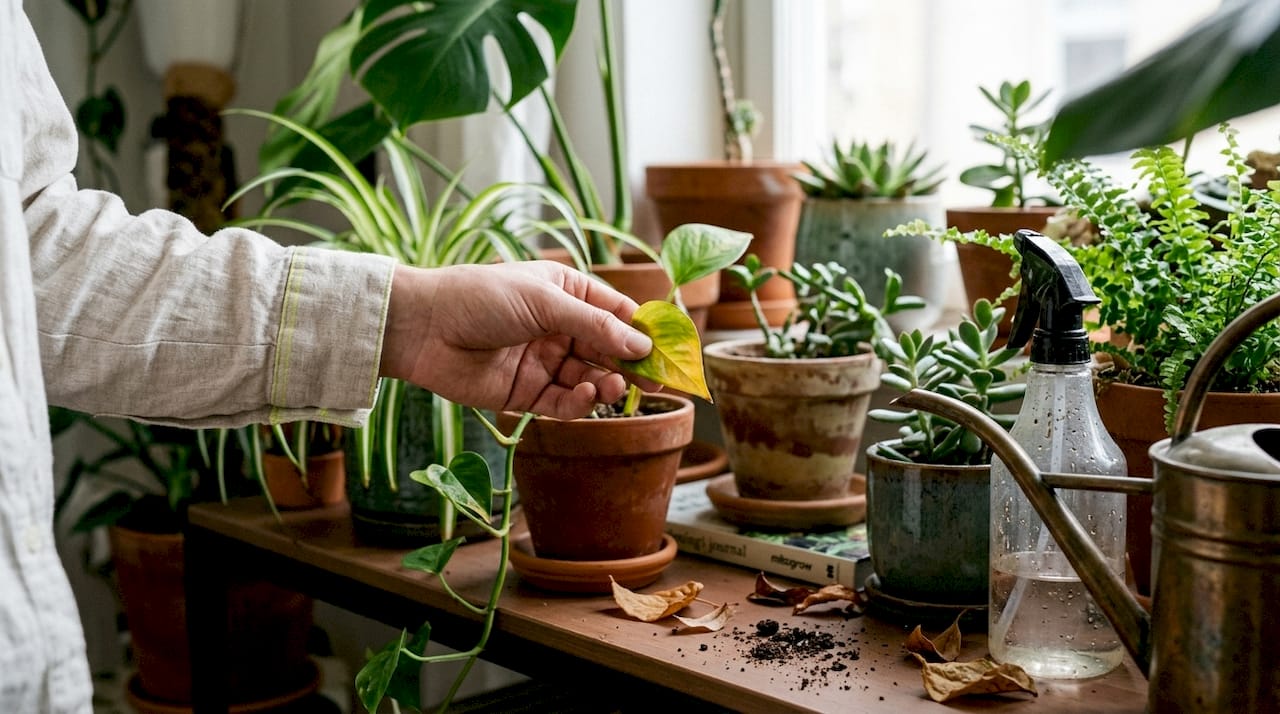
Visual monitoring is your best early warning system. Check leaves weekly for yellowing, spotting, or unusual texture changes. Catching stress early means a much faster recovery, especially when paired with a quality biostimulant during the intervention window.
Take your indoor plant care further with mitogrow
If you’ve been nurturing your leafy friends through acclimatization and still feel like something’s missing, biostimulants might be the piece of the puzzle you haven’t tried yet. mitogrow’s Pots and Planters formula is built specifically for indoor plant environments, working at the cellular level to boost nutrient uptake by up to 50% and support your plant’s natural stress response. It’s pet-safe, impossible to overdose, and compatible with whatever fertilizer you’re already using. Whether you’re nursing a new transplant through its first weeks or trying to revive something that looks like it’s given up, biostimulant resources at mitogrow.com are a great place to start. Because it’s not dead yet.
Frequently asked questions
How long does it take for plants to acclimate indoors?
Indoor acclimatization takes 3 to 8 weeks, with the first visible signs of adaptation typically appearing around weeks three to four. Patience during this window is the most important thing you can offer.
Which indoor plants require the highest humidity?
Species like Calathea and ferns need 60 to 70% relative humidity to prevent crispy edges and stay healthy. Most standard homes run well below that, so a humidifier or pebble tray setup makes a real difference.
Do biostimulants work on all indoor plants?
Biostimulants are most effective on perennial houseplants, especially during transplanting. Annuals generally fail to adapt indoors regardless of support, and organic biostimulants tend to show stronger root development results than synthetic options.
What signs indicate indoor plant stress?
Watch for leaf drop, yellowing, crispy edges, and etiolation (stretching toward light). These stress signals are your plant’s way of communicating, and early intervention almost always leads to faster recovery.
How can I supplement light for plants in dark indoor spots?
Grow lights with a full PAR spectrum (400 to 700 nm) are the most effective solution. Position plants closer to windows where possible, and use a light meter app to confirm your plant is getting at least 1,000 lux for healthy maintenance growth.