Indoor plant supplements: boost growth by up to 50%
TL;DR:
- Indoor plants need targeted supplements to address nutritional deficiencies caused by limited soil ecosystems.
- Combining organic and synthetic supplements offers the most balanced and effective approach for indoor gardening.
- Proper timing, testing, and moderation are key to maximizing results and preventing harm from over-fertilization.
Most indoor plant lovers assume their leafy friends just need water, light, and maybe a little love. That’s a comforting thought, but it leaves out something important. Indoor environments strip away the rich, living ecosystem that outdoor soil provides, and your plants quietly pay the price. Yellowing leaves, slow growth, and drooping stems aren’t always signs of neglect. They’re often signs of nutritional gaps that regular watering simply can’t fix. Supplements, the kind built around real science, can change that story completely. This guide covers the types of supplements available, how to apply them, what the evidence actually shows, and why the right balance matters more than any single product.
Table of Contents
- Why supplements matter in indoor plant environments
- Types of supplements: Synthetic vs. organic
- How and when to apply supplements for optimal plant health
- Evidence and results: Real-world impacts of supplement choices
- An overlooked truth: Why balance beats extremes in supplement use
- Support your indoor garden with proven solutions
- Frequently asked questions
Key Takeaways
| Point | Details |
|---|---|
| Supplements solve deficiencies | Targeted nutrients address common indoor plant problems like yellowing, weak growth, or brown leaf edges. |
| Synthetic vs. organic tradeoffs | Synthetics offer speed and precision while organics improve soil health but act slower indoors. |
| Balance is key | Hybrid applications deliver best results, avoiding the risks of using only one type of supplement. |
| Evidence supports routine use | Empirical data shows supplements significantly improve root volume, fruit yield, and microbial health. |
| Moderate, informed application | Soil testing and careful dosing prevent over-fertilization, maximizing plant health and growth. |
Why supplements matter in indoor plant environments
Indoor plants live in a fundamentally different world than their outdoor cousins. Outside, roots reach into complex, living soil teeming with microbes, fungi, and organic matter that continuously cycle nutrients. Inside, your potted plant is working with a finite amount of growing medium, limited microbial activity, and nutrients that deplete with every watering. That’s a tough setup, even for resilient plants.
The most common result? Deficiencies that show up in ways you might not immediately recognize. Here’s what to watch for:
- Yellow leaves: Often a sign of nitrogen or iron deficiency, especially when older leaves yellow first
- Purple or reddish tints on foliage: Can indicate phosphorus deficiency, particularly in cooler indoor environments
- Brown leaf edges: Frequently linked to potassium deficiency or salt buildup from over-fertilizing
- Stunted growth: A broad signal of multiple possible deficiencies, including magnesium
- Pale new growth: Often points to iron or manganese shortfalls
These symptoms matter because they represent real physiological stress. Supplements help correct deficiencies like nitrogen, phosphorus, potassium, iron, and magnesium, each producing its own characteristic set of warning signs.
“Your plant isn’t being dramatic. Those yellow leaves are a message, and supplements are one of the clearest ways to respond.”
Beyond visible symptoms, indoor soil pH plays a quiet but powerful role. When pH drifts too far from the ideal range of 6.0 to 7.0 for most houseplants, nutrients become chemically unavailable even when they’re physically present in the soil. Regular pH checks, paired with targeted supplementing, are what separate thriving indoor gardens from ones that perpetually struggle. Soil tests are inexpensive, fast, and genuinely eye-opening for anyone who hasn’t tried them yet.
The bottom line is simple: indoor plants can’t forage for what they need. They depend entirely on what you give them. Supplements aren’t a luxury for obsessive plant parents. They’re a practical tool for anyone who wants their green ecosystem to genuinely thrive.
Types of supplements: Synthetic vs. organic
Walk into any garden center and you’ll find shelves of fertilizers and supplements with bold claims. The real distinction that matters for indoor gardeners is synthetic versus organic, and each comes with meaningful tradeoffs.
Synthetic supplements are manufactured to deliver precise concentrations of specific nutrients. They dissolve quickly, act fast, and give you direct control over what your plant receives. That speed is genuinely useful when a plant shows acute deficiency symptoms and needs rapid correction. The downside is that synthetic supplements can cause fertilizer burn if over-applied, and repeated use leads to salt buildup in potting mix, which eventually damages roots.
Organic supplements, think fish emulsion, worm castings, and kelp meal, release nutrients slowly as microbes break them down. They’re gentler, improve soil structure over time, and support microbial communities. But here’s the catch: natural fertilizers often underperform indoors because pot-based environments lack the rich microbial populations needed to mineralize organic matter efficiently.
The evidence supports a nuanced view. Synthetics can produce 20 to 40% higher yields in the short term, which is impressive for anyone growing herbs or edibles indoors. Organics, however, build long-term soil health and reduce the risk of nutrient runoff, making them a more sustainable choice over time.
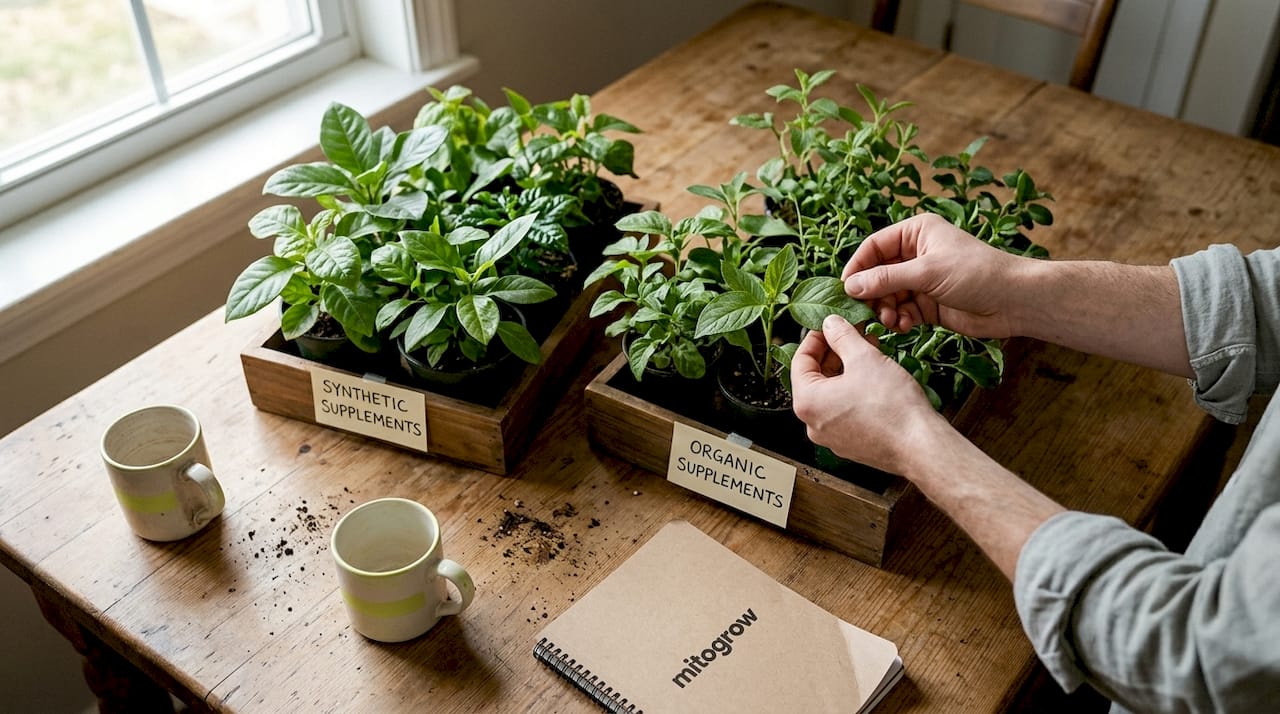
Pro Tip: Rather than choosing one camp, try a hybrid approach. Use a quality organic base, like worm castings mixed into your potting medium, and supplement with a diluted synthetic liquid feed during active growth periods. You get the best of both worlds without the extremes of either.
For most indoor gardeners, this balanced hybrid strategy is the most practical and forgiving path forward. It gives your leafy friends both the immediate nutrition they need and the long-term soil environment where they can genuinely settle in and thrive.
How and when to apply supplements for optimal plant health
Knowing what supplements to use is only half the equation. Timing and method matter just as much, and getting them wrong is one of the most common ways well-meaning plant parents accidentally set their plants back.
Here’s a practical framework for supplement application:
- Test your soil first. Before adding anything, run a basic pH and nutrient test. This prevents you from doubling down on nutrients that are already sufficient.
- Match your schedule to the season. Plants grow actively in spring and fall, so that’s when supplementing pays off most.
- Dilute liquid fertilizers. Always use half the recommended dose for indoor plants, since pots have nowhere for excess nutrients to drain safely.
- Observe your plants after each application. New yellowing, wilting, or crispy tips after supplementing are warning signs of over-application.
- Adjust based on growth stage. Seedlings and newly repotted plants need gentler feeding than established, actively growing specimens.
For liquid fertilizers, apply every 4 to 6 weeks during the growing season, which runs roughly from spring through fall. Slow-release granules can be worked into the top layer of soil every 3 to 6 months. During winter, most houseplants slow their growth significantly, so reduce or pause supplementing entirely to avoid buildup.
One truth that experienced growers learn quickly: over-fertilizing causes more harm than under-fertilizing in controlled indoor environments. Salt accumulation in potting mix is a slow, invisible problem until it suddenly isn’t. Flushing your pots with plain water every few months helps clear buildup and reset the root environment.
Pro Tip: If you notice white crusty deposits forming on the soil surface or around drainage holes, that’s a salt buildup signal. Flush the pot thoroughly with water and hold off on supplementing for at least a month.
Evidence and results: Real-world impacts of supplement choices
It’s one thing to talk about supplements in theory. It’s another to look at what actually happens when you apply them. The research is genuinely encouraging, especially for gardeners who want to make informed choices rather than just follow trends.
Here are some of the most compelling findings from recent research:
- Organic biostimulants increased cucumber root volume by 122% and root ramifications by 42% compared to non-organic treatments in hydroponic settings
- Synthetic supplements produced 25% more fruit weight in the short term, a meaningful edge for edible indoor gardens
- Organic treatments boosted soil microbial populations by 35% and reduced nutrient leaching, which matters for long-term pot health
- Hybrid approaches consistently outperformed single-method strategies across multiple growth metrics
Key insight: No single supplement type wins across every category. The strongest results consistently come from combining approaches rather than committing to one extreme.
For home gardeners, this translates into something practical. If you’re growing herbs on a windowsill and want faster results, a diluted synthetic liquid feed during the growing season makes sense. If you’re nurturing a beloved fiddle-leaf fig or monstera for the long haul, building organic matter into the mix supports the kind of root ecosystem that sustains growth over years, not just weeks.
The indoor context adds an important layer of nuance. Indoor pots lack outdoor microbial ecosystems, so organic materials mineralize more slowly and less completely than they would in garden beds. This is exactly why hybrid methods tend to produce the most balanced, reliable outcomes for indoor gardeners. You’re not choosing between fast and sustainable. You’re engineering a system that delivers both.
Thinking of your indoor garden as a living system, rather than a collection of individual plants, shifts how you approach supplementing. Each decision compounds over time, and the evidence supports being thoughtful rather than aggressive.
An overlooked truth: Why balance beats extremes in supplement use
Here’s something most supplement guides won’t tell you: the biggest mistakes indoor gardeners make aren’t about choosing the wrong product. They’re about chasing maximum results with a single approach and ignoring what the plant is actually telling them.
We’ve seen it play out repeatedly. Someone reads that a particular organic fertilizer transformed someone else’s plant and goes all-in, applying it generously to a pot that already has adequate nitrogen. Or they switch to a high-concentration synthetic because they want faster growth, then wonder why their plant looks worse a month later.
The research and real-world experience point to the same conclusion: consistent, moderate application guided by actual soil testing outperforms any aggressive single-product strategy. Your plant doesn’t need more. It needs the right things at the right time.
Hybrid approaches aren’t a compromise. They’re the most sophisticated strategy available to indoor gardeners, and they’re also the most forgiving. When you combine a slow-release organic base with targeted synthetic correction during active growth, you’re working with your plant’s biology rather than against it. That’s where the real magic happens, and it doesn’t require a PhD or a perfectly curated plant shelfie to pull off.
Support your indoor garden with proven solutions
If this guide has you rethinking your supplement strategy, you’re already ahead of most indoor gardeners. The next step is finding products that actually deliver on their promises. mitogrow’s indoor gardening supplements are built around the same science this article covers, working at the cellular level to boost nutrient uptake by up to 50% and support your plants through every stage of their lifecycle. Whether you’re troubleshooting a struggling leafy friend or building a thriving indoor ecosystem from scratch, mitogrow’s Pots and Planters formula is designed for exactly your environment. Pet-safe, impossible to overdose, and compatible with any fertilizer you’re already using, it fits seamlessly into the balanced approach the evidence supports.
Frequently asked questions
How can I tell if my indoor plants need supplements?
Look for symptoms like yellow or purple leaves, brown edges, or stunted growth. A soil test can confirm specific deficiency symptoms and corrections before you start supplementing.
Is it safe to use both synthetic and organic supplements together?
Yes, a hybrid approach is optimal for most indoor gardeners when applied in moderation, balancing fast correction with long-term soil health.
What frequency should I use when supplementing indoor plants?
Liquid fertilizers work best every 4 to 6 weeks during spring through fall, while slow-release granules can be applied every 3 to 6 months.
Can supplement misuse harm indoor plants?
Absolutely. Over-fertilizing causes more harm than under-fertilizing in pots, leading to salt buildup and root burn that can be difficult to reverse.
Do supplements improve indoor plant soil microbes?
Organic supplements do boost soil microbes meaningfully, though the effect is more limited indoors. Hybrid methods help offset this limitation and support a healthier root environment overall.