Root development explained
Most gardeners spend their energy fussing over leaves, blooms, and stems, but the real magic happens underground. Your plant’s root system is its entire support network, quietly driving every function above the soil line. Understanding tree roots reveals that roots form complex branching structures that serve as the true foundation for healthy plant growth. This guide walks you through how roots form, what they actually do, why they sometimes struggle, and how you can nurture exceptional root development using both time-tested and surprisingly innovative techniques. Whether your leafy friends are thriving or barely hanging on, what’s happening below the surface matters more than you might think.
What is root development? Key structures and functions
Root development is the ongoing process of growth, branching, and functional maturation that allows a plant to anchor itself, absorb resources, and communicate with its environment. It starts the moment a seed germinates and never really stops throughout a plant’s life. Understanding this process helps you make smarter decisions at every stage of care.
Roots are not all the same. Taproot, fibrous, and adventitious roots each serve distinct roles, and fine feeder roots under 2mm in diameter are the primary drivers of water and nutrient absorption. Taproots grow straight down and anchor large plants, fibrous roots spread wide near the surface, and adventitious roots form from non-root tissue like stems, which is how cuttings take hold.
Beyond absorption, tree root functions include storing energy reserves, producing growth hormones like auxins and cytokinins, and even communicating stress signals to the rest of the plant. Roots are a whole ecosystem in miniature.
Here is a quick summary of what healthy roots are doing for your plants every single day:
- Absorption: Drawing in water, oxygen, and dissolved nutrients from the soil
- Anchorage: Keeping the plant physically stable in wind, rain, and soil movement
- Storage: Holding carbohydrates and nutrients for periods of stress or dormancy
- Hormone production: Generating signals that regulate shoot growth and flowering
- Symbiosis: Hosting beneficial fungi and bacteria that extend the plant’s reach
When root development is strong, every one of these functions runs smoothly. When it is compromised, the whole plant feels it.
How root development shapes healthy plants
Healthy roots do not just support a plant, they actively drive its performance above ground. The architecture of a root system, meaning how deep it goes, how wide it spreads, and how densely it branches, directly predicts how well a plant will grow, flower, and survive stress.
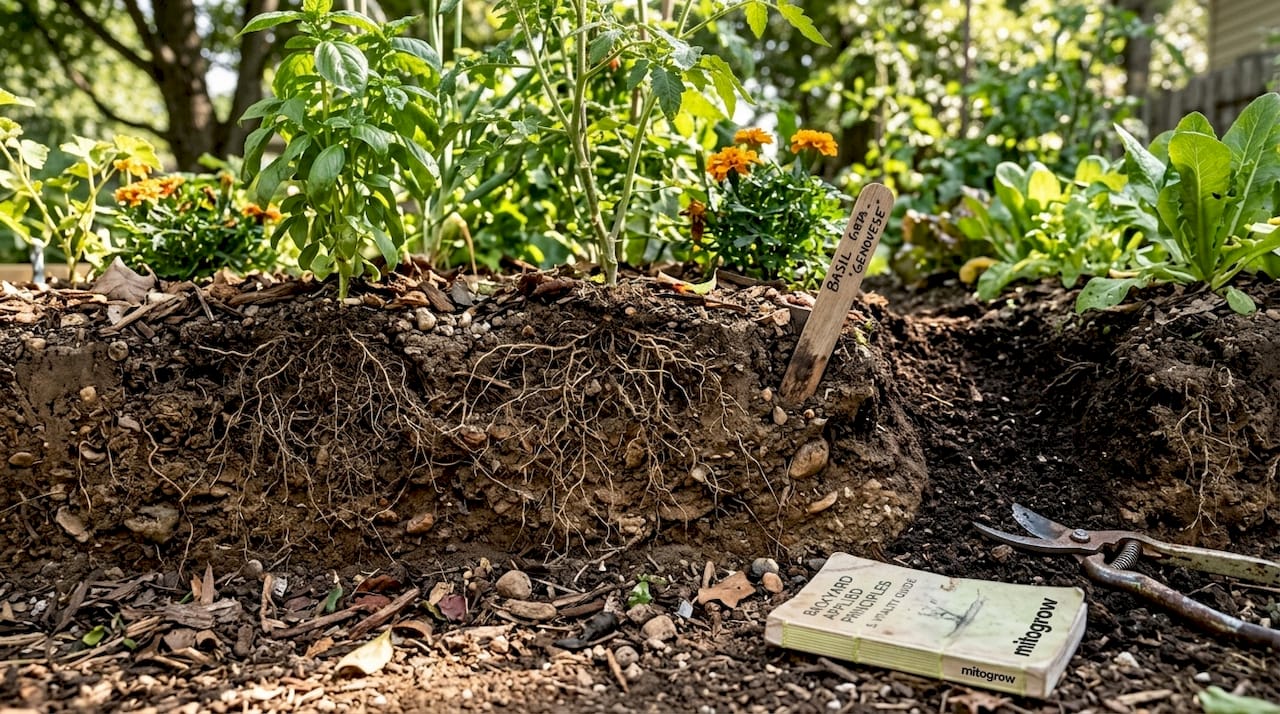
Recent research makes this connection impossible to ignore. Organic biostimulants increased root volume by 122% and root ramifications by 42% in controlled trials, with corresponding improvements in plant yield and resilience. That is not a small tweak. That is a transformation in how a plant interacts with its environment.
Plants with expanded root systems absorb nutrients up to 50% more efficiently, which means every drop of water and every granule of fertilizer you apply goes further.
Here is how the chain reaction works when your roots are genuinely healthy:
- Fine roots absorb water and dissolved minerals from the surrounding soil matrix
- Nutrients travel upward through the vascular system to fuel photosynthesis
- Energy from photosynthesis is sent back down to fuel further root growth
- Deeper, denser roots access more resources and buffer against drought
- Stress hormones are managed more efficiently, reducing transplant shock and wilting
Root trait research confirms that plants with richer root architectures recover faster from environmental stress, produce more biomass, and show stronger seasonal resilience. The takeaway is simple: invest in the roots, and the rest of the plant rewards you.
Common challenges and what limits root development
Even the most attentive gardeners run into root problems, often without realizing it until the damage shows up as yellowing leaves or stunted growth. The challenge is that roots are invisible, so problems brew quietly before you notice anything above ground.
Compacted and waterlogged soils limit oxygen around the root zone, forcing roots to stay near the surface where conditions are slightly better. This creates shallow, fragile systems that are highly vulnerable to drought and temperature swings. Overwatering is one of the most common culprits, essentially suffocating roots by displacing the air pockets they depend on.
Here are the most common root development challenges home gardeners face:
- Soil compaction: Prevents deep root penetration and reduces oxygen availability
- Overwatering: Saturates soil, cutting off oxygen and promoting root rot
- Drought stress: Causes fine feeder roots to die back rapidly
- Shallow planting: Limits root establishment depth from the very beginning
- Nutrient imbalance: Excess nitrogen pushes shoot growth at the expense of root branching
- Temperature extremes: Both heat and cold stress trigger early root loss
When plants experience stress, hormone imbalances follow. Elevated levels of abscisic acid, a stress hormone, suppress the production of new lateral roots. This is the plant’s way of conserving energy, but it creates a cycle where stressed roots produce fewer new roots, making recovery even harder.
Roots do have plasticity, meaning they can adapt their growth patterns to find water and nutrients in difficult conditions. But there is a limit to how much adaptation can compensate for genuinely poor soil health.
Pro Tip: Push a screwdriver or pencil 6 inches into your garden bed. If it meets strong resistance before that depth, your soil likely needs aeration. Aerating compacted beds before planting, or using a garden fork around established plants, can make an immediate difference in root care strategies and overall plant vitality.
Proven ways to boost root development in your garden
The good news is that most root development challenges are fixable, and many of the best solutions are surprisingly accessible. You do not need a laboratory or a professional horticulturalist to give your plants a serious underground upgrade.
Deep watering, phosphorus fertilizers, mycorrhizae, compost, and soil temperature are the foundational techniques that research consistently supports. Each one targets a specific aspect of root health, and together they create the conditions where roots genuinely thrive.
Here is how to put each method into practice:
- Water deeply and infrequently. Watering to a depth of 8 to 12 inches encourages roots to follow moisture downward. Shallow daily watering trains roots to stay near the surface.
- Use phosphorus-rich fertilizers. Phosphorus is the mineral most directly linked to root growth. Look for fertilizers with a higher middle number on the N-P-K label.
- Introduce mycorrhizal fungi. These beneficial fungi form partnerships with roots, extending their reach by up to 700 times. Mix mycorrhizal inoculant directly into planting holes or apply as a soil drench.
- Amend with compost. Compost improves soil structure, aeration, and microbial activity, all of which support root expansion. It can increase root aeration and nutrient uptake by 30 to 50% in amended beds.
- Maintain optimal soil temperature. Most roots grow best between 50 and 68 degrees Fahrenheit. Mulching regulates soil temperature and retains moisture.
- Try biostimulants. Naturally derived biostimulants activate a plant’s internal cellular processes, helping roots use existing soil resources more efficiently without adding more inputs.
Pro Tip: When introducing mycorrhizae, avoid applying phosphorus fertilizer at the same time. High phosphorus levels signal to the plant that it does not need fungal partners, reducing colonization. Apply mycorrhizae first, then fertilize lightly a few weeks later.
For natural root growth tips, combining compost with a biochar amendment creates a particularly supportive environment, improving both moisture retention and microbial diversity in the root zone.
A deeper look: Why fine roots and innovative tweaks matter most
Most root advice you will find focuses on encouraging deeper roots, and that is genuinely useful guidance. But here is what often gets left out: fine absorptive roots are a stronger predictor of plant growth than the thicker transport roots most people picture when they think about root systems.
Those hair-like feeder roots are doing the heavy lifting. They are the ones absorbing water, pulling in minerals, and hosting mycorrhizal partnerships. Yet most gardeners never think about them specifically, and many common practices, like heavy tilling, excess nitrogen, and infrequent compost application, actually damage them without anyone noticing.
Biostimulants, mycorrhizal inoculants, and targeted soil amendments remain genuinely underutilized by home gardeners. The research supporting them is strong and growing, but awareness is still catching up. If you have been doing everything right above ground and still feel like your plants are underperforming, the answer is almost certainly in the fine root zone.
The most rewarding shift you can make as a gardener is to start thinking of soil health and root health as the same thing. Nurture the invisible ecosystem beneath your plants, and the results above ground will follow in ways that feel almost effortless.
Ready to transform your plant roots?
If this deep look at root development has you thinking about what is actually happening beneath your garden beds and planters, you are already ahead of most gardeners. The next step is giving your plants the kind of cellular-level support that makes every watering, every amendment, and every bit of sunlight count for more. mitogrow’s biostimulant formulas are designed to work from within, activating the plant’s own energy systems to support root development and nutrient uptake across every stage of growth. Whether you are starting fresh, managing transplant stress, or trying to revive a struggling leafy friend, explore the full range of mitogrow root solutions and find the formula that fits your garden.
Frequently asked questions
Which fertilizer is best for root development?
Phosphorus-rich fertilizers are most effective for stimulating strong root development in most garden plants. Look for a higher middle number on the N-P-K label when root growth is your priority.
What are the signs of unhealthy root development?
Wilting, stunted growth, discolored leaves, and visible surface roots often signal poor or compromised root systems. Poor aeration and overwatering are two of the most common underlying causes.
How does watering affect root growth?
Deep, infrequent watering encourages roots to grow deeper into the soil, while frequent shallow watering keeps roots near the surface. Deep watering results in deeper root systems that are more resilient during dry periods.
Can over-fertilizing harm root development?
Yes, excessive fertilizer, especially nitrogen, can inhibit healthy root branching and lead to weaker plants overall. Research shows that reduced nitrogen boosted root length density and improved plant health in trial conditions.
What’s the role of mycorrhizal fungi in root development?
Mycorrhizal fungi form beneficial partnerships with roots, dramatically expanding their reach and improving both nutrient and water uptake. Mycorrhizae extend root system reach for more efficient absorption, making them one of the most powerful tools available to home gardeners.