Simple plant care checklist: thrive with less effort
Life gets busy, and your leafy friends sometimes pay the price. Between work, social commitments, and the endless scroll, keeping houseplants alive can feel like one more thing to fail at. But here’s the encouraging truth: thriving greenery does not actually require constant attention. The right plants, paired with a smart, minimal routine, can transform you from a reluctant plant killer into a confident plant parent. This checklist is built specifically for people who love the idea of a plant-filled home but need a system that fits real life, not an idealized one.
Table of Contents
- Choose the right low-maintenance plants
- Master the minimal watering strategy
- Simplify light, temperature, and humidity management
- Weekly and monthly plant care checklist
- Why less effort leads to healthier plants
- Make thriving plants even easier
- Frequently asked questions
Key Takeaways
| Point | Details |
|---|---|
| Pick resilient plants | Focus on snake plant and pothos for easy care with irregular watering. |
| Check before watering | Always test soil dryness weekly to prevent overwatering mistakes. |
| Optimize your space | Set up plants in suitable light and temperature zones to save daily effort. |
| Follow a simple checklist | A short weekly routine covers all essentials for thriving houseplants. |
| Less is more | Giving plants some neglect often keeps them healthier than daily fussing. |
Choose the right low-maintenance plants
Let’s start with the foundation. Making smart plant choices means less time and stress down the road, and it is genuinely the single most powerful thing you can do for your plant care routine before you even touch a watering can.
Not all houseplants are created equal. Some thrive on neglect, and those are exactly the leafy friends you want in your corner when life gets hectic. The good news is that low-maintenance houseplants like snake plant, ZZ plant, pothos, spider plant, and cast iron plant tolerate irregular watering of 3 to 6 weeks between drinks, can handle low light conditions as dim as 25 to 75 foot-candles, and ask for almost nothing in return.
Here is a quick look at your five best options:
- Snake plant: Nearly indestructible, tolerates low light and dry soil, grows slowly so it never feels out of control.
- ZZ plant: Stores water in its rhizomes (thickened underground stems), making it incredibly forgiving of forgotten waterings.
- Pothos: Trails beautifully from shelves, tolerates dim corners, and practically tells you when it is thirsty by drooping slightly.
- Spider plant: Adapts to a wide range of conditions, produces charming offshoots, and actively cleans indoor air.
- Cast iron plant: Lives up to its name with an almost stubborn ability to survive low light, dust, and irregular care.
| Plant | Watering frequency | Light tolerance | Resilience level |
|---|---|---|---|
| Snake plant | Every 3 to 6 weeks | Low to bright indirect | Very high |
| ZZ plant | Every 3 to 4 weeks | Low to moderate | Very high |
| Pothos | Every 1 to 2 weeks | Low to bright indirect | High |
| Spider plant | Every 1 to 2 weeks | Moderate to bright indirect | High |
| Cast iron plant | Every 2 to 3 weeks | Very low to low | Extremely high |
The key insight here is that overwatering kills more plants than neglect does. Snake plants and ZZ plants actually rot in consistently wet soil, so choosing them is not just about convenience. It is about picking plants whose natural rhythms match your realistic availability.
Pro Tip: When in doubt at the garden center, ask yourself, “Could I forget this plant for a month and would it survive?” If the answer is yes, it earns a spot in your home.
Master the minimal watering strategy
Now that you have picked resilient plants, effective watering is your next time-saving tool. Watering feels simple, but it is where most well-meaning plant parents go wrong, and usually in the direction of too much, not too little.
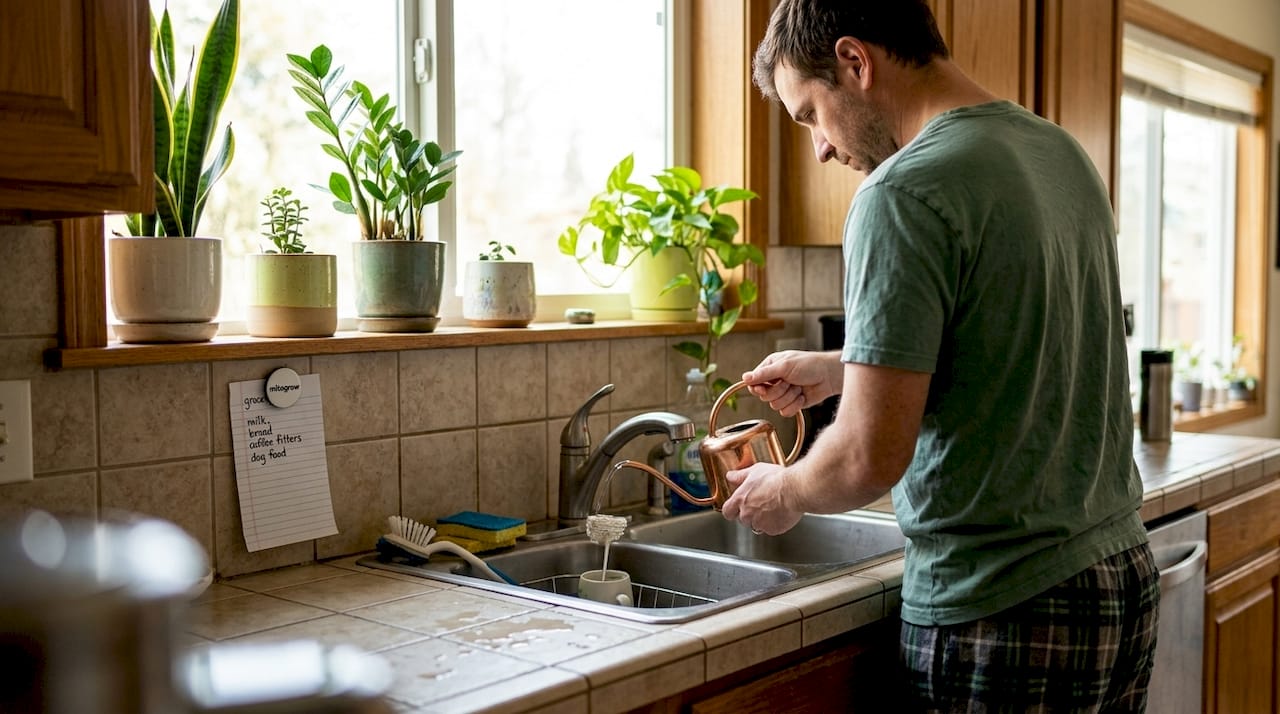
The golden rule is straightforward: water only when the top 1 to 2 inches of soil feel dry. Forget the idea of a fixed schedule. Instead, build a simple weekly check-in habit using one of these two reliable methods.
How to check soil moisture in under 30 seconds:
- Finger test: Push your finger about an inch into the soil. If it feels damp, wait. If it feels dry and pulls away from the pot edges, it is time to water.
- Pot weight test: Lift the pot right after watering and memorize that heavy feeling. When the pot feels noticeably lighter, the soil has dried out enough to water again.
- Weekly sweep: Set a recurring reminder on your phone for the same time each week. Walk through your space, check every pot using either method above, and water only what needs it.
- Batch your watering: Group your plants in one area on check-in day so you can assess and water everything in a single focused session, usually under 10 minutes.
- Drain completely: Always let excess water drain out of the bottom of pots. Sitting water in saucers is one of the fastest ways to invite root rot.
“Overwatering is the number one killer of houseplants. Most indoor plants prefer to dry out slightly between waterings rather than sitting in consistently moist soil.” — University of Georgia Cooperative Extension
This batched, need-based approach removes the guilt of skipping a day and the anxiety of a rigid schedule. Your plants will genuinely respond better to this rhythm than to daily fussing.
Pro Tip: Set your weekly plant check for Sunday evenings. It takes almost no time, it sets a calming tone before the work week, and it keeps your greenery on track without daily mental overhead.
Simplify light, temperature, and humidity management
With watering simplified, let’s make the rest of your environment work for you, not against you. The good news is that most of these adjustments are one-time setup decisions rather than ongoing chores.
Your environment setup checklist:
- Light: Place plants near windows with bright, indirect light when possible. Sheer curtains diffuse harsh direct sun and protect leaves from scorching while still letting in enough brightness.
- Temperature: Aim for a daytime range of 58 to 86°F and cooler nights around 65 to 70°F. Most common houseplants are comfortable in the same temperatures that feel comfortable to you.
- Drafts and heat sources: Keep plants away from air conditioning vents, radiators, and drafty windows. Temperature swings stress plants even when the average temperature looks fine on paper.
- Humidity: A 40 to 50% humidity level is ideal for most indoor plants. Grouping plants together creates a microclimate with naturally higher humidity around the foliage.
- Pebble trays: Fill a shallow tray with pebbles and water, then set your pot on top without the base touching the water. As the water evaporates, it passively raises humidity right where your plant lives.
Skip misting. It feels nurturing, but humidity below 20% causes plants to lose moisture rapidly, and a quick mist only provides a temporary fix that evaporates within minutes. Pebble trays and plant groupings deliver consistent, hands-off humidity all day long.
| Environmental factor | Ideal range | Common home condition | Easy fix |
|---|---|---|---|
| Temperature | 65 to 80°F | Usually within range | Move away from vents |
| Humidity | 40 to 50% | Often 30 to 40% in winter | Pebble tray or grouping |
| Light (indirect) | 100 to 500 foot-candles | Varies by window | Sheer curtains or repositioning |
| Drafts | None | Common near windows | Relocate pots seasonally |
Once your plants are in their ideal spots, you rarely need to touch these variables again until seasons change.
Weekly and monthly plant care checklist
Once your setup is sorted, following a minimalist checklist can keep your plants happy with just minutes each week. Think of it less like a chore list and more like a quick wellness check for your indoor ecosystem.
Weekly tasks (10 minutes or less):
- Observe leaves and overall growth for yellowing, drooping, or unusual spots.
- Check soil moisture using the finger test or pot weight method.
- Remove any dead or yellowing leaves to keep energy focused on healthy growth.
- Wipe dust off broad leaves with a damp cloth to help plants absorb light efficiently.
- Rotate pots a quarter turn so all sides receive even light exposure.
Monthly tasks (15 minutes or less):
- Inspect roots through drainage holes for any signs of overcrowding or root rot.
- Fertilize sparingly at about one-quarter of the label-recommended strength during the growing season, which runs from March through October. Use nothing in winter.
- Check for pests like fungus gnats or spider mites, paying attention to the undersides of leaves.
- Assess whether any plant has outgrown its pot and may need repotting in the next season.
According to the Wirecutter plant care guide, this basic weekly rhythm of observing, checking moisture, removing debris, wiping leaves, and rotating pots covers virtually all the essential bases for most common houseplants.
Bonus tasks for extra credit:
- Propagate trailing plants like pothos to grow your collection for free.
- Research each plant’s winter dormancy needs and reduce watering accordingly from November through February.
- Upgrade potting mix once a year for plants that have been in the same soil for more than two years.
Less is genuinely more when it comes to fertilizing. Overfertilizing burns roots and creates salt buildup in soil, which is far harder to fix than simply skipping a feeding. When in doubt, do less.
Why less effort leads to healthier plants
Putting this checklist into action asks for a subtle but important mindset shift: trusting that your plants can handle themselves between check-ins, because they absolutely can.
Most plant losses in busy households come from too much attention, not too little. A little overdone watering here, an extra dose of fertilizer there, and suddenly a perfectly happy plant is struggling. Plants are not waiting for constant intervention. They are waiting for the right conditions to be set once and then left alone to do what they do naturally.
Winter is especially telling. Low winter light increases respiration, causing plants to burn through stored sugars faster. The response most people have is to add more water or fertilizer, which actually compounds the stress. The smarter move is to back off, lower your care frequency, and let the plant rest. Think of winter as a built-in permission slip to do even less.
The right plant choices matter here too. Selecting resilient varieties upfront means your margin for error is enormous. A snake plant or ZZ plant is not waiting to die the moment your schedule gets packed. It is quietly thriving while you are off living your life. That kind of relationship with your greenery, calm, low-pressure, and mutually easy, is exactly what sustainable plant parenthood looks like.
Make thriving plants even easier
Building a streamlined care routine is a huge step forward, and your leafy friends are already better off for it. If you want to give them an extra edge, especially during stressful moments like repotting or seasonal changes, mitogrow solutions are designed to support plants at the cellular level, helping them absorb nutrients more efficiently and bounce back from setbacks faster. mitogrow’s Pots and Planners formula fits beautifully into a minimal care routine: it is pet-safe, impossible to overdose, and compatible with any fertilizer you already use. For busy plant parents who want their greenery to not just survive but genuinely thrive, it is a natural next step.
Frequently asked questions
What are the best plants for someone who forgets to water?
Snake plant, ZZ plant, pothos, and cast iron plant tolerate long dry spells between waterings, making them ideal choices for plant parents with unpredictable schedules.
How often should I check if my plants need water?
For low-maintenance houseplants, a weekly check using the finger test or pot weight method is enough. Water only when the top 1 to 2 inches of soil feel dry to avoid overwatering.
Is misting effective for plant humidity?
Misting offers only a brief humidity boost that evaporates within minutes. Grouping plants together or using pebble trays provides consistent, hands-off humidity that actually benefits your plants long-term.
What’s the simplest weekly plant care routine?
Observe leaves, check soil moisture, remove dead leaves, wipe off dust, and rotate pots. According to the Wirecutter houseplant guide, these five steps cover virtually everything your plants need each week in about 10 minutes.