


The Role of Environment in Plant Health for Gardeners
Most gardeners water consistently, place plants near a window, and wonder why things still go sideways. The truth is, the role of environment in plant health goes far deeper than sunlight and water schedules. Horticulturists call it the plant-environment interaction, and it covers everything from soil microbiome dynamics to microclimatic temperature swings to the slow creep of climate-driven pest pressure. Understanding these interconnected forces is what separates a garden that survives from one that genuinely thrives.
Key takeaways
| Point | Details |
|---|---|
| Soil biology drives resilience | Healthy soil microbiomes regulate nutrient cycling and stress tolerance far more than fertilizer alone. |
| Temperature and light work together | A 1°C temperature rise combined with lower light intensity can cut plant yield by nearly 15%. |
| Microclimates matter more than zones | USDA hardiness zones tell you about winter survival, not soil moisture, heat swings, or wind exposure. |
| Climate change shifts disease pressure | Warmer winters expand pest ranges and accelerate insect life cycles, raising disease risk across gardens. |
| Systems thinking transforms outcomes | Treating soil health, environmental monitoring, and pest management as one connected system produces lasting plant vitality. |
The role of environment in plant health starts underground
When most people hear “plant health,” they picture leaves, stems, and blooms. But the story actually begins beneath the surface. Soil is not just a growing medium. It is a living, breathing ecosystem with physical texture, chemical pH, organic matter content, and billions of microorganisms all working in concert.
The soil microbiome, the collective community of bacteria, fungi, and other microbes living around plant roots, has a profound influence on how plants grow and survive stress. Soil microbes shape plant adaptation to drought, salinity, and temperature extremes by altering which plant traits express under pressure. That is not a minor side benefit. That is a core survival mechanism your leafy friends rely on every day.
The impact of soil quality extends beyond biology. Compacted clay soils drain poorly and starve roots of oxygen. Sandy soils drain too fast and leave plants perpetually thirsty. Organic matter improves both scenarios by creating structure, feeding microbial life, and holding nutrients near the root zone where plants can actually use them.
Land-use intensification degrades soil microbiomes and reduces the functional diversity that plants depend on for immunity and nutrient cycling. Intensive gardening practices, repeated tilling, synthetic fertilizer overuse, and neglecting organic matter have similar effects at home garden scale.
Here is what gardeners can do to support healthy soil biology:
- Add compost regularly to feed microbial communities and improve soil structure.
- Minimize tilling to preserve fungal networks that connect plant roots to nutrients.
- Use organic mulches to stabilize soil temperature and moisture, protecting microbiome function.
- Avoid over-applying synthetic fertilizers, which can suppress beneficial bacterial populations.
- Test soil pH annually. Most plants prefer a range of 6.0 to 7.0, and nutrient availability in ecosystems shifts dramatically outside that range.
Pro Tip: When adding compost, work it into the top two to three inches rather than burying it deep. Most of the beneficial microbial activity happens in the upper soil layer, close to where roots actively forage.
Temperature, light, and why both matter simultaneously
Light conditions for plant growth and temperature effects on plants are most often discussed in isolation. In reality, they interact in ways that can compound or cancel out each other’s effects, and gardeners who manage only one variable while ignoring the other often end up frustrated.
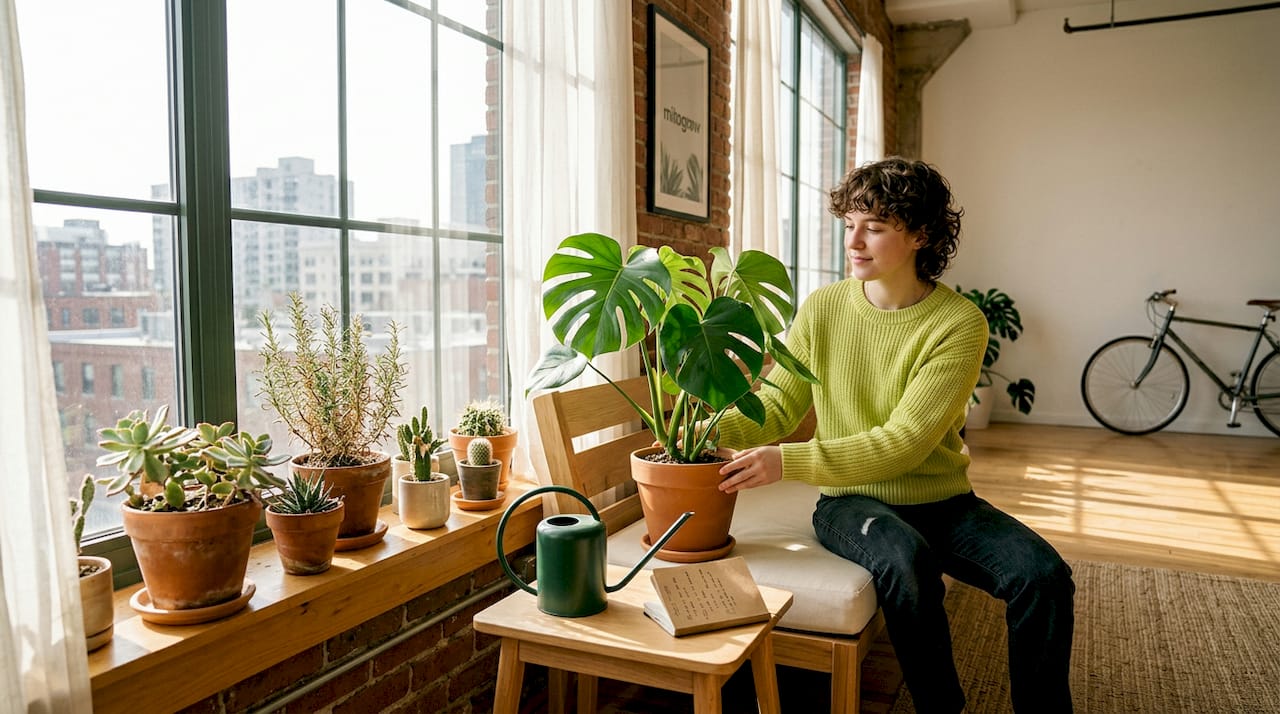
Consider this finding from greenhouse tomato research: each 1°C temperature increase combined with a 50 μmol·m⁻²·s⁻¹ light reduction reduces fruit yield by approximately 14.4%. That is not a small margin. It means a slightly warmer growing space with slightly less light does not produce a slightly smaller harvest. It produces a significantly smaller one. The two stressors amplify each other nonlinearly.
Here is a practical framework for managing both factors in your garden:
- Observe your site at multiple times of day. A spot that gets six hours of morning sun may behave completely differently than one getting six hours of afternoon sun. Afternoon light is more intense and drives up leaf temperature.
- Track summer temperatures near your plants, not just ambient air temperature. Soil surface temperatures and canopy temperatures can run 10°F to 15°F hotter than the air.
- Use shade cloth strategically during heat waves. A 30% shade cloth reduces light but also dramatically reduces heat stress, often producing a net benefit.
- Group plants with similar light and temperature tolerance together. Placing a heat-sensitive leafy green next to a full-sun perennial creates microclimate conflicts at the root zone.
- Adjust indoor plant placement seasonally. Winter sun angles are lower and less intense, so a south-facing window in January delivers far less energy than the same window in July.
Pro Tip: A simple infrared thermometer, the kind you point and click, lets you measure actual leaf surface temperatures during hot days. If your tomato leaves read above 95°F, they are likely shutting down photosynthesis regardless of how much you water them.
Research insight: High temperature and low light stress interact nonlinearly, meaning managing both together is necessary to optimize plant yield and water-use efficiency. Fixing just one without the other leaves significant performance on the table.
Climate extremes and rising disease pressure
Climate change and agriculture are colliding in ways that gardeners feel even if they cannot always name the cause. Heatwaves, unexpected late frosts, and extended drought periods are no longer rare disruptions. They are becoming baseline conditions in many regions.
The biological consequences go beyond wilting. Climate extremes increase pathogen virulence while simultaneously suppressing plant immune responses and weakening the soil microbiomes that normally buffer plants against disease. The result is a narrowing window of protection during the moments plants need it most.
Pest pressure compounds the problem. Warmer winters expand insect vector ranges and accelerate their life cycles, allowing more generations to complete within a single growing season. A pest that once produced two generations per year in your region may now produce three or four, each one a fresh wave of potential disease transmission.
What this means for gardeners in practice:
- Monitor for new pest arrivals. Insects previously limited to warmer climates are appearing in traditionally cooler zones. Spotted lanternflies and brown marmorated stink bugs are textbook examples.
- Think in triangles, not single threats. Plant disease risk is best understood as a pathogen-host-microbiome triangle, where all three sides matter. A plant with a thriving soil microbiome holds its own better against pathogens, even under climate stress.
- Rotate crops and vary plant families. Monocultures are far more vulnerable to climate-amplified pest cycles than diverse plantings.
- Stabilize soil moisture through mulching. Drought stress compromises plant immune signaling. Consistent moisture at the root zone keeps defenses active.
“Plant health failures under weather stress often stem from soil microbial dysbiosis. Managing soil biology stabilizes immunity in ways no pesticide can replicate.”
Understanding hardiness zones vs. real microclimates
Most gardeners treat USDA plant hardiness zones like a complete growing guide. They are not. USDA zones are based on average minimum winter temperature and say nothing meaningful about summer heat accumulation, soil moisture patterns, or the specific sun and wind conditions on your property. They are a screening tool, not a prescription.
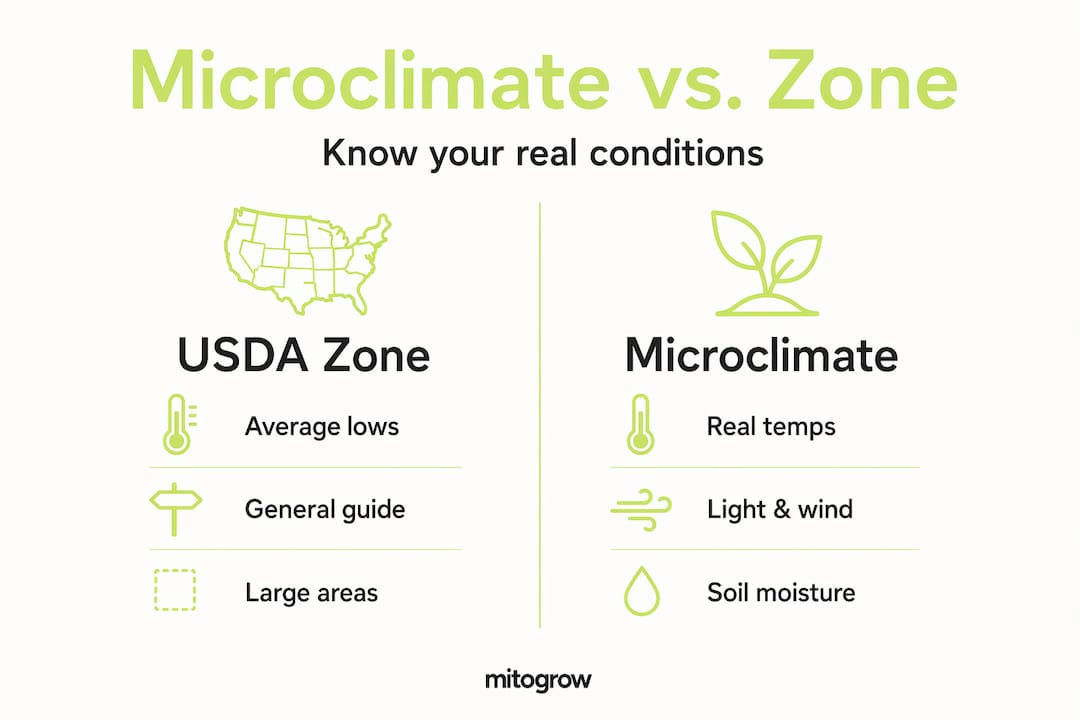
The gap between zone data and garden reality grows wider every year. Freeze days across the U.S. have declined with regional warming, meaning plants in your zone may face less cold stress than the designation implies, but also more unpredictable heat and moisture swings.
| Factor | What USDA zones tell you | What you need to find out yourself |
|---|---|---|
| Cold survival | Average minimum winter temperature | Whether your specific site has frost pockets or warm microclimates |
| Heat tolerance | Nothing | Cumulative summer heat units at your planting site |
| Soil moisture | Nothing | Drainage patterns, irrigation needs, and seasonal dry periods |
| Wind exposure | Nothing | Prevailing wind direction and whether structures or trees buffer it |
| Sun patterns | Nothing | Hours of direct light, shade gradients, and seasonal angle shifts |
Getting this right requires observation over time, not a single lookup. Walk your garden at different hours and seasons. Note where snow melts first in spring. Mark where puddles sit after heavy rain. A north-facing bed against a brick wall holds heat differently than open ground five feet away.
Pro Tip: Soil moisture probes are inexpensive and game-changing for understanding your microclimate. Stick one in your driest spot and one in your wettest, and you will quickly see the variance that a single zone designation completely misses.
Putting it all together in your garden
Understanding environmental factors affecting plants is empowering, but only when it translates into real decisions you make this weekend. Here is how to bring these concepts into daily practice:
- Audit your soil first. Before adjusting watering schedules or fertilizing, get a soil test. pH and nutrient availability in ecosystems are foundational. Everything else builds on that.
- Add organic matter seasonally. Compost, aged wood chips, and leaf litter all feed the soil microbiome and improve physical structure simultaneously.
- Reposition plants that chronically struggle. If a plant has underperformed for two seasons despite good care, the environmental conditions at that site are likely working against it. Move it and observe.
- Track, not guess. Use a simple garden journal or app to log temperatures, rainfall, pest sightings, and plant responses. Patterns become visible in ways that casual observation never reveals.
- Integrate pest management rather than reacting to it. Air quality and plant growth are connected through air circulation and humidity. Proper spacing reduces fungal pressure without chemicals.
Good plant care is less about the perfect product and more about reading your environment accurately and responding to what you find.
My take: the garden is a system, not a checklist
I have spent years watching gardeners pour real love into their plants while unknowingly working against the environment those plants live in. They water on schedule, they feed with the right fertilizer, they follow the zone maps. And they still lose plants they should have kept.
What I have learned is that plant health failures are almost never about one missing variable. They happen at the intersection. A plant already stressed by compacted soil has less reserve when temperatures spike. A soil microbiome depleted by synthetic overuse cannot buffer the plant when a pathogen arrives. The factors stack.
The most transformative shift I have seen in gardeners, the ones who go from inconsistent results to genuinely flourishing plots, comes when they stop treating each factor as a separate checkbox and start reading the garden as a living system. They notice things differently. They catch the early signs: a slight yellowing in an unexpected spot, puddles that linger three days after rain, one corner where plants always stall in August.
That observational shift is not complicated, but it requires slowing down enough to actually see what the garden is communicating. Your plants are always talking. The best gardeners learn to listen.
— Brigid
Give your plants a stronger foundation with MitoGrow
Understanding the full picture of environmental plant health is one thing. Giving your plants the cellular tools to respond to that environment is another. MitoGrow is a naturally derived biostimulant that works from within, supporting the energy production plants need to absorb nutrients more efficiently and activate their own stress responses.
Whether your leafy friends are dealing with transplant shock, recovering from a heat wave, or growing in soil that needs rebuilding, MitoGrow helps plants make better use of what is already around them. It is pet-safe, compatible with any fertilizer, and impossible to overdose, which makes it genuinely approachable no matter your experience level.
If you are ready to go beyond basic care and support your plants at the cellular level, explore MitoGrow’s full product line and find the formula designed for your growing environment.
FAQ
What are the most important environmental factors affecting plant health?
Soil quality, temperature, light intensity, water availability, and the soil microbiome are among the most critical factors. These elements interact with each other, meaning stress from one source often compounds the effects of another.
How does soil quality affect plant growth and resilience?
Soil provides physical support, water retention, and the microbial communities that regulate nutrient cycling and immune response. Healthy soil microbiomes influence plant stress tolerance by shaping which traits activate under pressure, making soil quality foundational to long-term plant vigor.
Do USDA hardiness zones tell the whole story about where plants can grow?
No. USDA zones reflect average minimum winter temperatures but do not account for summer heat, soil moisture, wind exposure, or site-specific microclimates. Gardeners should treat zones as a starting point and observe their specific site conditions to make accurate planting decisions.
How does climate change affect disease pressure in home gardens?
Warmer winters allow pest vectors to expand into new regions and complete more life cycles per season, increasing disease transmission risk. At the same time, heat and drought events suppress plant immune responses, creating windows of vulnerability that pathogens exploit.
What can gardeners do to protect plants from combined temperature and light stress?
Managing both factors together produces the best results. Using shade cloth during heat events, tracking actual leaf surface temperatures, and positioning plants to match their specific light and heat needs all reduce the compounding stress that occurs when temperature and light interact under pressure.


