


Troubleshooting poor plant growth: Science-backed fixes
TL;DR:
- Most struggling plants can be saved with a systematic, science-backed troubleshooting approach.
- Identifying the root cause involves careful observation of symptoms, pattern, and soil/plant health.
- Address environmental stress, soil health, and pests in a step-by-step process to promote recovery.
You’ve watered faithfully, added fertilizer, maybe even moved your leafy friends to a sunnier window, yet something is still off. The leaves look sad, growth has stalled, and you’re starting to wonder if you’re just not cut out for this. Here’s the truth: most struggling plants aren’t beyond saving. What they need isn’t more guessing, they need a systematic, science-backed approach that looks at the full picture, from soil and light to pests and cellular health. This guide walks you through exactly that process, step by step.
Table of Contents
- Identifying the root cause: Why plants struggle
- Assessing environmental stress: Light, water, and temperature
- Soil health and nutrients: Testing and improving conditions
- Managing pests and diseases: Early detection and intervention
- Verifying and maintaining healthy growth: Long-term solutions
- Our perspective: Why quick fixes rarely work and what experience teaches
- Next steps: Revive your garden with science-backed solutions
- Frequently asked questions
Key Takeaways
| Point | Details |
|---|---|
| Diagnose before treating | Identifying the true cause of poor plant growth is essential before applying fixes. |
| Environmental factors matter most | Light, water, and temperature are common limiting factors—adjust them first. |
| Soil and nutrient precision | Test soil conditions and avoid blind fertilizing for best results. |
| Address root cause, not symptoms | Fixing the underlying issue prevents repeat plant problems. |
| Monitor and document recovery | Keeping records helps you refine troubleshooting and maintain plant health. |
Identifying the root cause: Why plants struggle
Every struggling plant is telling you something. The trick is learning to read the signals clearly before reaching for a quick fix. Primary causes of poor plant growth include environmental stress like light, water, and temperature, along with soil issues such as compaction, drainage, and pH, nutrient deficiencies, pests, diseases, and cultural practices like overwatering or planting too deep.
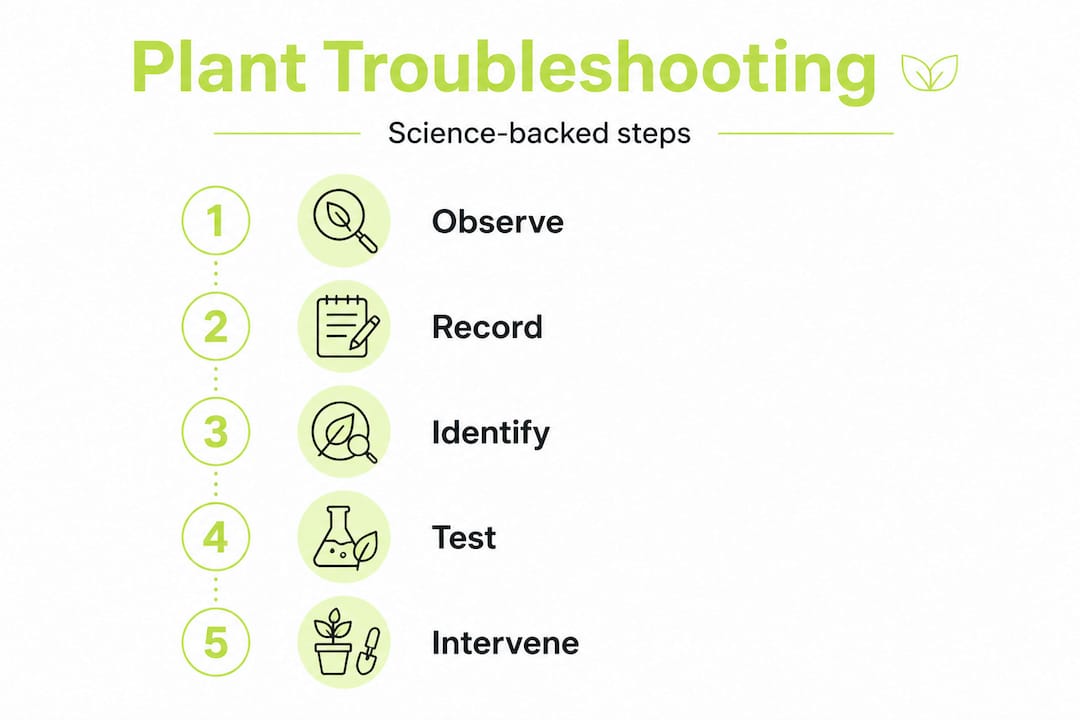
Before you do anything, slow down and observe. Walk around the plant. Are the symptoms spread across the whole plant evenly, or are they scattered and random? Uniform symptoms across many plants usually point to an abiotic (environmental) issue, while scattered, spreading symptoms often indicate a biotic problem like pests or disease. Systematic diagnosis means observing symptoms, checking roots and soil, considering patterns, reviewing your plant’s history, and consulting extension services when needed.
Here’s a quick comparison to help you sort what you’re seeing:
| Issue type | Pattern | Examples | First action |
|---|---|---|---|
| Abiotic (environmental) | Uniform, widespread | Drought stress, frost damage, pH lock-out | Adjust environment or soil |
| Biotic (living organism) | Scattered, spreading | Aphids, fungal blight, root rot fungus | Identify organism, treat early |
Start your diagnosis with this checklist:
- Leaves: Are they yellowing, browning, curling, dropping, or spotting?
- Stems: Are they soft, mushy, cracked, or leggy?
- Roots: Are they white and firm, or brown and slimy?
- Soil: Is it bone dry, waterlogged, or crusty on the surface?
- Pattern: Is only one plant affected, or a whole bed?
- History: Have you recently changed the watering schedule, fertilizer, or location?
Pro Tip: Keep a simple plant journal or even snap weekly photos on your phone. When something goes wrong, that record becomes your fastest troubleshooting tool. Patterns you’d never remember become crystal clear when you can scroll back through images from the past month.
With a clear sense of the problem, you can now start narrowing down the underlying cause and begin systematic troubleshooting.
Assessing environmental stress: Light, water, and temperature
Once you’ve identified whether the issue is abiotic or biotic, environmental stress is often the first area to target. These are the invisible forces shaping your plant’s daily experience, and they’re surprisingly easy to miscalibrate.
Underwatering causes yellow leaves, slow growth, and crispy lower leaves, while overwatering leads to persistent wilt, root rot, and yellow dropping leaves. Both look similar at first glance, which is why so many gardeners reach for the watering can when they should actually be holding back. Stick your finger two inches into the soil before watering. If it’s still moist, wait.
Here’s a quick symptom guide to help you match what you’re seeing to what’s likely causing it:
| Symptom | Possible cause | What to check |
|---|---|---|
| Yellow leaves overall | Overwatering or nitrogen deficiency | Soil moisture, nutrient levels |
| Crispy leaf edges | Underwatering or low humidity | Soil dryness, air moisture |
| Pale, spindly growth | Insufficient light | Hours of direct sun per day |
| Wilting despite moist soil | Root rot or compaction | Root health, drainage |
| Slow or no growth | Temperature stress or poor soil | Night temps, soil quality |
| Blossom drop or end rot | Irregular watering | Watering consistency |
Blossom end rot in tomatoes is a perfect real-world example of how irregular watering creates cascading problems. The plant can’t consistently absorb calcium even when calcium is present in the soil, because inconsistent moisture disrupts nutrient uptake. Fixing the watering schedule often resolves the calcium issue without adding any amendments at all.
How to assess your environment step by step:
- Check your light. Most plants need 6+ hours of direct sun daily. Use a compass or a sun-tracking app to verify what your spot actually receives, not what you assume it receives.
- Evaluate your watering. Check soil moisture at root depth, not just the surface. Invest in a basic moisture meter if you’re unsure.
- Monitor temperature swings. Cold nights below 50°F can stall warm-season crops even if daytime temps feel fine. Check nighttime lows for your zone.
- Assess air circulation. Stagnant air encourages fungal issues. A simple fan or strategic spacing can make a big difference indoors.
- Track consistency. Irregular watering is one of the most overlooked stressors. Plants thrive on rhythm.
Pro Tip: Mulch is your best friend for moisture stability. A 2 to 3 inch layer of organic mulch around your plants dramatically reduces evaporation, buffers soil temperature, and keeps watering schedules more forgiving. Pair it with a simple drip irrigation timer, and you’ve solved two of the biggest environmental stressors in one move.
Soil health and nutrients: Testing and improving conditions
With environmental factors addressed, the next step is to look underground, starting with soil health and nutrients. Healthy soil is alive, and when it’s not functioning well, no amount of fertilizer or sunshine can fully compensate.
Common soil problems that silently sabotage plant growth include:
- Compaction: Dense, hard soil that restricts root growth and oxygen exchange
- Poor drainage: Waterlogged soil suffocates roots and invites rot
- pH extremes: Soil pH extremes lock out nutrients, with the ideal range being 6.0 to 7.0 for most vegetables
- Nutrient deficiencies: Low nitrogen causes yellowing; low iron causes interveinal chlorosis
- Nutrient toxicity: Too much of one nutrient blocks absorption of others
- Biological dead zones: Soil lacking microbial life can’t break down organic matter or transfer nutrients effectively
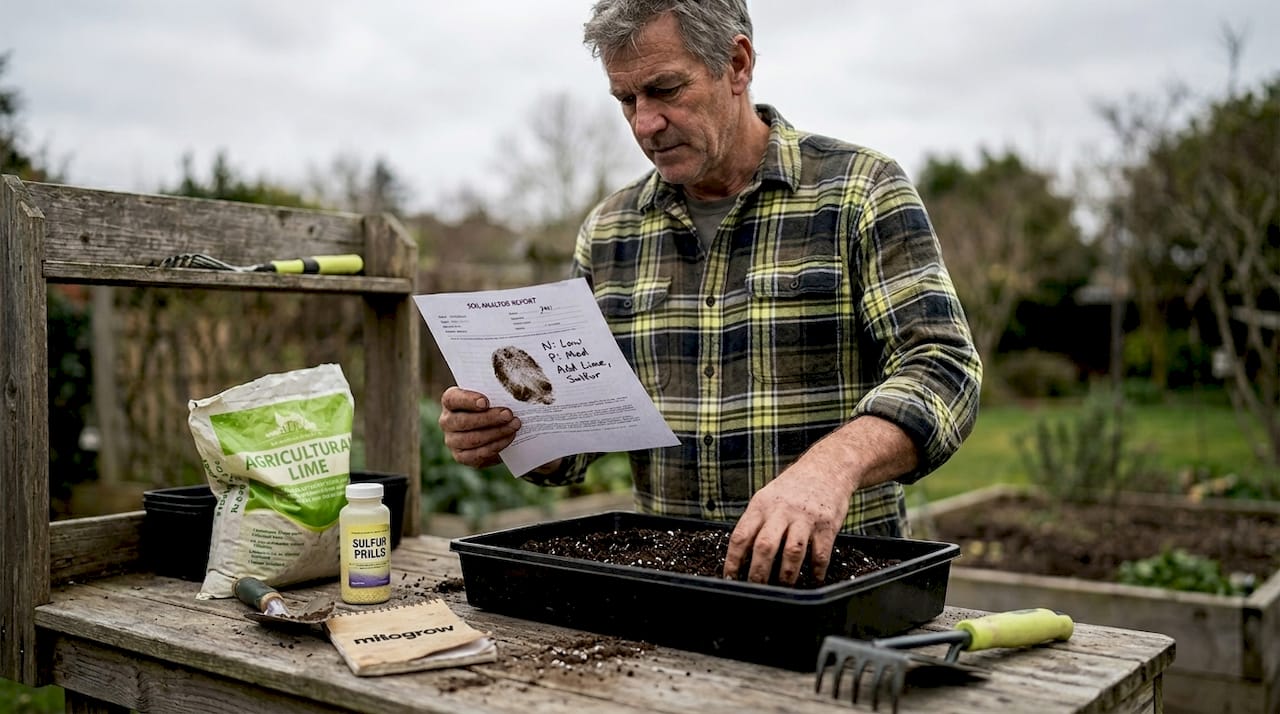
A basic soil test from your local cooperative extension office or a reliable home kit costs very little and tells you exactly what’s present and what’s missing. It removes all the guesswork and points you toward targeted solutions rather than broadcast fixes.
“Over-fertilizing is a more common problem than under-fertilizing. Plants given too much of certain nutrients can experience toxicity, and excess salts in soil actually draw moisture away from roots. Precision matters more than quantity.” — Common wisdom among certified horticulturalists, echoed in extension service guidelines nationwide
This is where the data gets interesting. Fertilizer non-response occurs in roughly 26% of cases due to interactions between species richness and aridity, meaning the same fertilizer that works brilliantly in one garden setting can do almost nothing in another. Blanket fertilization recommendations are a starting point, not a guarantee.
Pro Tip: Before adding any amendment, test first. Adding lime to raise pH when the pH is already fine, for example, can create new deficiencies. A $15 soil test saves you from expensive, counterproductive corrections down the line.
When soil test results come back, amend with intention. Use sulfur to lower pH, lime to raise it, and targeted organic fertilizers or compost to fill specific nutrient gaps. For compacted soil, aeration tools and organic matter additions like aged compost or wood chip mulch create long-term structural improvement.
Managing pests and diseases: Early detection and intervention
Finally, persistent or scattered symptoms often point to biotic attackers, and it’s time to check for pests and diseases. This is the area where early action makes the biggest difference between a recoverable plant and a lost one.
Pests and diseases weaken plants through a spreading pattern, while abiotic stress tends to affect plants uniformly. If you’re seeing damage that seems to jump around or worsen over days, look closely for organisms.
Common culprits to watch for:
- Aphids: Tiny clusters on new growth, sticky residue, curled leaves
- Spider mites: Fine webbing, stippled or bronzed leaves, dry conditions favor them
- Fungal blight: Brown or black lesions, often with yellow halos, spreading outward
- Powdery mildew: White powdery coating on leaves, more common in humid conditions
- Root rot (Pythium, Phytophthora): Brown, mushy roots, wilting despite moist soil
- Scale insects: Waxy bumps on stems, yellowing and leaf drop
“The most important principle in managing biotic issues is that abiotic stress weakens plants and opens the door for pest and disease attacks. Treating symptoms without fixing the root cause leads to endless cycles of reinfestation.”
That quote is worth sitting with. A plant weakened by drought stress or poor drainage is far more vulnerable to aphid colonies and fungal infections than a thriving one. Fixing the environment often reduces biotic pressure naturally.
When pests or disease are confirmed, here’s a measured, effective treatment approach:
- Isolate affected plants if possible to prevent spread to healthy plants nearby.
- Remove and dispose of heavily infected leaves or stems in sealed bags, not compost.
- Identify the organism precisely before treating. Fungal issues need fungicide; insect pests need appropriate insecticides or biological controls.
- Start with the gentlest effective solution: insecticidal soap, neem oil, or copper fungicide are often enough for early-stage problems.
- Apply treatments at the right time: early morning or late evening prevents leaf burn and maximizes effectiveness.
- Monitor and repeat every 7 to 14 days as needed. One treatment rarely eliminates an infestation completely.
- Consult your local extension service for recurring or unidentified issues. They offer free or low-cost plant diagnostics and know your regional pest pressures.
Verifying and maintaining healthy growth: Long-term solutions
After you’ve applied interventions, verifying plant recovery and setting up lasting routines is essential. One round of troubleshooting isn’t the finish line, it’s the beginning of a smarter gardening practice.
Use this before-and-after framework to track where you’ve been and where you’re heading:
| Before troubleshooting | After targeted intervention |
|---|---|
| Yellowing leaves, slow growth | New green growth emerging within 2 to 4 weeks |
| Compacted, dry soil | Looser, consistently moist soil with good drainage |
| Scattered spots and wilting | Symptom spread stopped, healthy tissue visible |
| Unknown nutrient status | Soil test completed, targeted amendments applied |
| Irregular watering schedule | Consistent schedule or drip irrigation in place |
Recovering plants need consistent conditions more than they need heroic interventions. Keep these ongoing best practices as your foundation:
- Test soil annually to track pH and nutrient trends over time
- Water deeply and consistently rather than shallowly and frequently to encourage deep root development
- Practice integrated pest management: monitor regularly, intervene early, and lean on biological controls first
- Rotate crops in vegetable beds to disrupt pest and disease cycles
- Add organic matter to beds every season to sustain soil life and structure
- Observe before acting: give interventions at least two to four weeks before layering on additional treatments
Precision remains critical, especially in diverse plantings and drier climates where fertilizer responses are less predictable. Tracking what you do and what happens afterward is the fastest way to build the kind of plant intuition that makes troubleshooting faster and more accurate every season.
Our perspective: Why quick fixes rarely work and what experience teaches
Here’s an uncomfortable truth that most gardening content glosses over: the reason so many plants stay struggling is that gardeners are treating symptoms instead of causes. It’s completely understandable. When a plant looks yellow and sad, the instinct is to add fertilizer, switch up the watering, or spray for pests, often all at once. But when you change three things simultaneously, you have no idea which one actually helped, or which one made things worse.
Real troubleshooting is slower, more methodical, and honestly more satisfying. It means changing one variable at a time, waiting and observing, and resisting the urge to layer on more products or adjustments before the plant has had time to respond. That patience is where the real learning lives.
We’ve seen it repeatedly in the community of growers around MitoGrow: the gardeners who make the fastest progress are the ones who document everything. Not in a rigid, scientific way, just notes on what they did and what they noticed. Over time, those notes reveal patterns that would have taken years to figure out through intuition alone.
The other shift worth making is letting go of the idea that more input equals better results. More fertilizer doesn’t fix a drainage problem. More water doesn’t fix a pest infestation. More light doesn’t fix a pH imbalance. Each plant challenge has a specific lever, and finding that lever through systematic observation is the entire game. Once you make that shift, you stop throwing things at the wall and start genuinely understanding your garden’s ecosystem.
Next steps: Revive your garden with science-backed solutions
If this process has you thinking more carefully about what’s actually happening inside your struggling plants, you’re already ahead of most gardeners. The next step is having the right support in your corner. MitoGrow’s plant health resources are built for exactly this kind of deep-dive troubleshooting, whether you’re dealing with a single wilting houseplant or a whole garden bed that’s lost its momentum. MitoGrow’s biostimulant formulas work from within the plant’s cells to boost nutrient uptake by up to 50% and strengthen stress response, giving your plants the foundation they need to actually benefit from everything else you’re doing. It’s not a replacement for good diagnostics, it’s the cellular support that makes your other interventions work better.
Frequently asked questions
What are the most common reasons my plants aren’t growing well?
The most common causes are environmental stress from light, water, and temperature, poor soil conditions, nutrient deficiencies, pests and diseases, and cultural practices like overwatering or planting at the wrong depth.
How can I quickly tell if the issue is from watering?
Yellow leaves and crispy lower growth usually mean underwatering, while persistent wilting and mushy roots are a strong sign of overwatering and root rot.
Does fertilizer always fix poor plant growth?
No, fertilizer non-response occurs in about 26% of cases due to factors like soil conditions and species richness, which is why a soil test and targeted diagnosis should always come before adding amendments.
How do I know if the problem is a pest or disease?
Biotic issues spread and appear scattered, moving from plant to plant or leaf to leaf, while abiotic stress tends to affect plants in a uniform, predictable pattern across a whole bed or planting.
What is the best way to monitor plant recovery after troubleshooting?
Check leaves, stems, and root health every week, and compare what you see against notes or photos from before you made changes. Consistent observation over two to four weeks gives you a realistic, evidence-based picture of whether recovery is underway.


