


What Is Plant Revival and How to Rescue Your Plants
That crispy, drooping plant on your windowsill may not be as far gone as you think. What is plant revival, exactly? It’s the intentional process of restoring a stressed or damaged plant to healthy growth through corrected care, environmental adjustments, and targeted support. Horticulturists call it stress recovery, and it requires patience more than it requires products. Many plants that look completely dead still have viable roots, dormant buds, or living stem tissue just waiting for the right conditions to respond. This guide walks you through exactly how to assess, treat, and support your leafy friends back to life.
Key takeaways
| Point | Details |
|---|---|
| Revival takes time | Most plants need 2 to 6 weeks of consistent, corrected care before showing real improvement. |
| Check roots, not just leaves | Brown leaves alone do not confirm a plant is dead; living roots or green stems can still support recovery. |
| Stabilize before you change | Fix one stressor at a time to avoid sending your plant deeper into shock. |
| Skip fertilizer during stress | Fertilizing weak roots causes chemical burn and worsens the problem; wait for new growth first. |
| Biostimulants support recovery | Supplements like salicylic acid or cellular biostimulants can boost immune response, but they work alongside good care, not instead of it. |
What plant revival actually means
Plant revival, or stress recovery, is not about snapping a plant back with a single fix. It is a gradual process of removing the stressors causing decline and giving your plant what it needs to rebuild from the inside out. And before you do anything else, you need to know whether recovery is actually possible.
The most reliable method is the scratch test. Using your fingernail, gently scratch a small section of the stem near the base and slowly move upward. Green or white tissue under the bark means there is still living tissue present. Brown, dry, or hollow tissue means that section is gone. The key insight here is that you want to find the highest point of live tissue, because that is where recovery will begin.
Many gardeners give up too soon because they focus only on the leaves. Leaves are the first thing a stressed plant sacrifices to survive, so they brown and drop early. But that does not mean the whole plant is done. Checking stems and buds gives you a far more accurate picture of what is actually alive.
Here is when revival is worth attempting:
- The stem has at least some green tissue at or near the base
- The roots are still white, tan, or light brown (not fully black and mushy)
- The plant has not been in a declining state for months without any care
- You can realistically correct the conditions that caused the stress
And here is when it may be time to let go: if the entire root system is black and rotted, if every stem is brown and hollow all the way to the soil line, or if the plant has a systemic fungal infection that has spread through the whole structure.
Pro Tip: Before you scratch the stem, check the root zone by gently lifting the plant out of its pot. Firm, light-colored roots mean there is real potential here. Soft, dark, foul-smelling roots need to be addressed before anything else.
Common causes of plant distress
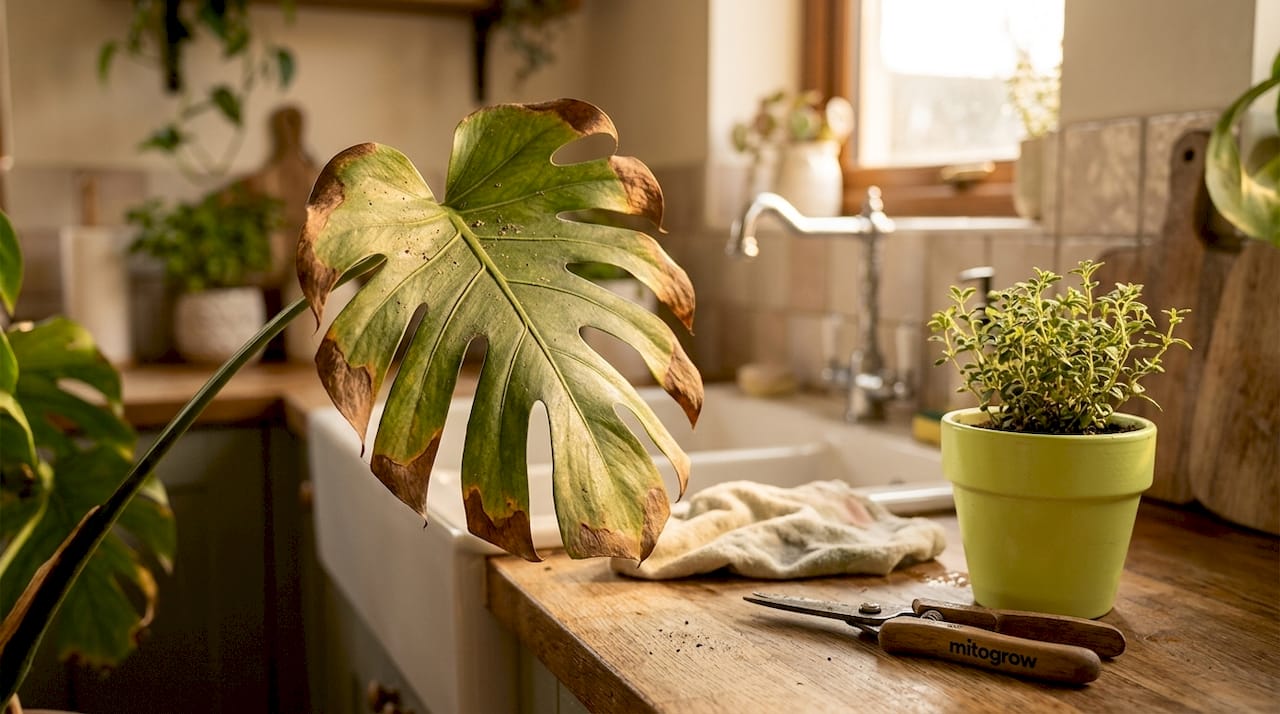
Understanding what causes plant wilting and decline is the first step to fixing it. Most struggling plants are dealing with one or more of these controllable stressors.
- Overwatering and underwatering. Overwatering is more about soggy soil duration than how much you pour. When roots sit in waterlogged soil too long, they suffocate and begin to rot, cutting off the plant’s ability to absorb nutrients. Underwatering causes the opposite, where cells lose turgor pressure and the plant wilts and eventually crisps.
- Light extremes. Too much direct sun scorches leaves and dehydrates the plant faster than roots can compensate. Too little light slows photosynthesis to a crawl, leaving the plant unable to produce enough energy to sustain healthy growth.
- Temperature and environmental shock. A sudden move from a greenhouse to your living room, a cold draft near a window, or placement near a heat vent can trigger rapid decline. Plants experience environmental shock the same way a person stepping from a hot sauna into cold air does. Their systems stall.
- Compacted or depleted soil. Soil that has been in the same pot for years can become hydrophobic (meaning water rolls right off instead of absorbing), nutrient-depleted, and too dense for healthy root growth. This is one of the sneakiest contributors to plant health decline because it happens gradually.
- Pests and disease. Spider mites, fungus gnats, scale insects, and root rot fungus are secondary stressors that often compound problems already created by poor watering or light conditions. They rarely appear on healthy, thriving plants.
The reason sudden environmental changes matter so much is that plants acclimate slowly. When multiple stressors hit at once, the plant’s cellular systems get overwhelmed. Identifying the primary stressor before you act is what separates a successful recovery from a spiral of interventions that make things worse.
Step-by-step plant recovery methods
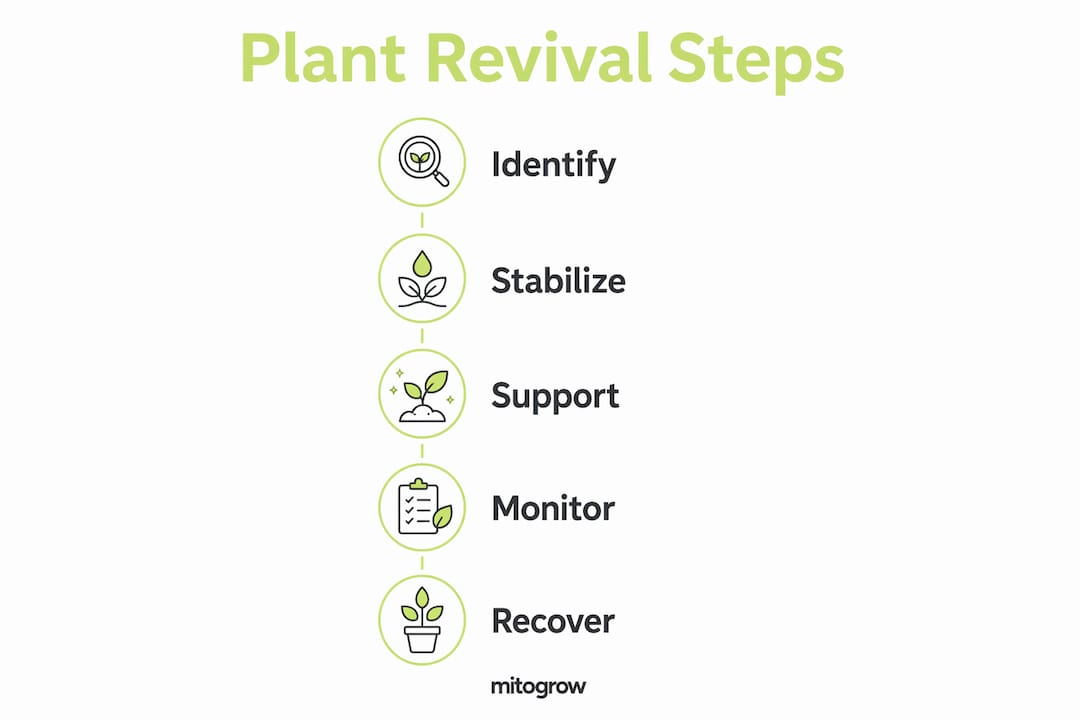
Once you know your plant has living tissue and you have identified the main stressor, you can start working through these plant care techniques in order. Resist the urge to do everything at once. Changing too many variables simultaneously stresses the plant further and makes it impossible to know what actually helped.
- Stabilize the environment first. Move the plant to a location with appropriate indirect light and stable temperature. No drafts, no direct midday sun, no heating vents nearby. Let it sit undisturbed for at least 48 hours before doing anything else.
- Correct your watering approach. If the soil is bone dry and hydrophobic, the standard “water until it drains from the bottom” approach will fail because the water runs straight through without absorbing. Try placing two or three ice cubes on the soil surface instead. Ice cube watering acts as a slow drip, giving dry, crusty soil time to rehydrate properly without overwhelming the root zone. If the soil is already soggy, hold off on watering entirely until the top two inches feel dry.
- Prune only fully dead material. Cut away stems and leaves that are completely brown, brittle, and hollow. Do not touch anything that is partially green or still flexible. Pruning dead tissue redirects the plant’s energy toward the living parts.
- Repot only if the roots are severely compromised. Repotting a stressed plant can add even more shock to an already fragile system. If root rot is present, gently remove the plant, trim away all black or mushy roots with sterile scissors, let the roots air dry for an hour, and repot into fresh well-draining mix. If the roots look okay, leave the plant where it is for now.
- Hold all fertilizer. This is one of the best plant revival tips you will find anywhere, and also one of the most ignored. Fertilizing stressed plants risks chemical burn on already weakened roots. Wait until you see new growth before reintroducing any feeding.
Pro Tip: Label the date you started your revival routine. It keeps you from second-guessing the process when progress feels slow, and it helps you identify what actually worked for next time.
Supplementary care and biostimulants
Once you have stabilized the basics, supplementary care can give your plant a meaningful boost during recovery. These tools work with good care practices, not as a replacement for them.
One surprisingly accessible option is an aspirin solution. Dissolving 3/4 of an aspirin in a gallon of water and using it every two weeks can stimulate your plant’s natural immune response. The active compound, salicylic acid, triggers systemic acquired resistance, which is the plant equivalent of priming your immune system before an illness. It is a gentle, low-cost way to support recovery without risk of harm.
Here is a quick comparison of common supplementary approaches during plant recovery:
| Approach | Best for | Limitations |
|---|---|---|
| Aspirin (salicylic acid) solution | Immune response activation | Does not address root damage or soil issues |
| Neem oil spray | Pest management during recovery | Can clog pores if over-applied |
| Hydrogen peroxide drench | Killing root rot pathogens | Disrupts beneficial soil organisms if overused |
| Biostimulant formula | Cellular energy and nutrient uptake | Works best alongside corrected care conditions |
Biostimulants are a step up from home remedies. Rather than pushing nutrients onto the plant from the outside, they work at the cellular level, supporting the plant’s ability to absorb and use what is already in the soil. They are especially helpful for plants recovering from transplant shock, drought stress, or prolonged neglect because those plants often have compromised uptake systems even when the soil conditions are finally right.
What to expect from the recovery timeline
Set realistic expectations. Most plants show the first real signs of improvement somewhere between two and six weeks, and the timeline varies by species. Herbaceous plants like pothos, peace lilies, and herbs respond faster than woody shrubs like roses or gardenias.
| Recovery stage | What you might see | Timeframe |
|---|---|---|
| Early stabilization | Leaf drop slows, no new decline | Days 1 to 7 |
| First signals | Stems feel slightly firmer, color holds | Weeks 1 to 2 |
| Visible improvement | New buds or tiny leaves emerging | Weeks 2 to 4 |
| Active recovery | New growth expanding, roots firming | Weeks 4 to 6 |
One thing to accept early: brown leaves will not turn green again. Once leaf tissue is dead, it stays that way. The goal is not to restore those leaves but to see new, healthy ones grow in their place. That first tiny unfurling leaf is your signal that the plant is genuinely pulling through.
If after six weeks you see no new growth and the plant still fails the scratch test in any remaining stems, it may be time to consider propagation. Cutting a healthy node and rooting it in water can give the plant a second chance even when the main structure cannot be saved. It is a surprisingly effective backup and one more reason not to give up too soon.
My honest take on what actually works
I’ve seen so many gardeners go into full fix-it mode the moment they notice their plant struggling. New soil, new pot, new fertilizer, a humidity tray, and a grow light all in the same weekend. And then they’re surprised when the plant looks worse a week later.
In my experience, the single most powerful thing you can do is nothing. Or almost nothing. Stabilize the light. Fix the water. Then wait. The urge to intervene aggressively is completely understandable, but plants need stillness during recovery the same way people do after an illness. Every unnecessary intervention costs the plant energy it doesn’t have to spare.
What I’ve learned after years of watching plants recover (and not recover) is that the ones that make it are almost always the ones where the gardener resisted the urge to fertilize, repot, and prune all at once. The approach that actually works is boring. It’s consistent, patient, and quiet. And when that first new leaf finally appears, it’s genuinely one of the most satisfying moments in gardening.
If you’re at the point where you’ve tried all the basics and your plant still isn’t responding, that’s when I’d reach for a biostimulant. Not as a miracle fix. As the thing that helps a struggling plant finally use the good care you’ve already been giving it.
— Brigid
Give your plants an edge with MitoGrow
When corrected care is not quite enough, a science-backed biostimulant can make a real difference. MitoGrow is a naturally derived formula designed specifically for stressed plants, working at the cellular level to boost nutrient uptake by up to 50% and activate the plant’s own stress response. It’s pet-safe, impossible to overdose, and compatible with whatever you’re already using. Whether you’re nursing a nearly-gone houseplant or supporting a garden that’s been through a rough season, MitoGrow is the tool experienced gardeners reach for when other products have run out of answers. Explore the full plant revival support lineup and find the right formula for your plant’s situation.
FAQ
What is plant revival, exactly?
Plant revival, also called stress recovery, is the process of identifying and correcting the conditions causing a plant to decline so it can rebuild healthy growth. It typically takes two to six weeks of consistent, corrected care.
How do I know if my plant can still be revived?
Perform a scratch test on the stem near the base. Green or white tissue under the bark means the plant is still alive and worth trying to save. Also check for firm, light-colored roots.
Should I fertilize a struggling plant to help it recover?
No. Fertilizing a stressed plant risks burning the already weakened roots and making recovery harder. Wait until you see new growth before reintroducing any fertilizer.
How long does plant recovery take?
Most plants show visible improvement within two to four weeks, with full active recovery by weeks four to six. Herbaceous plants respond faster than woody varieties.
What do biostimulants do for plant recovery?
Biostimulants support a plant’s cellular energy and nutrient absorption, helping it actually use the good care conditions you’ve created. They work best as a complement to corrected watering, light, and soil, not as a substitute for those basics.


