What is root health and how to improve it in 2026
Your tomato plants look lush and green above ground, but beneath the soil, their roots might be suffocating. Most gardeners focus exclusively on what they can see: leaves, stems, flowers. Yet root health determines whether plants absorb water efficiently, resist disease, and survive transplanting. When roots fail, no amount of fertilizer or sunlight can save a plant. This guide reveals how to assess root condition, spot warning signs early, and create soil environments where roots thrive, giving you practical strategies to strengthen the foundation of every plant in your garden.
Table of Contents
- Understanding Root Health: What It Means And Why It Matters
- Recognizing Healthy Vs Unhealthy Roots: Key Characteristics
- Common Threats To Root Health And How They Affect Plants
- Practical Ways To Improve And Maintain Root Health In Your Garden
- Understanding Common Root Problems: Exposure, Splitting, And Rot
- Explore Products And Resources To Support Healthy Roots
- How Can I Tell If My Plant Roots Need Attention?
- What Is The Best Watering Practice To Support Root Health?
- Can I Use Root Stimulants Or Mycorrhizae To Fix Unhealthy Roots?
- How Do Soil Conditions Affect Root Health?
Key takeaways
| Point | Details |
|---|---|
| Root health foundation | Healthy roots absorb water and nutrients efficiently, anchor plants securely, and store energy reserves for growth and stress recovery. |
| Visual inspection matters | Firm white or tan roots with dense root hairs signal health, while brown mushy roots with foul odor indicate disease or rot. |
| Soil conditions critical | Compaction, poor drainage, and extreme pH levels suffocate roots faster than overwatering alone, limiting oxygen access. |
| Prevention beats treatment | Deep infrequent watering, proper mulching, and avoiding deep planting prevent most root problems before they start. |
| Early intervention saves plants | Catching root issues through gentle excavation allows corrective action before visible decline appears above ground. |
Understanding root health: what it means and why it matters
Root health refers to the condition of a plant’s root system, encompassing its ability to perform essential functions that keep plants alive and productive. Roots do far more than anchor plants in place. They absorb water, extract nutrients from soil, pull in oxygen for cellular respiration, and store carbohydrates that fuel growth during stressful periods. When any of these functions decline, the entire plant suffers regardless of how much you water or fertilize above ground.
Healthy roots create resilient plants that bounce back from drought, resist pest attacks, and establish quickly after transplanting. Compromised roots lead to yellowing leaves, stunted growth, and eventual plant death even when environmental conditions seem ideal. Understanding root health means recognizing that what happens underground determines what you see above.
Roots perform these critical functions:
- Absorb water and dissolved nutrients through root hairs and transport them to stems and leaves
- Extract oxygen from air pockets in soil for cellular energy production and metabolism
- Anchor plants firmly against wind, rain, and gravitational forces
- Store carbohydrates and nutrients as reserves during dormancy or stress periods
- Produce hormones that regulate shoot growth and flowering timing
When roots operate at full capacity, plants grow vigorously and handle environmental stresses with minimal visible damage. Weak or diseased roots create bottlenecks that no amount of above ground care can overcome. Gardeners who prioritize root health from planting through maintenance see dramatically better results than those who focus solely on visible plant parts.
Recognizing healthy vs unhealthy roots: key characteristics
Healthy roots are firm, white to light tan, with dense root hairs covering their surfaces. They feel slightly moist but never slimy, and they smell earthy and fresh when you gently excavate around them. These roots branch extensively, creating a fibrous network that maximizes soil contact for efficient absorption. When you tug gently on a healthy plant, resistance indicates strong root anchorage.
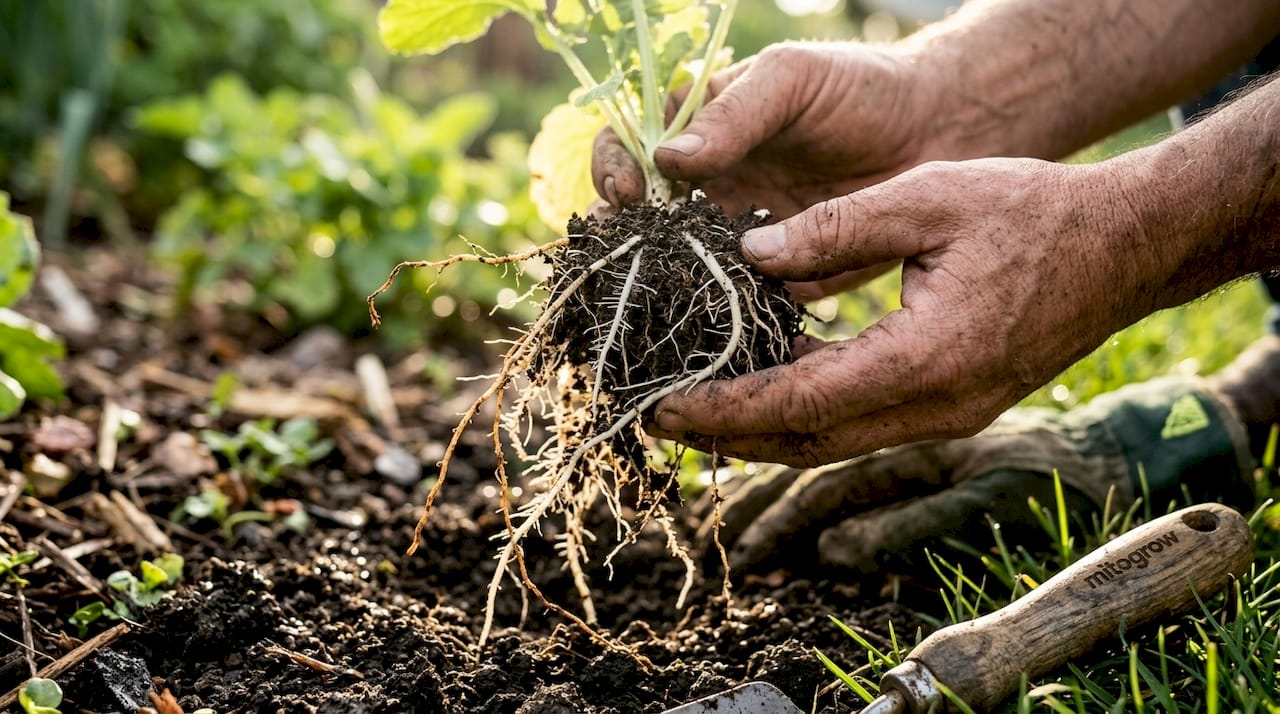
Unhealthy roots tell a different story through distinct warning signs. Brown or black coloration signals tissue death or fungal infection. Mushy texture means cell walls have broken down from rot or waterlogging. A foul sulfur smell indicates anaerobic decomposition from oxygen starved soil. Sparse root hairs or smooth root surfaces suggest nutrient deficiency or pathogen damage that prevents normal root hair development.
Early inspection catches problems before they become visible above ground. Gently dig 2 to 3 inches away from the stem base, removing soil carefully to expose lateral roots without breaking them. Spring and fall offer ideal inspection windows when soil moisture and temperature make digging easier. Use a hand trowel or your fingers rather than sharp tools that might slice roots accidentally.
Key indicators of root condition:
- Color: White, cream, or light tan indicates health; brown, black, or gray signals disease or death
- Texture: Firm and slightly flexible means living tissue; soft, mushy, or brittle indicates rot or desiccation
- Smell: Earthy and fresh signals healthy soil biology; rotten or sulfurous odor means anaerobic conditions
- Branching: Dense lateral roots and abundant root hairs show vigorous growth; sparse roots indicate stress
- Root tips: White or light colored growing tips demonstrate active expansion; dark tips suggest stalled growth
Pro Tip: Inspect roots in early morning when soil moisture makes excavation easier and roots are most turgid, reducing accidental breakage during examination.
Common threats to root health and how they affect plants
Key threats to root health include soil compaction, poor aeration, overwatering, inadequate drainage, and extreme pH levels. Each threat disrupts different root functions, but oxygen deprivation emerges as the most immediate danger. Roots need oxygen for cellular respiration just like leaves do, and compacted or waterlogged soil cuts off this oxygen supply within hours.
Soil compaction from foot traffic or heavy equipment crushes air pockets between soil particles, reducing pore space where oxygen normally resides. Roots in compacted soil grow horizontally along the surface rather than penetrating deeply, making plants vulnerable to drought and wind damage. Poor drainage creates similar problems by filling pore spaces with water instead of air, essentially drowning roots even when soil appears only moderately wet.
Extreme soil pH, whether above 7.0 or below 5.5, locks up essential nutrients in chemical forms roots cannot absorb. Iron, manganese, and phosphorus become unavailable at high pH, while aluminum toxicity damages root tips at low pH. Salinity from over fertilization or poor quality water burns root tissues through osmotic stress, pulling moisture out of cells.
Biological threats compound these physical and chemical stressors:
- Root feeding nematodes pierce root cells and inject enzymes that cause galling and stunted growth
- Fungal pathogens like Phytophthora and Pythium invade waterlogged roots and spread rapidly through diseased tissue
- Root weevil larvae chew root bark and cambium, girdling small roots and reducing absorption capacity
- Bacterial soft rots enter through wounds and dissolve root tissues in anaerobic conditions
“Roots suffocate faster than they drown. Soil aeration and drainage matter more than watering frequency for root survival. Even brief periods of oxygen deprivation can trigger irreversible root damage that takes weeks to manifest above ground.”
Mechanical damage from transplanting, tilling, or construction activity tears roots and creates entry points for pathogens. Unlike above ground wounds that seal quickly, root wounds heal slowly in dark, moist soil environments where fungal spores thrive. Each threat multiplies others: compaction increases waterlogging risk, waterlogging enables fungal infection, and infection weakens roots against mechanical stress.
Practical ways to improve and maintain root health in your garden
Practical methods to improve root health start with soil preparation before planting. Mix 2 to 4 inches of compost or aged organic matter into the top 8 to 12 inches of soil to improve structure, drainage, and microbial activity. This creates the aerated environment roots need while providing slow release nutrients that support steady growth without chemical burn risk.
Watering technique matters more than watering frequency. Deep, infrequent watering encourages roots to grow downward seeking moisture, creating drought resistant plants with extensive root systems. Apply water slowly until it penetrates 6 to 8 inches deep, then wait until the top 2 inches dry before watering again. This cycle mimics natural rainfall patterns and prevents the shallow root development that comes from frequent light watering.
Mulch application provides multiple root health benefits when done correctly. A 2 to 3 inch layer of organic mulch moderates soil temperature, retains moisture, suppresses weeds, and feeds beneficial soil organisms as it decomposes. Never exceed 6 inches of mulch depth or pile mulch against plant stems, as excessive mulch creates anaerobic conditions and invites rot.
|
Soil pH Range |
Root Performance | Nutrient Availability | Recommended Action |
|---|---|---|---|
| Below 5.5 | Poor, aluminum toxicity | Iron and manganese excess, phosphorus locked | Add lime to raise pH gradually |
| 5.8 to 6.5 | Optimal for most plants | Maximum nutrient availability | Maintain with compost additions |
| 6.6 to 7.0 | Good for many species | Slight iron and manganese reduction | Monitor and adjust if symptoms appear |
| Above 7.0 | Declining, micronutrient deficiency | Iron, manganese, phosphorus unavailable | Add sulfur or acidic amendments |
Root stimulants and mycorrhizal inoculants offer benefits in specific situations. Mycorrhizae form symbiotic relationships with roots, extending their effective reach and improving phosphorus uptake in exchange for plant carbohydrates. These work best in low fertility soils or with newly transplanted specimens. Chemical root stimulants containing auxins promote lateral root development but provide minimal benefit in healthy, well prepared soil where roots grow vigorously without intervention.
Seasonal root health checklist:
- Test soil pH and adjust to optimal range for your plants before spring growth begins
- Apply compost or organic matter in early spring to feed soil biology as temperatures warm
- Mulch after soil warms in late spring to conserve moisture through summer heat
- Water deeply and infrequently during growing season, adjusting for rainfall and temperature
- Avoid foot traffic and equipment use in garden beds to prevent compaction
- Inspect roots of struggling plants in fall to diagnose problems before winter dormancy
- Protect root zones from freeze thaw cycles with winter mulch in cold climates
Pro Tip: Surface roots growing above ground indicate compacted soil or high water tables, not shallow planting. Improve soil aeration through core aeration or vertical mulching rather than covering exposed roots with soil, which suffocates them further and creates decay.
Understanding common root problems: exposure, splitting, and rot
Exposed surface roots indicate compaction or high water tables forcing roots to grow horizontally near the surface where oxygen remains available. Gardeners instinctively want to cover these roots with soil, but this approach suffocates them and accelerates decline. Instead, apply 1 to 2 inches of mulch over exposed roots to protect them from temperature extremes and physical damage while maintaining air circulation.
Root splitting in vegetables, particularly carrots, beets, and radishes, results from irregular watering that causes rapid cell expansion after drought stress. When soil dries excessively, root growth slows and cell walls harden. Sudden heavy watering or rain causes rapid water uptake that splits these hardened tissues. Consistent moisture through drip irrigation or regular hand watering prevents this problem more effectively than any post split treatment.
Black root rot complex affects stressed plants in replanted fields or containers where pathogen populations build up over successive growing seasons. This syndrome combines multiple fungal species that attack roots weakened by transplant stress, temperature extremes, or nutrient imbalances. Crop rotation, soil solarization, and allowing fallow periods break disease cycles more reliably than fungicide applications.
Root girdling occurs when plants are installed too deeply, causing stems to develop roots that circle back and constrict the main root system. Trees and shrubs planted with their root flare buried below grade commonly develop this problem 5 to 10 years after installation. Excavate around the base to expose the root flare and remove any circling roots before they girdle the trunk.
| Problem | Primary Symptoms | Main Causes | Effective Remedies |
|---|---|---|---|
| Exposed roots | Roots visible above soil surface | Soil compaction, high water table, shallow soil | Apply mulch, improve drainage, avoid covering with soil |
| Root splitting | Vertical cracks in root vegetables | Irregular watering, drought followed by heavy rain | Maintain consistent soil moisture, use drip irrigation |
| Black root rot | Dark roots, stunted growth, yellowing | Pathogen buildup, replanting stress, poor drainage | Rotate crops, improve soil structure, allow fallow periods |
| Root girdling | Circling roots, slow decline, stem constriction | Planting too deep, container bound roots | Expose root flare, remove circling roots, plant at proper depth |
Best practices to prevent common root problems:
- Plant at proper depth with root flare visible at soil surface
- Maintain consistent soil moisture through growing season
- Improve drainage in areas where water stands after rain
- Rotate annual crops to prevent pathogen buildup
- Inspect container plants for circling roots before transplanting
- Avoid soil compaction by keeping foot traffic off planting beds
- Test and adjust soil pH annually in vegetable gardens
- Apply balanced organic fertilizer rather than high nitrogen synthetic products that promote rapid soft growth
Explore products and resources to support healthy roots
Strong roots create resilient plants that thrive through stress and recover quickly from setbacks. The strategies outlined here work even better when combined with biostimulants that enhance root function at the cellular level. mitogrow products support root development by activating internal stress responses that boost nutrient uptake and improve survivability during transplanting, drought, or disease pressure. Unlike traditional fertilizers that simply add nutrients, these formulations help roots work smarter, making better use of what’s already available in your soil. Whether you’re establishing new plantings, maintaining mature gardens, or reviving struggling specimens, the right combination of cultural practices and targeted support gives your plants the root foundation they need to flourish.
How can I tell if my plant roots need attention?
Look for above ground symptoms like yellowing leaves that aren’t caused by pests, wilting despite adequate watering, or stunted growth during the growing season. Gently excavate 2 to 3 inches away from the stem to expose lateral roots without damaging them. Discolored, mushy, or foul smelling roots indicate problems requiring immediate intervention, while firm white roots signal healthy function.
What is the best watering practice to support root health?
Deep, infrequent watering encourages roots to grow downward 6 to 8 inches, creating drought resistant plants with extensive root systems. Apply water slowly until it penetrates deeply, then allow the top 2 inches of soil to dry before watering again. Frequent shallow watering keeps roots near the surface where they’re vulnerable to heat stress and mechanical damage.
Can I use root stimulants or mycorrhizae to fix unhealthy roots?
Mycorrhizal inoculants benefit newly transplanted plants or those growing in poor soil by extending effective root reach and improving phosphorus uptake. However, these products work best as preventive measures in healthy plants rather than treatments for diseased roots. Cultural practices like improving drainage and soil structure should always come first, as chemical treatments rarely reverse established infections.
How do soil conditions affect root health?
Poor drainage and compaction eliminate air pockets between soil particles, suffocating roots by cutting off oxygen supply needed for cellular respiration. Extreme pH levels above 7.0 or below 5.5 lock up essential nutrients in forms roots cannot absorb, causing deficiency symptoms even in fertile soil. Correcting these physical and chemical problems creates the foundation for healthy root development that no amount of fertilizer can substitute.