


Why Cell-Level Plant Care Matters for Healthier Plants
Cell-level plant care is the practice of nurturing the biological processes inside individual plant cells to build stronger, more resilient plants from the inside out. Most gardeners focus on what they can see: yellowing leaves, drooping stems, dry soil. But why cell-level plant care matters goes much deeper than surface symptoms. The real story of plant health plays out at the microscopic level, where enzymes fire, cell walls flex, and energy gets rationed in real time. Understanding cellular plant health is what separates plants that merely survive from leafy friends that genuinely thrive.
Why cell-level plant care matters for plant survival
Plants do not wait for visible damage before responding to stress. Stress responses start immediately by modulating enzyme activity inside individual cells, allowing plants to react fast without waiting for gene expression changes. That speed is remarkable. It means your plant is already working hard on a cellular level long before you notice anything is wrong.
University of California researchers identified a two-phase cellular strategy that explains a lot about why plants behave the way they do under pressure:
- Phase one: Enzyme activity shifts almost instantly, pausing the production of growth compounds to protect the plant from further damage.
- Phase two: Over a longer period, the plant reduces overall growth to redirect energy toward survival and repair.
This is why a plant that looks “fine” one week can look stressed the next. The cellular response was already underway. Reactive oxygen species interfere with enzyme function during stress, slowing growth pathways and triggering survival strategies. If those key enzymes fail entirely, the plant cannot recover.
Pro Tip: If your plant suddenly stops putting out new growth during a heat wave or after repotting, that is not failure. That is cellular triage. Give it consistent water and nutrition, and let the recovery phase run its course.
Supporting enzyme function is one of the most direct ways to improve how your plant bounces back. Products and practices that work at the cellular level give those enzymes the environment they need to do their job.
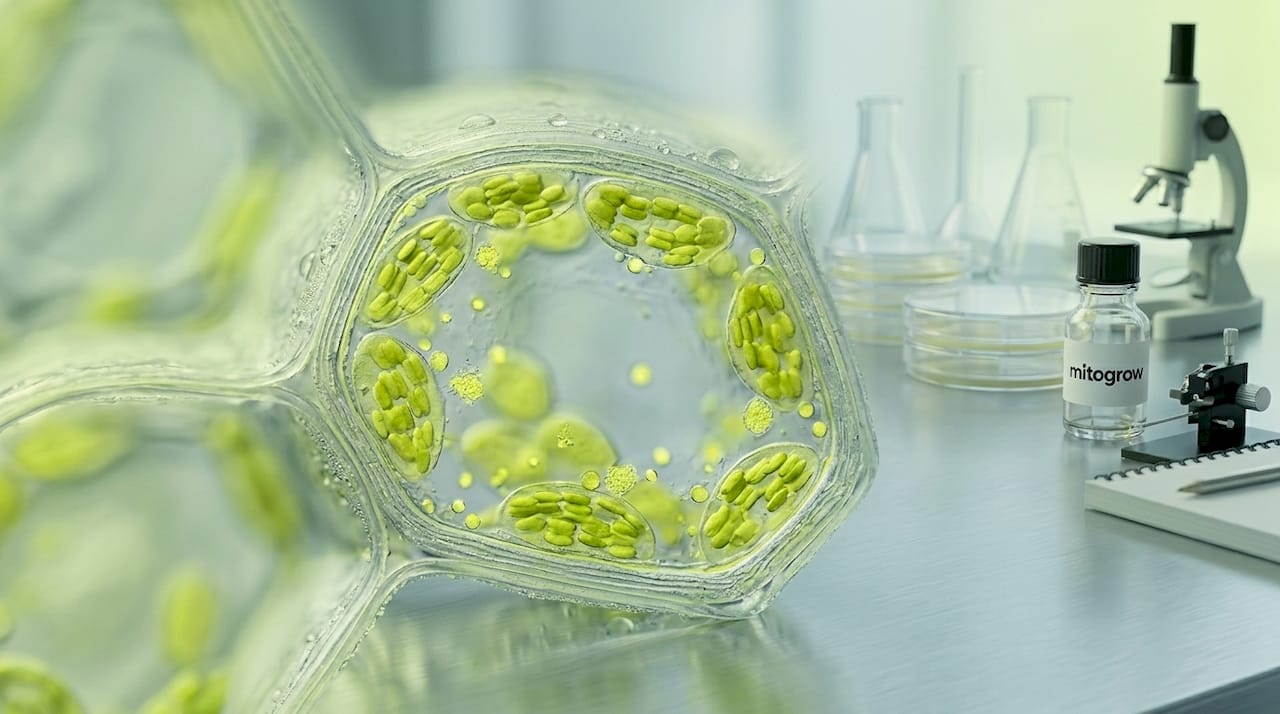
How plant cell walls balance growth and defense
The cell wall is not a passive shell. Plant cell walls are dynamic, loosening for expansion during growth but maintaining strength to prevent collapse, and constantly interacting with neighboring cells to balance speed and stability. Think of it like a building that can expand its footprint while simultaneously reinforcing its foundation.
Umeå University research confirms that cell walls act as signaling interfaces, where chemical and mechanical changes guide growth coordination across entire tissues. This is not just structural support. The cell wall is actively communicating, sending signals that influence whether nearby cells grow, harden, or prepare for attack.
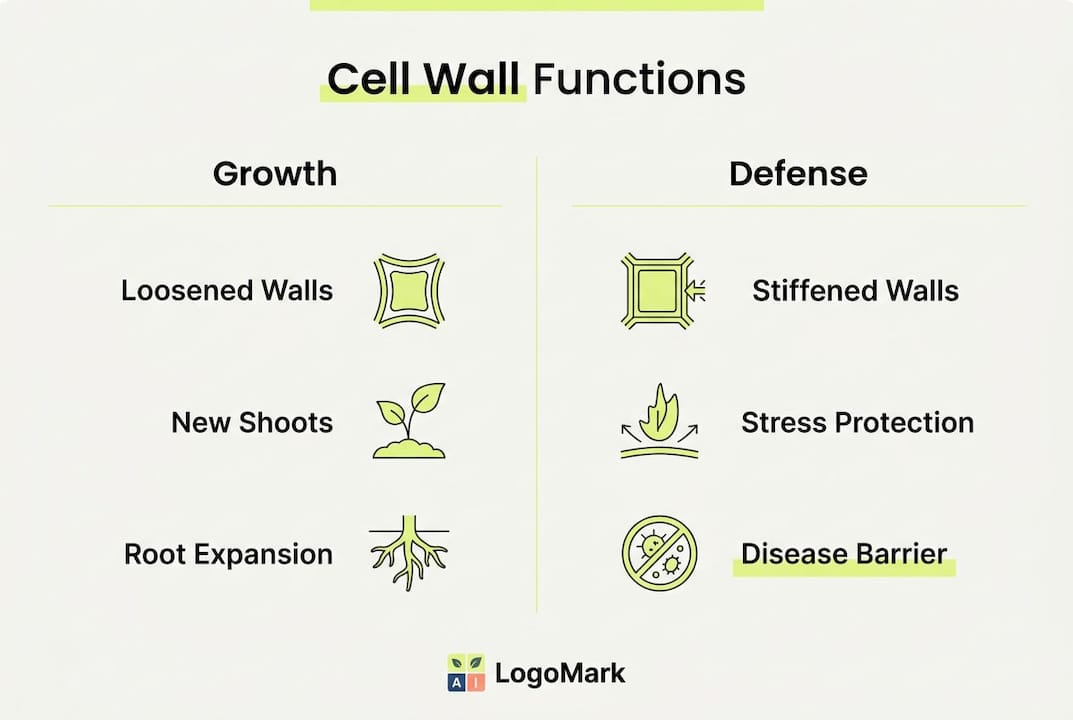
| Cell wall state | What it means for your plant |
|---|---|
| Loosened for growth | New shoots, roots, and leaves can expand freely |
| Stiffened for defense | Plant resists physical damage, pests, and disease |
| Remodeling under stress | Wall chemistry shifts to protect structural integrity |
| Signaling to neighbors | Coordinates growth decisions across the whole tissue |
When cell-wall chemistry is disrupted by chronic underwatering, poor nutrition, or repeated physical stress, the plant loses its ability to coordinate these signals effectively. The result shows up as brittle stems, stunted growth, or leaves that tear easily.
Pro Tip: Consistent, moderate watering matters more than occasional deep soaks for cell-wall health. Irregular hydration causes the wall to cycle between over-expansion and contraction, weakening its structural chemistry over time.
How plants manage energy at the cellular level under stress
When stress hits hard, plant cells do something counterintuitive: they deliberately slow down their own energy production. Under stress, plant cells repress photosynthesis and activate protein breakdown regulators called NAC53 and NAC78 to maintain cellular stability and manage damaged proteins. This coordinated regulation links the nucleus and the chloroplasts, allowing the plant to conserve resources rather than waste them on processes it cannot sustain.
Ruhr University Bochum researchers found that this energy rebalancing is not random. It is a precise, regulated response that prioritizes cellular survival over visible growth. That is why a stressed plant often looks pale or stops flowering. It is not dying. It is conserving.
For home gardeners, this has a direct implication:
- Avoid pushing heavy fertilizer onto a visibly stressed plant. The cells are already in conservation mode, and flooding them with nutrients they cannot process adds to the burden.
- Maintain balanced hydration so chloroplasts can resume normal photosynthesis once the stress passes.
- Give stressed plants time. The NAC53/NAC78 regulatory cycle needs to complete before the plant can return to active growth.
Understanding this energy management system reframes what “recovery” actually looks like. A plant that is not growing is not necessarily failing. It may be doing exactly what its cells are designed to do.
What single-cell science reveals about targeted plant care
Not all plant cells respond to stress the same way, and that distinction changes everything about how we think about plant care at the cellular level. Single-cell studies highlight heterogeneity even within leaf mesophyll subpopulations, allowing localized immune activation to optimize energy use. In plain terms: some cells in a single leaf are running defense programs while neighboring cells are still focused on growth.
Here is why that matters for you as a gardener:
- Tissue-level averages mislead. When you look at a leaf and see “stress,” you are seeing the average of thousands of different cellular conversations happening at once.
- Localized immunity is efficient. Plants can activate defense in specific cells without shutting down the whole plant, but only if those cells have the resources to do so.
- Broad treatments have limits. Single-cell genomic atlases combined with AI are now enabling precision crop improvement by selectively activating defense or growth programs in specific cell types. Home gardeners cannot replicate that precision, but they can stop undermining it.
- Targeted care reduces whole-plant stress. When you support the conditions that allow individual cells to do their jobs, the whole plant benefits without the energy cost of a system-wide stress response.
This is the core argument for the importance of cell-level care: you do not need to understand every molecular pathway to benefit from thinking at the cellular scale.
Practical ways to support cellular plant health at home
Translating cellular biology into everyday gardening does not require a lab coat. The benefits of plant cell care come from consistent, thoughtful habits that create the right environment for cells to function well.
- Water consistently, not dramatically. Irregular watering disrupts enzyme activity and cell-wall stability. Aim for steady soil moisture rather than cycles of drought and flood.
- Feed lightly and regularly. Cells absorb nutrients through active transport processes that work best under stable conditions. Sporadic heavy feeding overwhelms those systems.
- Protect from chronic mild stress. Repeated poor cell-level conditions can cause refractory behavior, reducing the plant’s responsiveness unless recovery periods occur. A plant that is always slightly stressed never fully resets.
- Allow recovery windows. After repotting, pruning, or a weather event, hold back on fertilizer for one to two weeks. Let the cellular stress response complete before adding new demands.
- Match light to the plant’s actual needs. Too little light suppresses photosynthesis and starves cells of energy. Too much triggers oxidative stress that interferes with enzyme function.
Pro Tip: Watch for subtle early signs of cellular stress: slightly curled leaf edges, a dull rather than glossy leaf surface, or new growth that emerges smaller than usual. These signals appear before dramatic wilting and give you time to adjust care before the plant enters deep survival mode.
Defense priming and stress memory at the cellular level mean that how you care for your plant today shapes how it responds to stress next month. Good cellular habits compound over time, building a plant that is genuinely more resilient, not just temporarily recovered.
Key takeaways
Cell-level plant care is the foundation of real plant resilience because enzyme function, cell-wall integrity, and energy management all operate at the cellular scale before any visible symptom appears.
| Point | Details |
|---|---|
| Enzymes respond first | Cellular enzyme activity shifts within minutes of stress, long before visible symptoms appear. |
| Cell walls communicate | Dynamic cell-wall remodeling sends growth and defense signals across entire plant tissues. |
| Energy conservation is intentional | NAC53/NAC78 regulators deliberately suppress photosynthesis to protect cells during stress. |
| Cells are not uniform | Different cell subpopulations run distinct programs simultaneously, making targeted care more effective than blanket treatments. |
| Chronic stress compounds | Repeated mild stress creates cellular refractory periods that reduce long-term plant responsiveness and resilience. |
The case for thinking smaller in your garden
I have spent years watching gardeners do everything right on the surface and still lose plants they loved. The watering schedule was consistent. The fertilizer was premium. The light was perfect. And yet something was off. What I kept coming back to was this: most plant care advice is written for the plant you can see, not the plant that actually exists at the cellular level.
The science has caught up to what observant gardeners have always sensed. When UC Riverside researchers mapped how quickly enzyme activity shifts during stress, or when Ruhr University Bochum identified the NAC53/NAC78 energy regulation system, they were confirming something practical: plants are not passive recipients of care. They are active, responsive systems running complex programs inside every single cell.
What changed my perspective was understanding cellular refractory periods. A plant that has been chronically mildly stressed does not just look tired. It has literally reduced its capacity to respond to future stress. That is not a metaphor. That is a measurable cellular state. Once I understood that, I stopped thinking about plant care as a series of interventions and started thinking about it as building an environment where cells can do their jobs without interruption.
The future of home gardening is not more products or more complicated schedules. It is a deeper understanding of what is happening inside the plant, and the humility to let that biology lead.
— Brigid
How MitoGrow supports your plants at the cellular level
If this article has you thinking about what is actually happening inside your leafy friends, MitoGrow was built for exactly that moment. MitoGrow is a patented biostimulant that works from within, supporting cellular energy production so your plants can make better use of the water, light, and nutrients they already have. It activates the plant’s internal stress response, supports enzyme function, and helps cells maintain the balance between growth and defense that this article describes. The formula is pet-safe, compatible with any fertilizer, and impossible to overdose, making it a genuinely low-risk addition to any care routine. Explore MitoGrow’s plant care solutions and see what cellular-focused care looks like in practice.
FAQ
What is cell-level plant care?
Cell-level plant care is the practice of supporting the biological processes inside individual plant cells, including enzyme activity, energy management, and cell-wall integrity, to build stronger and more resilient plants overall.
Why do plant cells stop growing during stress?
Plants pause growth during stress by modulating enzyme activity to redirect energy toward survival. This two-phase response protects the plant from further damage before longer-term adaptation begins.
Can chronic mild stress permanently damage my plant?
Repeated mild stress creates cellular refractory periods that reduce a plant’s responsiveness to future stress. Allowing genuine recovery windows between stressful events helps reset the plant’s cellular defense capacity.
How do plant cell walls affect resilience?
Plant cell walls actively remodel in response to stress, stiffening for protection and loosening for growth. When cell-wall chemistry is disrupted by inconsistent care, the plant loses its ability to coordinate growth and defense signals across tissues.
How does cellular energy management affect what I see on my plant?
When cells activate NAC53/NAC78 regulators to conserve energy, photosynthesis is suppressed and visible growth slows or stops. This is a normal, protective cellular response, not a sign that the plant is beyond saving.


