


Your Gardening Troubleshooting Guide for Thriving Plants
TL;DR:
- Proper diagnosis and preventative care are crucial for successful gardening, as overwatering and environmental stress often cause plant problems.
- Consistently observing, testing soil moisture, and maintaining good garden hygiene prevent pests and diseases more effectively than reactive treatments.
You pour time, love, and care into your garden, and then something goes wrong. A leaf yellows. Buds drop before they open. A plant that was thriving last week looks like it might not survive the weekend. If that scenario feels familiar, you are not alone. A gardening advice service fielded over 121,000 inquiries in 2025 about pruning, pests, and diseases alone. This gardening troubleshooting guide cuts through the confusion and gives you a clear path from “something is wrong” to “my plants are thriving again.”
Table of Contents
- Key takeaways
- Getting ready to troubleshoot your garden
- Diagnosing common nutrient deficiencies
- Watering smarter, not more
- Handling garden pests and diseases
- Fixing environmental and planting problems
- My honest take on troubleshooting mistakes
- Give your plants a stronger foundation
- FAQ
Key takeaways
| Point | Details |
|---|---|
| Observe before you treat | Diagnose symptoms carefully before reaching for fertilizer or pesticides to avoid making things worse. |
| Watering depth matters | Deep, infrequent watering builds stronger roots than shallow daily watering. |
| Yellow leaves mislead | Yellowing can signal overwatering, not always a nutrient deficiency, so test soil moisture first. |
| Prevention beats reaction | Simple hygiene habits and consistent care prevent most common pest and disease problems. |
| Environmental fit is non-negotiable | Matching your plant to its light, climate, and soil conditions prevents the majority of stress-related setbacks. |
Getting ready to troubleshoot your garden
Before you can fix what is wrong, you need the right tools and a basic understanding of what your plants actually need. Think of this as setting the stage. Good troubleshooting is not guesswork. It is methodical, calm, and grounded in observation.
Tools and materials worth having on hand
- A soil pH test kit or digital meter
- A moisture meter (or your finger for a free version)
- A magnifying glass for spotting tiny pests
- Neem oil, insecticidal soap, and organic fungicide
- A notebook or phone app to log symptoms and dates
- Clean pruning shears (sterilized between cuts)
Pro Tip: Keep a simple plant journal. Even a notes app on your phone works. Recording when symptoms appear, what changed recently (new fertilizer, rain, repotting), and what treatment you tried will save you weeks of guessing.
Early diagnosis of whether a problem is nutritional, environmental, or pest-related is the most critical factor in successful plant recovery. The sooner you correctly name the problem, the more options you have.
What your plants need at baseline
Every plant, from a tomato in a pot to a rose bed in full sun, needs four things in balance: water, nutrients, light, and suitable soil. When any one of those falls out of balance, the plant signals distress. Your job as the gardener is to figure out which one is off, not assume it is all four at once.
| Basic need | What “off balance” looks like |
|---|---|
| Water | Wilting, yellowing, root rot, or crispy leaf edges |
| Nutrients | Pale leaves, stunted growth, dark or purple discoloration |
| Light | Leggy growth reaching toward windows, or bleached, scorched leaves |
| Soil health | Compaction, poor drainage, or extreme pH affecting nutrient access |
Diagnosing common nutrient deficiencies
Nutrient problems are among the most misread common gardening issues. Not every yellow leaf means your plant is hungry. In fact, yellow leaves from overwatering are far more common than yellow leaves from nutrient deficiency. Testing soil moisture before assuming your plant needs feeding will save you from compounding the problem.
How to work through a deficiency diagnosis
- Check soil moisture first. Press a finger two inches into the soil. If it is wet or soggy, overwatering or drainage is likely your culprit.
- Test soil pH. Most nutrients become unavailable to plants when pH is outside the 6.0 to 7.0 range, even if those nutrients are physically present in the soil.
- Match your symptoms to specific nutrients. Yellowing between leaf veins on older leaves often points to magnesium deficiency. Yellowing on newer leaves with green veins suggests iron deficiency. Stunted, purplish growth often indicates phosphorus issues.
- Adjust gently. Apply a balanced fertilizer, adjust pH with lime or sulfur, and wait two weeks before reassessing. Patience here is not optional; it is the strategy.
- Avoid stacking treatments. Over-fertilizing triggers nutrient lockout, a condition where excess salts in the soil actually block uptake of nutrients that are already there.
Key nutrients and what they do:
- Nitrogen (N): Drives leafy, green growth. Deficiency shows as pale or yellowing lower leaves.
- Phosphorus (P): Supports root development and flowering. Deficiency shows as purplish leaf undersides.
- Potassium (K): Regulates water movement and disease resistance. Deficiency causes browning leaf edges.
- Magnesium (Mg): Central to chlorophyll production. Deficiency causes interveinal yellowing on mature leaves.
- Iron (Fe): Supports chlorophyll synthesis in new tissue. Deficiency causes yellowing on young leaves with dark veins.
Pro Tip: A soil test from your local extension service costs around $15 to $20 and removes all the guesswork. It tells you exactly what is present, what is missing, and what your pH is. Do it once at the start of the season and you will have a clear road map.
Watering smarter, not more
Water is where most home gardeners go wrong, and it goes wrong in both directions. Too little and roots dry out. Too much and roots suffocate, creating the perfect conditions for fungal disease and rot.
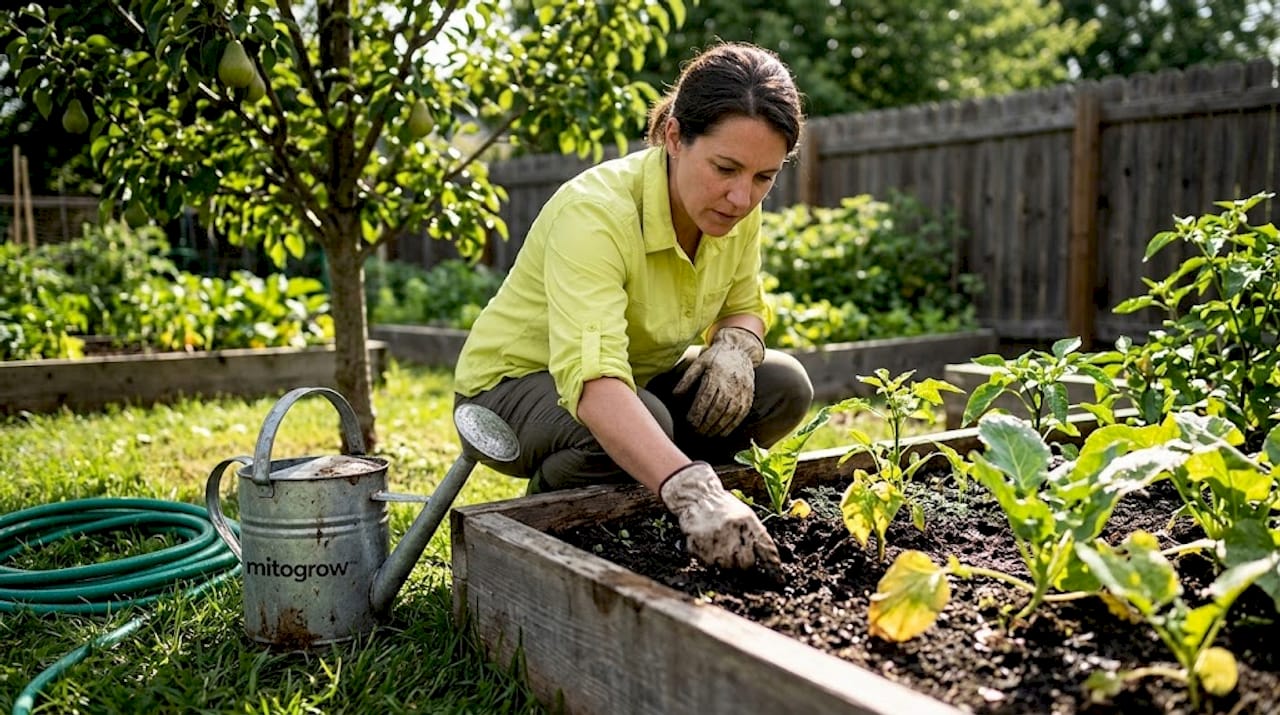
The science on this is clear. Roses and vegetables need one to two inches of water per week, delivered through deep, infrequent sessions two to three times a week rather than daily shallow sprinkles. Deep watering trains roots to grow downward, where soil stays cooler and moisture lingers longer. Daily light watering keeps roots near the surface, where they are vulnerable to heat and drought.
What to change right now
- Water at the base of the plant, not overhead. Overhead watering spreads fungal diseases like powdery mildew and black spot by keeping foliage wet for extended periods.
- Water in the morning so any splash on leaves dries before evening.
- Use drip irrigation or soaker hoses to deliver water directly to the root zone with minimal evaporation.
- Check soil moisture before every watering. Push a finger two inches deep. If it still feels damp, wait another day.
Consistent moisture, not just adequate moisture, is what your plants actually need. Tomatoes, for example, are highly sensitive to uneven watering. Blossom-end rot is primarily caused by inconsistent moisture disrupting calcium uptake, not simply by calcium deficiency. Fixing your watering schedule is more effective than adding calcium spray.
Pro Tip: Before working your soil after rain, do the squeeze test. Grab a handful of soil and squeeze it. If water runs out or it holds a tight clump that does not crumble, the soil is too wet to work. Walking or digging in wet soil compacts it and damages drainage for weeks.
Handling garden pests and diseases
Pests and diseases are the garden problem solutions most gardeners search for after something has already gone wrong. The better strategy is to catch them early, because stressed plants are significantly more attractive to pests than healthy ones. Think of a plant under drought stress or nutrient stress as sending out a signal that attracts trouble.
Common signs to watch for
- Aphids: Clusters of tiny green, black, or white insects on new growth; sticky honeydew residue on leaves below.
- Hornworms: Large green caterpillars that blend into tomato foliage; look for stripped stems and dark droppings.
- Powdery mildew: White, chalky coating on leaf surfaces, especially in warm days and cool nights.
- Black spot: Dark circular spots on rose leaves followed by yellowing and leaf drop; spreads through water splash.
- Root rot: Wilting despite wet soil; roots appear brown and mushy rather than white and firm.
For garden pest control tips that actually work without reaching for harsh chemicals, start here:
- Remove affected leaves or stems immediately and dispose of them away from the garden. Do not compost diseased material.
- Spray aphid colonies with a strong stream of water to knock them off, then follow with diluted insecticidal soap.
- For fungal diseases, apply neem oil or a copper-based fungicide early in the morning to dry foliage.
- For root rot, cut away dead roots, dust the clean cuts with cinnamon (a natural antifungal), and withhold water for five to seven days to allow healing before resuming a careful watering schedule.
- Introduce beneficial insects like ladybugs or lacewings to manage aphid populations organically over time.
Simple preventive actions like clearing fallen debris, improving drainage, and keeping foliage dry eliminate the majority of common plant ailments before they start. A tidy garden is a healthy garden.
Fixing environmental and planting problems
Some of the most persistent gardening setbacks have nothing to do with pests or nutrients. They come from the planting conditions themselves: the wrong depth, compacted soil, poor drainage, or a plant placed in light conditions it was never designed to handle.
Signs your plant is dealing with environmental stress:
- Wilting despite adequate watering
- Leaves curling inward or developing crispy edges
- Poor flowering or fruit set despite healthy foliage
- Roots circling the pot or growing above the soil surface
- Stunted growth that does not respond to fertilizing
Planting depth matters more than most people realize. Tomatoes, for example, need soil temperatures above 60°F before transplanting. Planting too early in cold soil causes blossom drop and can cost you the entire season’s harvest. That is not a pest problem or a nutrient problem. It is a timing and environment problem.
Common environmental fixes
| Problem | Symptom | Fix |
|---|---|---|
| Soil compaction | Poor drainage, stunted roots | Aerate soil, add organic matter |
| Improper planting depth | Unstable plant, root exposure | Replant at correct depth with soil amendment |
| Wrong light conditions | Leggy or scorched growth | Relocate plant or adjust sun exposure gradually |
| Poor drainage | Soggy roots, persistent wilting | Raise planting beds, add perlite or coarse sand |
| Cold soil at transplant | Blossom drop, no fruit set | Wait until soil temps reach appropriate threshold |
Soil compaction is one of the quieter threats in a home garden. It reduces oxygen in the root zone, slows water movement, and creates conditions where disease can spread more easily. Loosening compacted soil with a garden fork and working in compost or aged bark can transform plant performance within a single season.
My honest take on troubleshooting mistakes
I have spent years watching gardeners, including myself early on, make the same reactive mistake. The moment a leaf yellows or a plant droops, we reach for the fertilizer bag or the spray bottle. It feels productive. It rarely is.
What I have learned is that patience and observation are more powerful than any product. Sitting with a struggling plant, really looking at it, checking the roots, testing the moisture, examining the leaf patterns before treating anything, saves more plants than any quick fix. Most of the time, the problem is simpler than we think. It is too much water, or not enough sun, or soil that has gone compacted and airless over the winter.
I have also noticed that gardeners who keep even a basic log of what they planted, when they watered, and what they applied consistently outperform those who rely on memory alone. Patterns become obvious. You start to see that the basil always struggles in July when you forget to water deeply, or that the roses get black spot every year after a stretch of humid evenings.
The most useful mindset shift I can offer: stop treating your garden like a series of emergencies and start treating it like an ongoing relationship. Prevention will always beat reaction. And when things do go wrong, slow down, diagnose carefully, and give your plants the space to respond before deciding they need more intervention.
— Brigid
Give your plants a stronger foundation
If you have worked through this plant care troubleshooting process and your plants are still struggling, the issue might not be what you are doing but what your plants are able to absorb. MitoGrow is a naturally derived biostimulant that works at the cellular level, helping plants actually use the nutrients already in their soil rather than just pushing more inputs onto them. It is pet-safe, compatible with any fertilizer you are already using, and impossible to overdose, making it a genuinely low-risk addition to your landscape maintenance routine.
Whether you are nursing a struggling rose bed, reviving a container planting, or trying to get newly transplanted shrubs through their first season, MitoGrow’s plant formulas are designed to support recovery at every stage. It is not dead yet.
FAQ
What are the most common gardening issues for home gardeners?
The most frequent problems are overwatering, nutrient deficiencies, pest infestations (especially aphids), and fungal diseases like powdery mildew. Most can be prevented or resolved with consistent observation, proper watering technique, and good garden hygiene.
How do I know if my plant has a nutrient deficiency or is overwatered?
Check soil moisture before assuming a nutrient problem. Yellowing leaves from overwatering appear across the whole plant and the soil will feel wet or compacted, while nutrient deficiency yellowing often follows a specific pattern tied to leaf age or location.
How often should I water my garden plants?
Most vegetables and flowering plants do best with one to two inches of water per week, delivered in deep sessions two to three times weekly rather than shallow daily watering. Always check soil moisture before watering rather than following a rigid schedule.
What is the best way to treat root rot?
Cut away all brown, mushy roots with sterilized shears, dust the cut surfaces with cinnamon as a natural antifungal, and then withhold watering for five to seven days to let the plant begin healing before resuming a careful, reduced watering schedule.
How can I prevent pests and diseases in my garden?
Clear fallen leaves and debris regularly, avoid overhead watering, space plants for good airflow, and inspect foliage weekly for early signs of trouble. Catching problems early, when they are small, is consistently more effective than treating a full-blown infestation.


