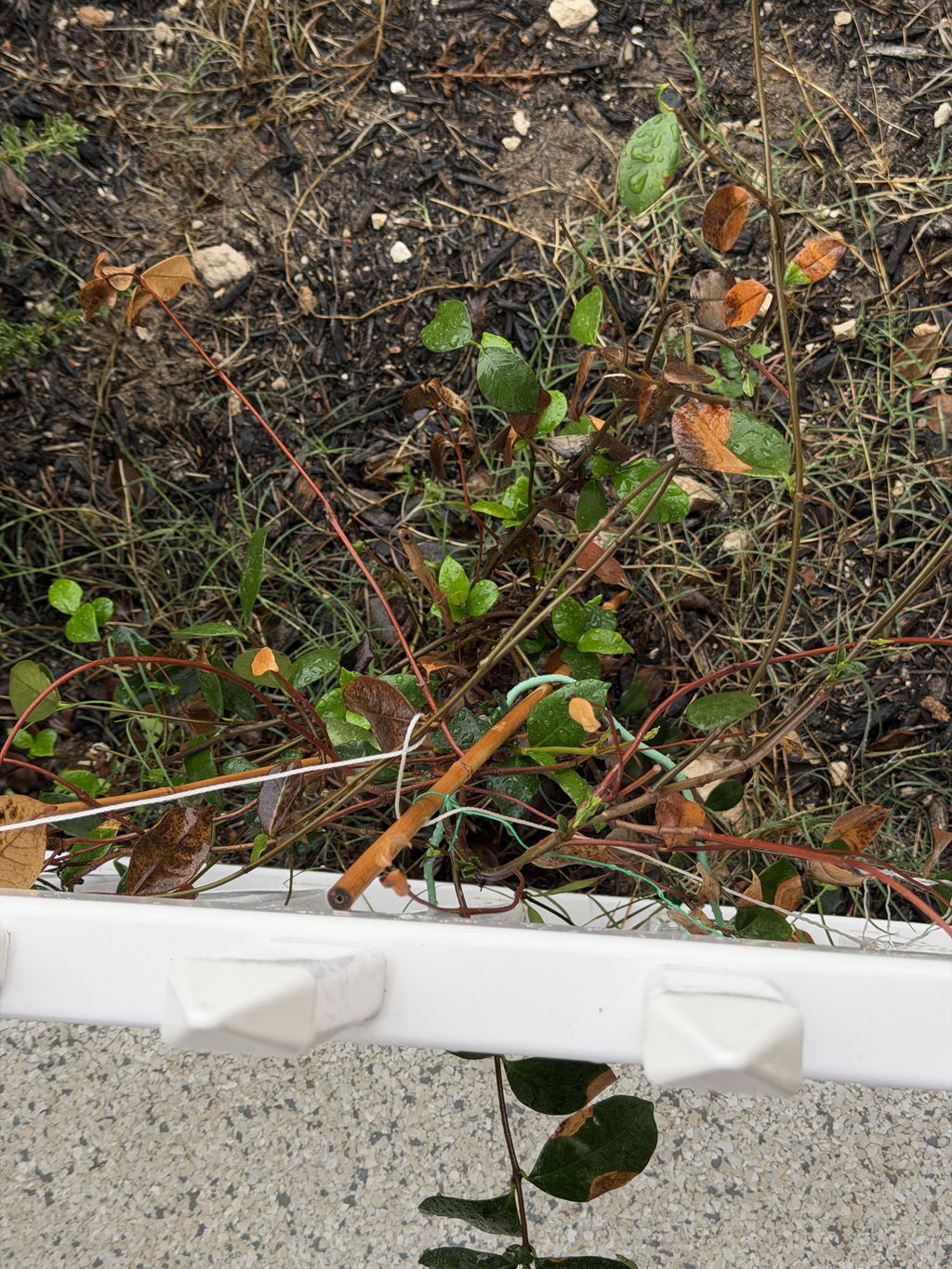
Drought Tree Treatment After Heat Stress and Summer Drought
Effective drought tree treatment starts with a diagnosis, then slow deep watering, root-zone protection, and time for the tree to rebuild. After a severe summer, brown leaves do not automatically mean the tree is dead, but persistent scorch, dieback, and dry soil deserve prompt attention.
Explore mitogrow Tree & Shrub for tree stress and root-zone support.
How to Identify Heat Stress Damage in Trees
Heat and drought stress occur when a tree loses water through its leaves faster than its roots can replace it. High temperatures increase water demand, while compacted or dry soil limits the supply. Penn State Extension explains that urban heat loads can come from pavement, reflected sunlight, hot air, and exposed soil, not only from a lack of rainfall. Read Penn State Extension's overview of heat stress in trees.
- Leaf scorch: Brown, crispy margins or areas between the veins can indicate that leaves are losing water faster than the tree can move it.
- Wilting that lasts: Temporary midday droop can be a heat response. Leaves that remain limp the next morning are more concerning.
- Early leaf drop: Some deciduous trees shed leaves to reduce water loss during severe drought.
- Thinner or smaller foliage: A sparse canopy, unusually small leaves, or weak new growth can signal ongoing stress.
- Twig and branch dieback: Dry tips and dead outer twigs show that the tree is conserving resources. Check whether buds and inner branches remain alive.
- Dry, hard soil: Soil near the root zone may be difficult to penetrate, cracked, or pulling away from hardscape and exposed roots.
Symptoms can overlap with root damage, pests, disease, compacted soil, and overwatering. Check soil moisture before increasing irrigation. If one side of the canopy is declining, inspect the corresponding root zone and nearby pavement, construction, drainage, or irrigation problems.
What Should You Do Immediately After a Heat Wave or Drought?
After extreme summer weather, the safest first response is to reduce additional stress rather than force new growth. Confirm the soil is dry, water slowly, protect the root zone with mulch, and postpone disruptive work until the tree shows stable recovery.
- Check the root zone: Probe the soil several inches below the surface near, but not against, the trunk. Compare dry and moist areas around the canopy's drip line.
- Water slowly: Apply water where feeder roots are likely to be, extending from a few feet outside the trunk toward the drip line. Pause if water begins to run off.
- Protect the soil: Add a 2- to 4-inch layer of organic mulch across the root zone, leaving a clear gap around the trunk flare. Mulch should not touch the bark.
- Stop competing stress: Keep turf and weeds from competing for moisture, but avoid digging, cultivating, or disturbing shallow roots beneath the canopy.
- Delay unnecessary pruning: Remove only clearly dead, hazardous, diseased, or broken material, and use a qualified professional for large limbs or work near structures.
- Skip a growth push: Do not use fertilizer to force a flush of leaves while the tree is water-stressed. New growth also requires water, and poorly timed applications can add pressure.
Do not assume rain immediately ends the problem. A tree can look better after rainfall while its fine roots and stored energy remain depleted. Continue checking soil moisture and new growth through the following weeks and, where appropriate, the next growing season.
How Do You Use Deep Watering to Treat a Stressed Tree?
Deep watering means applying water slowly enough to soak the active root zone rather than wetting only the surface. The goal is consistent moisture with oxygen still available in the soil, not a permanently saturated planting bed.
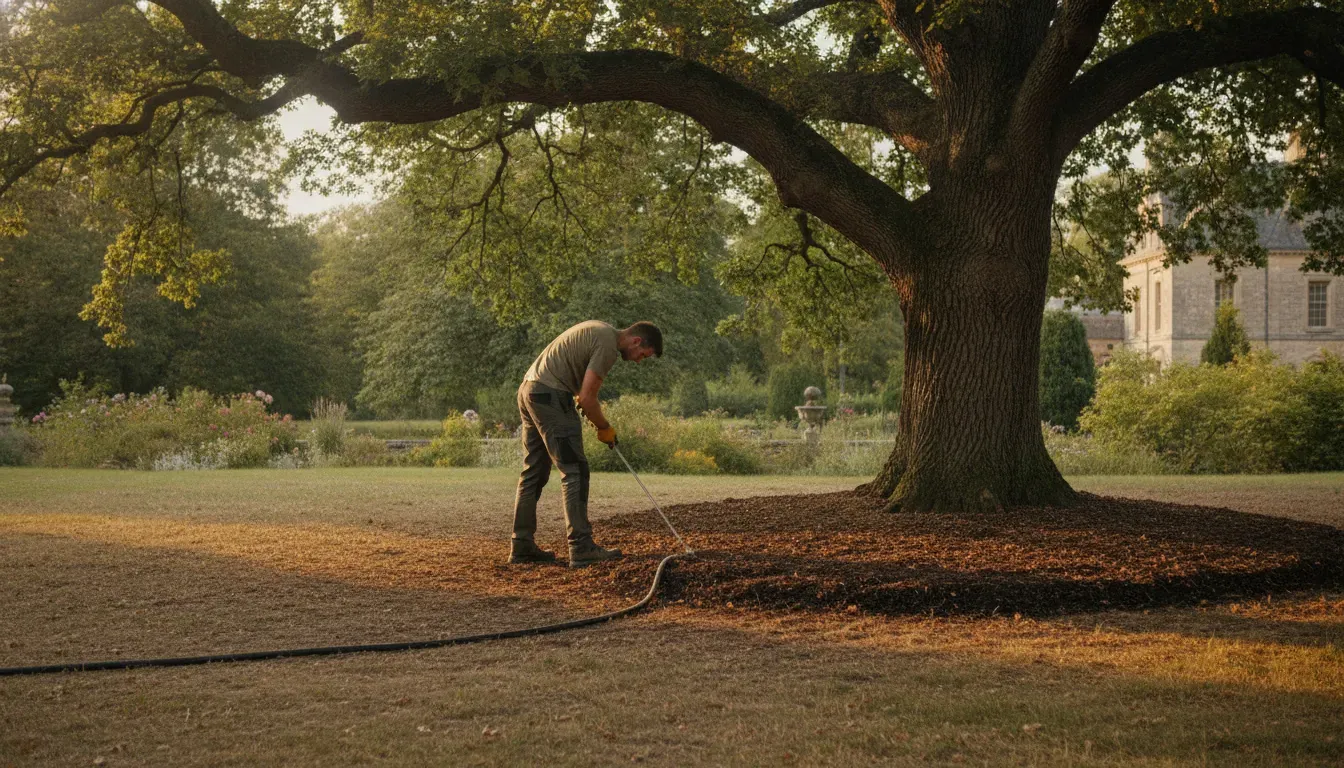
For established trees, extension guidance commonly favors slow, deep irrigation at intervals such as every 7 to 10 days during prolonged dry conditions, adjusted for species, soil, rainfall, local restrictions, and drainage. Newly planted trees usually need more frequent monitoring while their root systems establish. A calendar alone is not enough, so test the soil before repeating the cycle.
Use the drip line, not the trunk
Most absorbing roots are spread beneath and beyond the canopy, not concentrated at the trunk. Place a soaker hose or slow-running hose in a broad ring around the tree. Move it as needed to wet the root zone evenly. Avoid a fast stream that creates runoff or erodes soil.
Measure depth and drainage
After watering, push a soil probe or long screwdriver into several locations. If it stops abruptly, the soil may still be dry, compacted, or blocked by roots and rocks. If water pools for a long time, drainage may be limiting oxygen. Neither condition should be solved by simply adding more water.
UC Agriculture and Natural Resources recommends slow application and notes that shallow, frequent watering can encourage roots to remain near the surface, where they dry faster. Its drought-care guidance also recommends keeping mulch several inches away from trunks and avoiding fertilizer during drought. Review UC ANR's drought-care guidance for trees.
See how mitogrow supports nutrient uptake and root-zone resilience.
How Root Support Products Fit Into Tree Recovery
Root support is most useful when it complements sound irrigation, soil care, planting depth, and monitoring. It cannot replace water, correct severe drainage failure, or repair a structurally unsafe tree. A qualified arborist should diagnose serious decline before a product is applied.
mitogrow Tree & Shrub is a biostimulant for trees, shrubs, and other woody plants. It is not a fertilizer. The product page describes use during planting, transplanting, maintenance, and stress recovery, with an application rate of 1 to 2 tablespoons per gallon of water. Follow the current label and product directions for the specific situation.
The practical sequence is:
- Correct the immediate water problem and confirm the soil can accept and hold moisture.
- Protect the root zone with appropriate mulch and reduce competition.
- Assess compaction, root disturbance, planting depth, drainage, and pest or disease symptoms.
- Use a tree-specific biostimulant only as part of that broader plan and according to its label.
- Record canopy condition, soil moisture, new growth, and dieback so you can judge recovery over time.
For a deeper professional context, compare this recovery approach with mitogrow's evidence-led biostimulant guidance for arborists and its tree root stimulator field guide. Both reinforce that root support belongs inside a repeatable tree-care program rather than being treated as a cure-all.
How Long Does Drought Tree Treatment Take to Work?
Drought tree treatment can improve leaf posture and soil moisture relatively quickly, but full recovery is measured in months or growing seasons. A tree may resume normal appearance after rain while still rebuilding fine roots, stored carbohydrates, and pest resistance below ground.
Use a simple recovery log to avoid judging the tree by one hot afternoon:
- Weekly: Check soil moisture at several points around the drip line and note whether water is soaking in or running off.
- Every two to four weeks: Photograph the canopy from the same position and look for new buds, leaf expansion, or advancing dieback.
- After storms: Inspect for hanging limbs, new cracks, soil movement, or branches that have become unsafe.
- Through the next season: Track whether the canopy fills out, new shoots harden normally, and the tree tolerates ordinary dry periods better.
Do not increase water, fertilizer, pruning, or product applications simply because improvement is slow. Slow progress can be normal after severe stress. If the trend is consistently worse, bring the log and photographs to an arborist so the next decision is based on evidence rather than guesswork.
When Is a Heat-Stressed Tree Too Far Gone to Save?
A tree is not automatically lost because it has brown leaves. Look for living buds, flexible twigs, healthy tissue beneath a small scratch on a young twig, and gradual improvement in soil moisture and canopy condition. Species, age, root damage, and the length of the drought all change the outlook.
Request an arborist assessment when you see:
- Large dead limbs over a home, driveway, walkway, or play area.
- Cracks, cavities, sudden leaning, lifting soil, or exposed and damaged roots.
- Rapid dieback across much of the canopy or decay at the trunk base.
- Persistent decline despite corrected watering and protected soil.
- Signs of insects or disease after the heat event.
- A young, newly planted, high-value, or recently transplanted tree in serious decline.
North Carolina State University reports that drought-stressed trees may develop leaf scorch, premature leaf drop, thinner canopies, and twig dieback. It also notes that recovery can continue long after rainfall returns because damaged roots and depleted energy reserves take time to rebuild. Read NC State's drought-stress guidance.
Support your tree-care plan with mitogrow Tree & Shrub.
Frequently Asked Questions
Can a tree recover from heat stress and drought?
Yes, many trees recover when their root zones receive appropriate moisture and protection. Recovery depends on species, age, root damage, drought duration, pests, disease, and whether the tree still has living buds and branches.
Should I prune a tree after a severe summer?
Remove only clearly dead, broken, hazardous, or diseased branches unless an arborist recommends more. Avoid heavy pruning while the tree is stressed because producing and sealing new wounds also consumes resources.
How often should I water a drought-stressed tree?
Check soil moisture first. Many extension recommendations use slow, deep watering about every 7 to 10 days for established trees during prolonged drought, but soil, species, rainfall, drainage, and local rules may require a different schedule.
Does fertilizer help a tree recover from drought?
Usually, fertilizer is not the first response to drought stress. Prioritize water and root-zone care. Fertilizer-driven new growth requires water, so apply nutrients only when conditions and a professional or label recommendation support it.
What is the difference between a biostimulant and fertilizer?
A fertilizer supplies plant nutrients, while a biostimulant supports how a plant uses resources and responds to stress. mitogrow is a biostimulant, not a fertilizer, and should complement sound tree-care practices.
Sources: Penn State Extension on heat stress in urban trees; UC Agriculture and Natural Resources on drought care; NC State on drought stress in trees; Arbor Day Foundation on summer tree signals.