Cat and Dog Safe Indoor Houseplants for Your Home
A room can feel brighter and more alive with a few well-chosen plants, but a curious cat or dog can turn an innocent nibble into a serious concern. Many popular houseplants are toxic to pets, so plant selection should begin with safety, not appearance.
Yes, you can enjoy indoor greenery with pets at home. Cat and dog safe indoor houseplants include options such as spider plants, American rubber plants, cast iron plants, and Christmas cactus. African violets, Boston ferns, and Phalaenopsis orchids are also ASPCA-listed as non-toxic to cats and dogs.
The safest approach is to verify each plant's species and place it where your pets cannot dig, chew, or knock it over. Then, with the basics of indoor plant care in place, you can build a collection that supports a healthier home without sacrificing your pets' well-being. First, it helps to understand why that safety check matters.
Call mitogrow at (877) 365-8733 to start your pet-safe indoor plant collection.
Why Pet Safety Matters in Houseplant Selection
Houseplants can make a room feel calmer, brighter, and more connected to nature. For households with cats or dogs, however, appearance should not be the first filter. Safety belongs at the beginning of the selection process, before light requirements, watering habits, or decorative style. Many popular houseplants are toxic to pets, so an attractive plant creates avoidable risk when a curious animal nibbles a leaf or knocks over a pot. PETA notes that many familiar houseplants can be toxic to canine and feline companions.
Pets explore plants differently than people do
A plant that sits untouched for months may suddenly become interesting to a pet. Cats may nibble trailing leaves or bat at foliage from a shelf. Dogs may investigate a new pot with their mouths, especially when a plant is placed at floor level. The risk is not limited to a large bite. Small amounts of plant material can still cause concern, and symptoms may vary depending on the plant and the animal.
That uncertainty is why the safest approach is deliberate selection. Check a plant's scientific name against a reliable toxicity reference before bringing it home. Common names can refer to different species, and similar-looking plants do not necessarily share the same safety profile. The ASPCA's plant database and pet-friendly plant guidance are useful starting points for confirming whether a variety is listed as non-toxic to cats or dogs. A non-toxic designation does not mean pets should eat a plant freely, but it removes a major source of preventable danger.
Safety creates a better foundation for plant care
Choosing a pet-safe plant also makes ongoing care more practical. You can focus on placing it in suitable light, managing moisture. And watching for signs of stress without worrying that normal plant activity will expose an animal to a toxic variety. This is the same careful mindset that supports effective indoor plant care: identify the plant, understand its needs, and respond to evidence rather than guesswork.
Safety must still come first even when a plant is labeled pet friendly. Keep pots stable, remove fallen leaves, and consider your individual pet's habits. If you suspect a pet has ingested a potentially toxic plant, contact a veterinarian or the ASPCA Animal Poison Control Center at (888) 426-4435 immediately. With informed choices, pet-owning households can enjoy a substantial indoor collection while making responsible decisions about what lives within reach.
Which Common Houseplants Are Toxic to Cats and Dogs?
Many popular houseplants can be toxic to pets, so plant selection deserves the same care as lighting and watering. The risk is especially important for cats and dogs that nibble leaves, dig in potting soil, or knock over containers. The PETA houseplant safety guide notes that many familiar indoor varieties can harm canine and feline companions.
Some plants require particular caution:
Lilies are an emergency risk for cats
True lilies and daylilies are extremely dangerous to cats. Ingestion of even a small amount of plant material, pollen, or contaminated water from a vase can become a serious medical emergency. Keep lilies out of a cat's environment rather than relying on a high shelf. A curious or determined cat may reach places that seem secure, and pollen can spread onto fur and be swallowed during grooming.
Peace lily, philodendron, and dieffenbachia
Peace lily, philodendron, and dieffenbachia, also called dumb cane, are common foliage plants that can cause problems if chewed. Their sap may irritate the mouth and throat, leading to drooling, pawing at the mouth, difficulty swallowing, or vomiting. Because these plants are often sold in small, attractive pots, they can be easy to bring home without recognizing the safety concern. Households with pets should avoid placing them within reach and confirm the plant's exact identity before purchase.
Sago palm and aloe
Sago palm is another plant to keep away from cats and dogs. All parts can be hazardous, with the seeds especially concerning if swallowed. Aloe is also not a pet-safe choice: chewing the plant may cause gastrointestinal upset and other symptoms. Do not assume a succulent is harmless simply because it has thick leaves or grows slowly. Common names can also be confusing, so check the botanical name when comparing plants at a nursery or garden center.
If a pet ingests a plant that may be toxic. Do not wait for symptoms and do not try to treat the animal at home unless a veterinary professional directs you. Remove access to the plant, note what was eaten and approximately when, and contact a veterinarian or the ASPCA Animal Poison Control Center at (888) 426-4435 immediately. The ASPCA specifically advises immediate professional guidance after suspected exposure to poisonous substances or potentially toxic plants: ASPCA pet-friendly plant guidance.
When in doubt, choose a documented non-toxic variety and still discourage chewing. Pet-safe plants are a practical starting point for building an indoor collection that supports both a welcoming home and responsible pet care.
Best Cat and Dog Safe Indoor Houseplants for Your Home
Choosing cat and dog safe indoor houseplants lets you bring more color and texture indoors without making safety an afterthought. The plants below are listed by the ASPCA as non-toxic to cats and dogs. But pet-safe does not mean every leaf, potting mix, or fertilizer is suitable for eating. Select a plant that matches the light in your home, then keep loose soil, fallen leaves, and treatments away from curious pets.
| Plant | Light need | Care level | Pet safety |
|---|---|---|---|
| Spider Plant | Bright, indirect | Easy | Non-toxic to cats and dogs |
| American Rubber Plant (Peperomia) | Bright, indirect | Easy | Non-toxic to cats and dogs |
| Cast Iron Plant | Low to medium, indirect | Easy | Non-toxic to cats and dogs |
| Boston Fern | Bright, indirect | Moderate | Non-toxic to cats and dogs |
| Parlor Palm | Low to bright, indirect | Easy | Non-toxic to cats and dogs |
| African Violet | Bright, indirect | Moderate | Non-toxic to cats and dogs |
| Phalaenopsis Orchid | Bright, indirect | Moderate | Safe around cats and dogs |
| Christmas Cactus | Bright, indirect | Easy to moderate | Pet-friendly choice |
| Gerbera Daisy | Bright light | Moderate | Non-toxic to pets |
| Blue Echeveria | Bright light | Easy | Pet-safe succulent |
Call mitogrow at (877) 365-8733 to confirm which pet-safe plants fit your space.
The safest choice is also the one you can care for consistently. A Cast Iron Plant or Parlor Palm can suit a dimmer room, while a Blue Echeveria or Gerbera Daisy needs a brighter position. Spider Plants, American Rubber Plants, and African Violets add dependable color in filtered light, and Boston Ferns reward homes that can provide steady moisture. For more plant-selection and recovery guidance, explore mitogrow's indoor plant care resources. ASPCA listings identify these varieties as non-toxic, including the Phalaenopsis Orchid, Christmas Cactus, and Blue Echeveria. Even with a safe species, supervise nibbling and verify any new plant by its exact botanical name before bringing it home.
Best Pet-Safe Indoor Plants for Cat Owners
Cats investigate their surroundings with remarkable persistence. A new plant may become a climbing route, a plaything, or an appealing leaf to nibble, especially when it sits near a favorite window or perch. Choosing non-toxic plants removes the danger associated with chewing the plant itself, while thoughtful placement still helps protect both your cat and the foliage.
The following options are especially useful for cat owners who want variety without bringing known toxic plants into the home. The ASPCA lists each of these plants as non-toxic to cats, although any plant material can still cause stomach upset if an animal eats a large amount.
Spider Plant
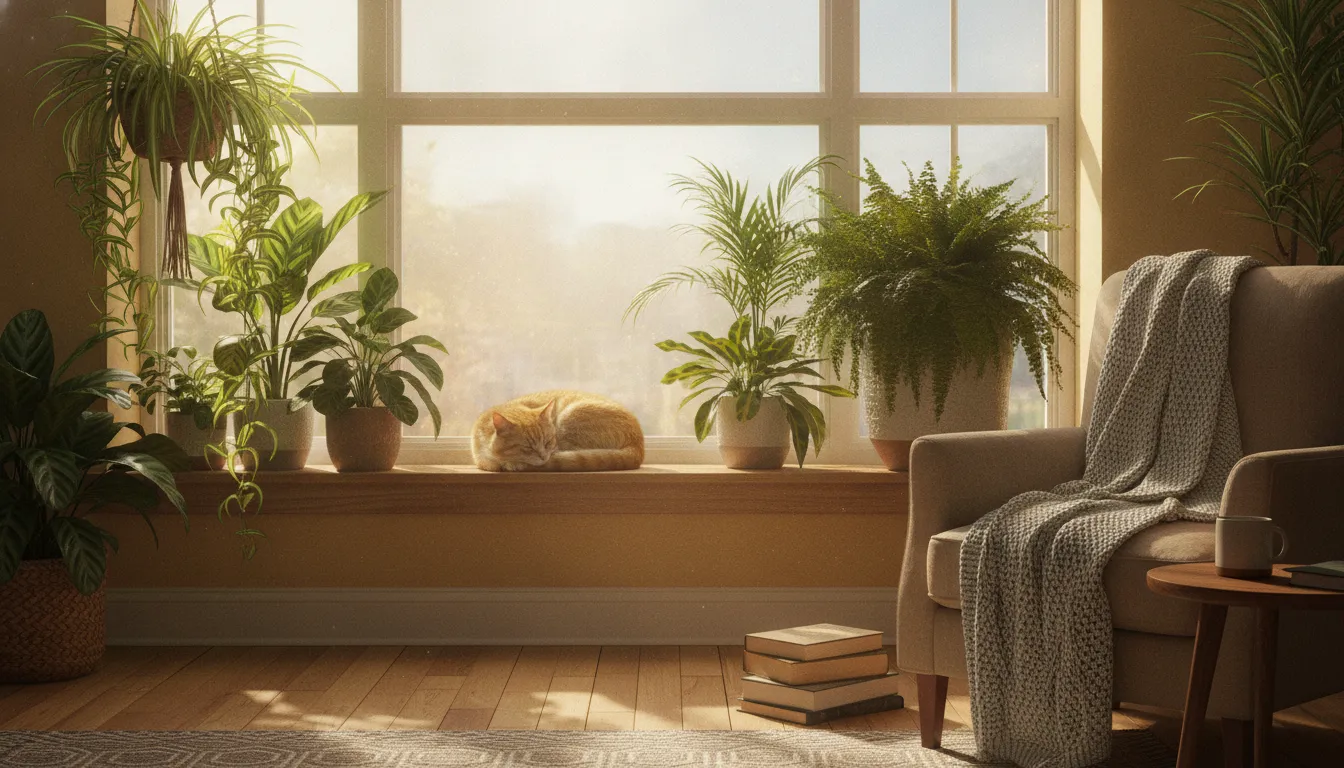
Spider Plant (Chlorophytum comosum) is a practical choice for homes with curious cats. Its arching, grass-like leaves and trailing offsets create movement that may attract attention, but the ASPCA identifies it as non-toxic to both cats and dogs. Place it in a hanging planter or on a stable shelf where the leaves can trail without becoming a tempting floor-level toy. See the ASPCA's Spider Plant safety listing for the botanical identification and toxicity information.
African Violet and Phalaenopsis Orchid
For cat owners who prefer flowers, African Violet and Phalaenopsis Orchid, also called Moth Orchid, offer color without selecting a plant known to be toxic to pets. The ASPCA includes both among its pet-friendly houseplant choices. African Violets work well in compact spaces, while an orchid can serve as a more prominent focal plant. Keep either pot on a secure surface and choose a location with suitable light rather than moving the plant into an unsafe spot simply to keep it away from a cat.
Boston Fern
Boston Fern brings a fuller, softer texture to a room than many compact flowering plants. It is also identified by the ASPCA as a safe houseplant for pet owners. Its fronds can be attractive to cats, so a hanging basket or protected plant stand may be the best setup for a persistent nibbler. Give the fern the care it needs and check that the container cannot be knocked over during play.
Donkey's Tail
Donkey's Tail is a trailing succulent that adds a different shape to a cat-friendly collection. The ASPCA lists it as pet-safe and notes that it may bloom, although it rarely flowers indoors. Its bead-like leaves can be fragile, making a high, stable location useful even when toxicity is not the main concern. A position that is visible but not easy for a cat to reach lets you enjoy the plant while reducing breakage.
Cat-safe selection is the first layer of protection. Confirm the plant's identity before bringing it home, since common names can vary, and review the care needs of each variety. For broader guidance on building a healthy collection, explore our indoor plant care resources.
Best Pet-Safe Indoor Plants for Dog Owners
Dogs bring a different kind of activity to an indoor garden. A curious nose can send a pot sliding, a wagging tail can brush off leaves, and a bored puppy may investigate the lowest foliage. For homes where plants need to tolerate everyday commotion, choose non-toxic varieties with sturdy habits and manageable care needs. The goal is not to assume a pet-safe plant can withstand every bite or accident, but to give yourself a safer, more resilient starting point.
These four options are especially useful for dog owners who want dependable greenery without adding known plant toxicity to the household risk list.
Cast Iron Plant
The Cast Iron Plant (Aspidistra elatior) earns its name for a reason. Its broad, upright leaves and forgiving nature make it a practical choice for rooms with regular foot traffic. More importantly, the ASPCA lists it as non-toxic to dogs, cats, and horses. Place it in a stable, weighty pot where a dog cannot easily knock it over, and give it filtered light rather than harsh direct sun. It is a strong choice for a hallway, living room corner, or other spot where a delicate plant might struggle.
Parlor Palm
Parlor Palm offers a softer, airy shape while remaining a sensible option for pet-friendly homes. It is a slow-growing indoor plant that the ASPCA identifies as safe for pet owners. Because its fronds can extend into a dog's reach. Position the palm on a secure stand or in a heavy planter rather than treating its non-toxic status as an invitation to chew. Bright, indirect light and careful watering will help it stay full and attractive without demanding constant attention.
Gerbera Daisy
For dog owners who want color, Gerbera Daisy brings bright flowers to an indoor collection. The ASPCA lists it as non-toxic to pets, and it can grow up to 24 inches tall. Its flowers can make a room feel lively, but the plant still benefits from a location protected from rough play. Set it on a stable surface with strong, appropriate light, and remove spent blooms or damaged leaves promptly. That simple upkeep keeps the plant looking intentional and reduces loose plant material on the floor.
Blue Echeveria
Blue Echeveria is a compact succulent with a pet-safe profile and a sculptural rosette. According to the ASPCA, it can produce small, bell-shaped flowers in summer. Its low profile makes it easy to place on a shelf or inside a protected plant grouping. Keep its pot secured if your dog brushes past furniture, use a fast-draining container, and avoid frequent watering. This is a good option when you want visual interest without tall stems or sprawling foliage at nose level.
Even with non-toxic choices, supervise chewing and keep pots stable. A dog that eats any unfamiliar plant may develop stomach upset, and a knocked-over container can create a separate hazard. Select plants for both their safety listing and their ability to fit the realities of your home.
How to Care for Pet-Safe Plants and Keep Them Healthy
A pet-safe plant is a safer choice, but it still needs thoughtful placement and consistent care. A healthy plant is less likely to shed damaged leaves, attract curious attention, or become a tempting target. Careful selection makes it possible to enjoy a substantial indoor collection alongside pets, as one documented home demonstrates with more than 100 houseplants, two cats, and a dog. Use the following routine to protect both your plants and the animals who share your space.
- Choose verified safe species. Start with a plant identified as non-toxic to the pets in your home, and check the botanical name rather than relying on a common name alone. The ASPCA plant database is a useful reference because similar-looking plants can have very different safety profiles. Remember that plant safety comes first, since some varieties can make pets seriously sick.
- Place plants out of reach. Even a non-toxic plant can cause stomach upset if a pet eats a large amount. Set containers on stable shelves, use secure hanging planters, or group plants behind a barrier your pets cannot knock over. Keep trailing stems and fallen leaves away from floor-level play areas, and confirm that the pot cannot tip when brushed by a tail or paw.
- Match water and light to the species. Read the plant's care requirements and give it the brightest suitable light without exposing shade plants to harsh direct sun. Water when the soil and plant call for it, rather than following a rigid calendar. Use pots with drainage, empty standing water, and keep plant care products stored securely. Before adding any treatment to your routine, review whether it is safe for pets the same way you would check a new plant. For broader indoor plant care, focus on steady maintenance instead of trying to correct several problems at once.
- Watch for signs of stress. Yellowing leaves, wilting, crispy edges, soft stems, pests, and sudden leaf drop can point to excess water, insufficient light, temperature changes, or root problems. Inspect plants during regular watering and isolate a struggling container if pests or disease appear. This makes it easier to diagnose the cause before the issue spreads to nearby plants.
- Trim nibbled or damaged leaves. Remove torn, yellow, or diseased foliage with clean scissors. Pruning improves the plant's appearance and removes material that may continue to attract a curious pet. Never leave clipped leaves on the floor, especially if you have not confirmed the plant's safety or cannot identify the species.
- Keep pets stimulated elsewhere. Give cats appropriate grass, toys, climbing options, and resting places, and provide dogs with exercise and chew-safe activities. Redirecting natural curiosity is more reliable than repeatedly scolding a pet near a plant. For additional ideas, see these pet-safe plant care tips.
Reach out to mitogrow at (877) 365-8733 for personalized pet-safe plant care guidance.
Regular observation is the common thread: check the plant, check its location, and check how your pet interacts with it. If a pet eats an unidentified or potentially toxic plant, contact a veterinarian or the ASPCA Animal Poison Control Center at (888) 426-4435 immediately. A careful routine lets you maintain healthy greenery while keeping safety at the center of your indoor garden.
Frequently Asked Questions
What are the best indoor plants safe for both cats and dogs?
Spider plants, Boston ferns, American rubber plants, cast iron plants, African violets, Phalaenopsis orchids, Christmas cacti, and parlor palms are dependable choices. The ASPCA lists these varieties as non-toxic or pet-friendly for cats and dogs, but individual pets may still develop stomach upset after chewing any plant. Verify the exact species before bringing it home.
Are succulents safe for cats and dogs?
Some are, but "succulent" describes a broad group rather than one safety category. Blue Echeveria and Donkey's Tail are listed as pet-safe options by the ASPCA. Do not assume every succulent is harmless, and check the botanical name against a trusted toxicity database before purchasing.
Is a peace lily safe for cats and dogs?
No. Peace lilies should not be treated as pet-safe plants. Keep them out of homes where cats or dogs can reach them, and confirm the safety of similar-looking plants individually. If your pet may have eaten a peace lily or another potentially toxic plant, contact a veterinarian or the ASPCA Animal Poison Control Center immediately at (888) 426-4435.
What should I do if my pet chews a houseplant?
Move the plant away, note the plant's name, and contact your veterinarian promptly if the species is unknown or potentially toxic. Do not wait for symptoms before asking for guidance. The ASPCA recommends immediate veterinary or poison-control contact when exposure to a poisonous substance or potentially toxic plant is suspected: ASPCA plant-safety guidance.
Ready to Choose the Right Pet-Safe Plants?
Creating a healthy indoor garden is easier when your plant choices fit both your space and your pets' habits. For practical guidance on selecting and caring for pet-safe houseplants, talk to the mitogrow team. Call mitogrow at (877) 365-8733 to discuss your plant care questions and next steps.