How to Plant a Garden Bed for Beginners
Learning how to plant a garden bed for beginners is less about buying the most plants and more about giving every plant a workable place to grow. Choose a site with the right light, prepare soil that drains well, leave room for mature growth, and establish a steady watering routine before adding extra products. This guide walks through the process for a new raised bed or an in-ground planting area.
Shop Bloom & Bed for flowers and garden beds
How to Plant a Garden Bed for Beginners: The Basics
A successful garden bed gives plants four basics: suitable light, healthy soil, enough room for roots and leaves, and consistent moisture. Start with those conditions before adding more plants or amendments. A simple, well-planned bed is easier to water, weed, observe, and correct than an overcrowded one.
Before you dig, decide whether you are planting flowers, herbs, vegetables, or a mix. Check the mature size and light needs of each plant, then sketch the bed on paper. Put taller plants where they will not shade shorter ones, and keep paths or stepping stones wide enough to reach the center without compacting the soil.
- Choose plants that fit your sunlight, climate, and available time.
- Plan access before filling the bed.
- Buy fewer plants than you think you need until you confirm mature spacing.
- Keep plant labels or seed packets so you can follow each crop's depth and spacing guidance.
How to Choose the Right Location for a Garden Bed
Choose a location that receives the amount of light your plants need, has dependable access to water, and drains after rain. Most flowering plants and many vegetables perform best with several hours of direct sun, but the right amount depends on the plant. Observe the site during the day before building the bed.
Check light, drainage, and access
Watch for shade from fences, homes, and mature trees. Avoid a low spot where water collects, especially if the bed will hold plants that dislike wet roots. A location close to a hose or rain barrel makes regular watering more realistic. Leave enough room around the bed to mow, carry compost, and inspect plants without stepping into the growing area.
Choose a practical bed size
A bed that can be reached from both sides is usually easier for a beginner to maintain when it is about 3 to 4 feet wide. If the bed touches a wall or fence and can only be reached from one side, make it narrower. The best length is the one you can water and weed without creating a hidden middle section.
For a new flower bed, consider how quickly perennials, shrubs, or vigorous annuals will fill the space. For vegetables, plan around the mature width listed on the seed packet. A little empty soil is easier to manage than a crowded canopy that stays damp and invites disease.
Soil Preparation: What to Add Before Planting
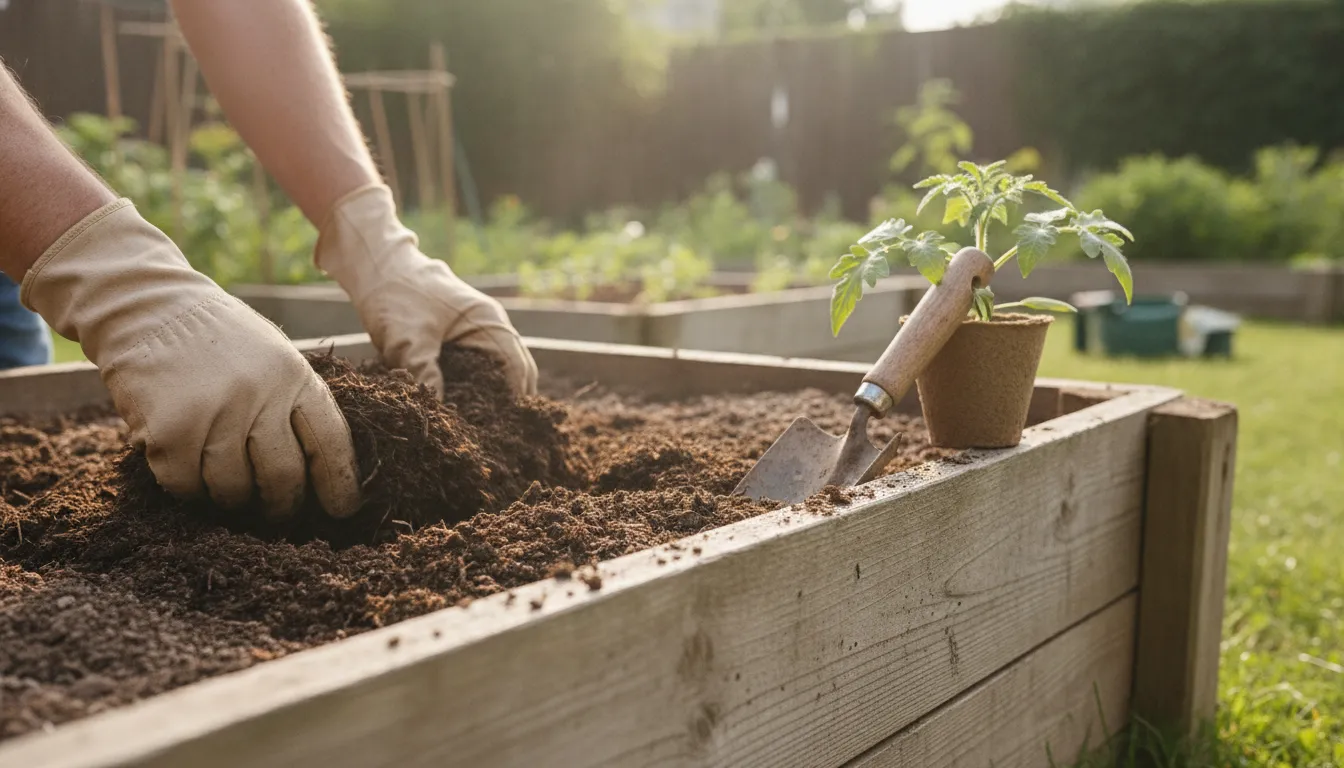
Good soil preparation creates a loose, well-drained root zone that can hold moisture without staying saturated. Remove weeds, loosen compacted soil, add finished compost or a quality growing mix, and smooth the surface before planting. Avoid working wet soil, because digging it can create hard clumps that restrict roots.
For an in-ground bed
- Mark the bed and remove grass, weeds, and large roots.
- Loosen the top layer of soil without turning the whole profile upside down.
- Break up compacted areas and remove large stones or construction debris.
- Blend in finished compost or another appropriate soil amendment based on the soil condition and the plants you will grow.
- Rake the surface level, then water lightly so the soil settles before planting.
For a raised bed
Fill a raised bed with a quality growing mix rather than relying on a thin layer of topsoil. The mix should support drainage, air space, and moisture retention. Fill the bed close to its final level, because soil settles after watering. Leave enough space at the top to prevent soil from washing over the frame.
| Soil condition | What to look for | Beginner action |
|---|---|---|
| Compacted | Water pools and roots struggle to penetrate | Loosen carefully and improve organic matter over time |
| Very sandy | Water drains quickly and soil dries fast | Add finished compost and monitor moisture closely |
| Heavy clay | Soil sticks together when wet and hardens when dry | Improve gradually with organic matter; avoid working it when wet |
| Healthy mix | Crumbly texture with moisture but no standing water | Plant, mulch lightly, and keep observing the root zone |
Do not assume every plant needs the same soil. Flowers, vegetables, herbs, and native plants may have different drainage and acidity preferences. If the bed has a persistent problem, a local soil test can help you choose amendments instead of guessing.
Learn how mitogrow supports nutrient uptake and plant resilience
How Do You Space Plants in a New Garden Bed?
Space plants according to their mature width, not the size of the starter pot. Measure from the center of one plant to the center of the next unless the label says otherwise. Correct spacing gives leaves room to dry, roots room to expand, and you room to water and inspect each plant.
Use the seed packet or plant tag as the first reference. When a spacing range is provided, use the wider end if you live in a humid climate, have limited gardening time, or want easier access for harvesting. You can plant more closely for a full ornamental look, but expect more pruning, watering, and disease monitoring.
| Planting situation | Spacing approach | Why it helps |
|---|---|---|
| Small annual flowers | Follow the mature spread on the tag; allow a little air between plants | Encourages even growth and easier deadheading |
| Leafy vegetables | Use the packet spacing and thin seedlings early | Reduces competition for light, water, and nutrients |
| Large perennials | Plan for mature width even if the starter plant looks small | Prevents a crowded bed after one growing season |
| Mixed-height beds | Place tall plants behind shorter plants based on the main viewing angle | Preserves light and makes every plant easier to see |
How Deep Should You Plant Flowers and Vegetables?
Plant most transplants at the same depth they grew in their container, with the top of the root ball level with the surrounding soil. Seeds should follow the depth on the packet, because small seeds often need light coverage while larger seeds can be planted deeper. Firm the soil gently around roots without packing it hard.
Water the container before removing a transplant, loosen circling roots carefully, and support the root ball while setting it into the hole. Avoid burying stems unless the plant label specifically recommends it. A plant that is set too deep may have poor airflow around its crown, while a shallow root ball can dry quickly.
How to Water New Garden Beds Correctly
New garden beds need consistent moisture while roots move into surrounding soil, but saturated soil can remove the air roots need. Water slowly at the root zone, check the soil a short distance below the surface, and adjust for sun, wind, temperature, rainfall, and plant type rather than following a rigid calendar.
- Water at the soil line instead of repeatedly wetting foliage.
- Use a gentle flow so water soaks in instead of running off.
- Check moisture with your finger or a trowel before watering again.
- Water more often during hot, windy weather and less after meaningful rainfall.
- Add a light layer of mulch after the soil has warmed, keeping mulch away from stems.
- Look for both wilt and constantly wet soil. They can signal different problems.
For the first week, inspect the bed daily. After that, a regular check every few days is often enough unless weather changes quickly. Strong roots come from a balance of moisture and oxygen, not from keeping the bed constantly soaked.
How Biostimulants Support New Planting Establishment
A biostimulant can support a new garden bed after the basic growing conditions are in place. mitogrow describes its formula as plant fuel: it helps plants use available nutrients and manage stress, but it does not replace light, water, healthy soil, or a plant-specific nutrition plan.
For flowers and ornamental beds, mitogrow Bloom & Bed is the relevant formula. The product page lists a mixing range of 1 to 2 tablespoons per gallon of water, with the exact application based on use. Follow the current product label rather than increasing the dose in search of faster growth.
This distinction matters for beginners. A biostimulant is not a fertilizer, and it should not be used to cover up compacted soil, poor drainage, incorrect planting depth, or irregular watering. Use it as one part of a complete establishment routine. For more background, see this guide to biostimulants for flowers and garden beds and the broader mitogrow science overview.
When a new bed has been planted, watch for fresh growth, stable leaf color, and roots that hold the soil together when a plant is gently checked. These observations are more useful than expecting an overnight change. A new garden bed establishes through repeatable care.
A Simple First-Week Garden Bed Checklist
The first week is about reducing stress and catching small problems early. Use this short routine after planting:
- Confirm that each plant has the correct light and enough space.
- Check that the root ball is level with the surrounding soil.
- Water slowly at the base until the root zone is evenly moist.
- Look for runoff, puddling, wilt, broken stems, or exposed roots.
- Replace settled soil around roots without covering the plant crown.
- Delay extra feeding until you understand the plant label and soil needs.
- Keep a simple note of watering, rainfall, and changes in growth.
If you want a broader seasonal routine for soil, spacing, mulch, and stress recovery, use this home garden plant care and recovery guide as the next step.
Explore mitogrow plant care for outdoor beds and the rest of your garden
Garden Bed Planting FAQs
What should I add to soil before planting a garden bed?
Start by understanding the existing soil. Remove weeds, loosen compacted areas, and add finished compost or an appropriate growing mix. A soil test can help identify problems before you add large amounts of amendment.
How far apart should plants be in a garden bed?
Use the mature width on the plant tag or seed packet, measuring from plant center to plant center unless the label gives different directions. Wider spacing improves access and airflow, while closer spacing creates a fuller look but requires closer monitoring.
Can I plant a garden bed without a raised frame?
Yes. An in-ground bed can work well when the site drains, receives suitable light, and has soil that can be improved. A raised frame is useful when you need more control over soil depth, access, or the boundary of the bed.
Should I use fertilizer when planting a garden bed?
That depends on the plant and the soil. Follow the plant label and soil-test guidance instead of adding fertilizer automatically. A biostimulant such as mitogrow is not a fertilizer; it is used to support plant processes and can complement a complete care plan.
How long does it take a new garden bed to establish?
Small annuals may settle quickly, while perennials and larger plants need longer to build roots. Watch for steady new growth, firm stems, and soil that stays evenly moist without remaining saturated. Consistent care matters more than a fixed deadline.
Start Small and Build From Healthy Roots
The best beginner garden bed is not the biggest one. It is the bed you can reach, water, observe, and maintain. Choose the site carefully, prepare the soil, follow mature spacing, plant at the right depth, and protect the root zone from extremes. Once those basics are working, a biostimulant can be a practical addition to the routine for flowers and ornamental beds.
For more ideas on planning a productive outdoor space, return to the home garden success and recovery resource or browse the mitogrow outdoor plant care collection.