Biostimulant for Flowers and Garden Beds: Apply It Right
Flower beds can look healthy one week and struggle the next after heat, drought, heavy rain, transplanting, or a seasonal change. A biostimulant for flowers and garden beds can support natural plant processes during those demanding periods. It is not a substitute for proper watering, suitable light, soil care, nutrients, or pest management.
Explore bloom and bed support from mitogrow.
A biostimulant for flowers and garden beds supports plant processes related to nutrient uptake and stress tolerance. It works more like plant fuel than a fertilizer. Used according to its label, it can help plants make better use of the care and resources already present in the growing environment.
For the basic definition, read what a biostimulant is and how it supports plant health. This guide focuses on practical decisions: when to apply a product, how to mix it, how often to use it, and what results are reasonable to expect.
Why Use a Biostimulant for Flowers and Garden Beds?
A biostimulant can support flowering plants by working with natural processes related to nutrient uptake, root activity, plant quality, and stress tolerance. The University of Massachusetts Amherst explains that biostimulants are defined by the plant processes they support, not only by the ingredients they contain. Read the university biostimulant overview for the technical definition.
That role is different from fertilizer. Fertilizer supplies nutrients such as nitrogen, phosphorus, or potassium. A biostimulant does not replace a nutrient plan, and mitogrow should not be treated as fertilizer or plant food. It is plant fuel intended to help a plant work with resources already present in the soil and growing environment.
| Care tool | Primary role | What it does not replace |
|---|---|---|
| Biostimulant | Supports plant processes and stress response. | Water, light, soil care, nutrients, or pest management. |
| Fertilizer | Supplies nutrients according to its label. | Good root conditions or consistent care. |
| Water and light | Provide essential growing conditions. | A targeted biostimulant application when appropriate. |
Roots and nutrient uptake set the stage for growth
Flowering plants need more than available nutrients to perform well. They also need functioning roots, suitable moisture, adequate light, and protection from pests and disease. A biostimulant can fit into that larger routine by supporting the plant and root environment rather than simply adding a conventional nutrient dose.
Start with the site. Confirm that the flower bed receives the light the plants need and that water can move through the soil without pooling. Then inspect roots and foliage. A plant with damaged roots, a pest infestation, or a disease still needs the appropriate diagnosis and treatment. Only then should you decide whether a biostimulant fits the plan.
This approach keeps expectations realistic. A product that supports plant processes cannot undo weeks of drought, repair compacted soil instantly, or force a plant to bloom outside its natural season. It can be one measured input in a routine that gives flowers the right environment.
For flowers, ornamental beds, and other non-woody plants, review the Bloom and Bed product details and follow its current label for plant categories, mixing, and application.
When Should You Apply a Biostimulant to Flower Beds?
The best time to apply a biostimulant to a flower bed depends on the product label, plant condition, and growing environment. In general, application can fit after new planting, during a seasonal refresh, or when flowers are recovering from heat, drought, heavy rain, or another source of abiotic stress.
Use it when establishing new plantings
New flowers and ornamental plants are adjusting to disturbed roots, new soil, moisture changes, and different exposure. A product approved for that use can be part of the planting routine. Follow the label rather than applying extra product to compensate for transplant stress. Water new plants as needed, confirm that the bed drains properly, and give each species the light it requires.
Refresh a bed at a seasonal transition
A seasonal refresh may make sense when plants begin active growth or when a bed is being replanted. The right moment varies with climate and plant type, so inspect the bed instead of relying on one calendar date. Look at new growth, leaf color, soil moisture, and whether roots have had time to establish.
Support recovery after difficult weather
Heat and drought can place plants under abiotic stress, while heavy rain can leave root zones saturated. Address the immediate condition first. Restore appropriate moisture after drought, improve drainage after heavy rain, and wait until foliage and soil conditions are suitable for application. A biostimulant should not mask active wilting or treat a pest or disease problem.
Research helps explain why growing conditions matter, but it does not create a universal promise. A study of German chamomile found that biostimulants influenced plant traits under particular soil and growing conditions. That result does not prove identical outcomes for every flower bed. Review the study details for its specific context.
How to Apply a Biostimulant for Flowers and Garden Beds
Applying a biostimulant is straightforward when you measure carefully and follow the product directions. Use these steps as a practical framework, but let the current product label take priority because formulas and concentrations differ.
- Read the label first. Confirm that the product is intended for flowers, ornamental beds, or other non-woody plants. Check the approved application method, mixing directions, storage instructions, and safety guidance.
- Choose clean water and equipment. Use a clean watering can, bucket, or sprayer that has not held herbicide or another chemical residue. Mix only the amount you expect to apply.
- Measure accurately. The current Bloom and Bed product guidance states that one half-pound bag makes 50 gallons. Confirm the current label before measuring, since directions can change. Never increase the rate because a plant looks stressed.
- Mix thoroughly. Add the measured product to water as directed, then stir or agitate until it is evenly dispersed. Do not combine it with fertilizer, pesticide, or another garden input unless the label permits that combination.
- Apply across the root zone. Distribute the soil application evenly instead of pouring it in one concentrated spot at the crown. Avoid puddles and runoff.
- Clean up and observe. Rinse and store equipment as directed. Note the date and garden conditions, then watch the plants before reapplying.
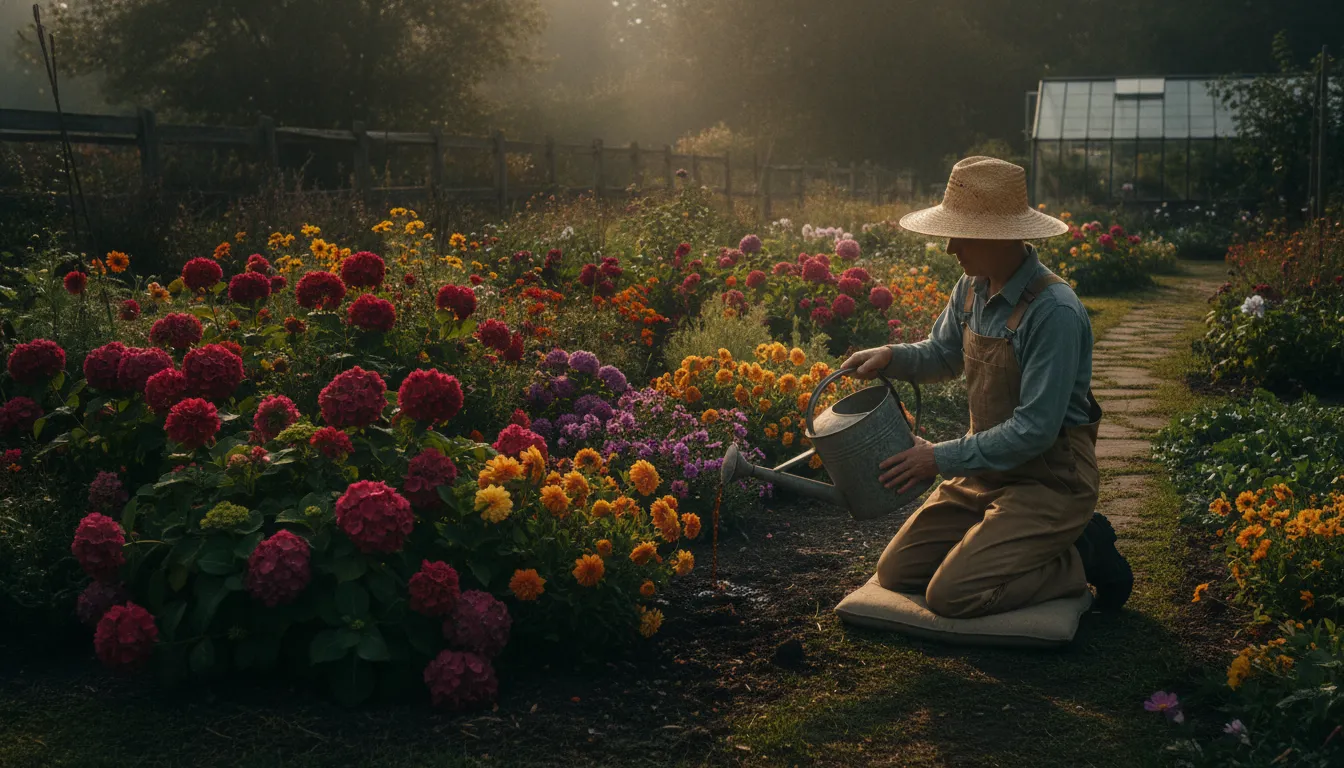
Application technique matters because the root zone is the target. Pouring the full mix against one stem can create uneven coverage and leave the rest of the bed untreated. A slow, even pass is easier to repeat and makes observations more useful. If the soil is too dry to absorb the solution or already saturated, correct that condition first.
How Often Can You Use Biostimulants on Flowers?
There is no universal calendar for every formula or garden. The right frequency depends on the product label, plant condition, and recent weather. Start with the directions for the specific product. Applying more often does not guarantee faster or better results.
Current Bloom and Bed product guidance allows year-round use and reapplication as needed for flowers, ornamental beds, and other non-woody plants. A bed may need support after a new planting, seasonal refresh, or stressful weather. Another bed may be growing steadily and need no immediate reapplication.
Reassess the garden before reapplying
- Water: Check whether the soil is dry, saturated, or draining poorly. A biostimulant does not replace consistent watering or drainage repair.
- Light: Consider whether the species receives the light it needs. Another application will not correct the wrong site.
- Soil: Look for compaction and poor root-zone conditions. If nutrient deficiency is suspected, use appropriate soil testing and follow a separate nutrient plan.
- Pests and disease: Inspect leaves, stems, buds, and the undersides of foliage. A biostimulant is not a pest-control treatment.
- Weather: Note heat, drought, cold, heavy rain, or sudden changes. Reassess the plant, but never exceed the label.
Record the application date and conditions if you care for several beds. This simple habit helps you judge the plant response without confusing a new application with an improvement caused by better watering, light, or weather.
What Results Should You Expect from a Garden Biostimulant?
A garden biostimulant supports plant processes that help flowers and ornamental plants use available resources. It is not a guaranteed bloom booster and does not replace light, water, suitable soil, nutrients, or pest management. Think of it as plant fuel that may help a plant make better use of the care already available.
Visible changes can take time. Roots are involved first, because a healthy root system helps a plant access water and nutrients. Over time, you may notice steadier new growth, improved vigor, or better recovery from a stressful period. Timing is not universal. A recently transplanted annual, an established perennial, and a plant growing in compacted soil will not respond in the same way.
Weather, light, drainage, soil structure, plant age, and baseline condition all shape what a plant can do next. Look for overall direction rather than a fixed number of blooms or a promised date. If a plant continues to decline, investigate moisture, light, roots, nutrition, pests, and disease before applying more product.
Use a simple observation routine
Evaluate the bed at the same interval each time, such as once a week. Look for new leaves, fresh stems, bud development, and changes in overall color. Also check soil moisture at root depth instead of judging the surface alone. These observations help separate a real trend from a short-lived response to rain or cooler weather.
Keep one variable in mind when you review the plants. If you apply a biostimulant and also change irrigation, move the plants, prune heavily, or add several soil products, you will not know which change mattered. Protect the plants first, but otherwise keep the routine steady while you observe.
Do not use a lack of immediate flowers as proof that the application failed. Root activity and new growth may develop before a visible bloom change. Annuals, perennials, and newly transplanted plants also follow different timelines. Compare each plant with its own earlier condition rather than with a different species in the same bed.
Stop and reassess if foliage worsens, roots remain saturated, or symptoms suggest insects or disease. More product is not the answer to every garden problem. A careful diagnosis protects the bed and keeps the biostimulant in its proper role as one part of a broader care plan.
For a science-focused explanation, read the science behind mitogrow. For a recovery checklist, see how to revive a struggling flower bed. For broader outdoor care, visit the home garden plant care and recovery guide.
Read the Bloom and Bed directions before treating your garden.
Frequently Asked Questions
When should you apply a biostimulant to garden beds?
Apply after planting or during a seasonal bed refresh. You can also apply it when flowers are recovering from heat, drought, or heavy rain. First address water, light, drainage, and active pest or disease problems. Then follow the product label for timing and method.
How often can you use biostimulants on flowers?
There is no universal calendar for every formula or garden. follow the current label and reapply only as directed or as needed. Reassess weather, plant condition, moisture, and other care before applying again.
Do biostimulants replace fertilizer in garden beds?
No. A biostimulant supports plant processes, while fertilizer supplies nutrients. A biostimulant also does not replace water, light, suitable soil, or pest management. Keep those parts of the care plan separate.
Can you use biostimulants on all types of flowers?
Check the product label and intended plant categories first. Bloom and Bed products are designed for flowers, ornamental beds, and non-woody plants when used according to their current directions.
Are liquid biostimulants better for garden beds?
Not necessarily. Liquid and dry formulas differ in mixing, coverage, storage, and application method. Choose based on the label, bed size, and the method you can apply consistently.