Indoor Plant Fertilizer vs Biostimulant: A Simple Guide
When an indoor plant starts growing slowly, yellowing, or struggling after a move, the answer is not always more fertilizer. Light, water, roots, and available nutrients all shape plant health, while indoor conditions can add stress that is easy to overlook.
Explore mitogrow Pots & Planters for indoor plant care
The practical difference in indoor plant fertilizer vs biostimulant is simple. Fertilizer supplies essential nutrients. A biostimulant supports natural processes related to nutrient uptake, nutrient-use efficiency, and stress tolerance. They can play complementary roles, but a biostimulant does not replace adequate light, water, or nutrition. Learn more about indoor plant supplements before building a routine.
Start by identifying what your plant needs to grow well, then match each input to that need. That makes it easier to decide when fertilizer belongs in the plan, where a biostimulant may provide support, and how to use both without overcomplicating care. For a broader recovery checklist, read indoor plant care and recovery.
What Do Indoor Plants Actually Need to Grow?
Healthy indoor growth starts with the basics working together. A plant needs enough light to power photosynthesis, consistent water without staying saturated, a growing medium that supports the roots, oxygen around those roots, and access to nutrients. If one part of that system is off, adding another product may not solve the underlying problem.
Light and water set the pace
Light is the plant's energy source, so a low-light plant may grow slowly even when its leaves look green. Water carries nutrients through the plant, but roots also need air spaces in the growing medium. When potting mix stays waterlogged, those spaces fill with water and roots have less access to oxygen. A container with suitable drainage and a watering routine based on the plant, pot, and environment can help keep that balance.
The growing medium supports roots
Potting mix does more than hold a plant upright. It creates the physical environment where roots find moisture and oxygen. Over time, a medium can compact or drain poorly, changing how evenly water moves through the container. Before reaching for nutrients, check whether the plant has adequate light, whether water is reaching the root zone, and whether the medium still drains appropriately.
Nutrients matter, but symptoms need context
Fertilizers provide essential plant nutrients, including the major nutrients nitrogen, phosphorus, and potassium. However, yellow leaves, slow growth, or wilting do not automatically mean a plant needs more fertilizer. Those symptoms can also reflect problems with light, watering, roots, temperature, or the growing medium. Treat the symptom as a signal to investigate rather than as an automatic instruction to feed.
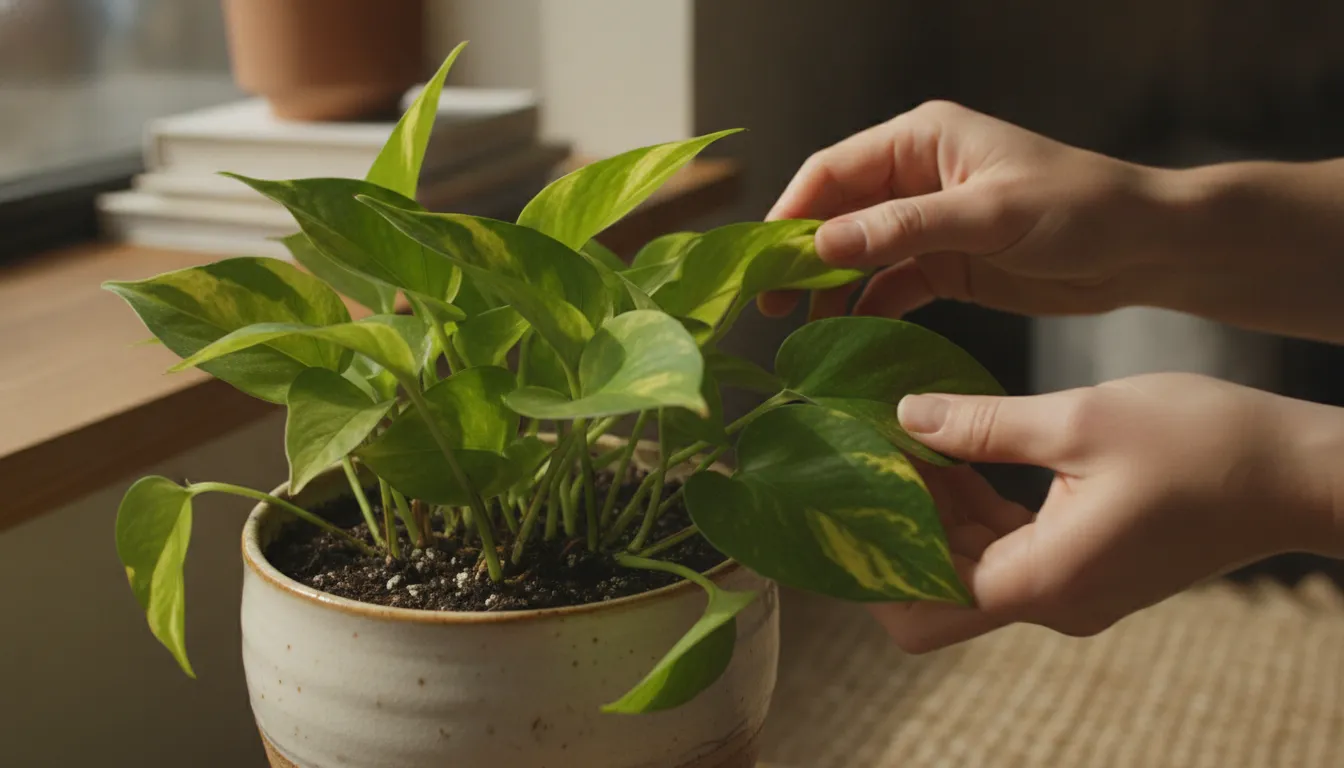
For a clearer look at the process behind nutrient movement and uptake, read this guide to how indoor plants absorb nutrients.
Match feeding to active growth
Indoor plants generally use nutrients most actively when they are growing. University of Maryland Extension recommends timing fertilization for the active growing season in spring and summer, then reducing or stopping it in winter as growth slows. More is not always better: excess fertilizer can cause salt buildup in the soil, which may lead to leaf-tip burn or wilting. Establish the growing conditions first, then use a measured, seasonal approach to nutrition.
How Fertilizer Feeds Plants and When to Use It
Fertilizer supplies nutrients that plants need for basic growth. For indoor plants, the three numbers on the front of a fertilizer label are the N-P-K analysis: nitrogen, phosphorus, and potassium. Nitrogen is associated with leafy growth, phosphorus supports processes such as root development and reproduction, and potassium helps regulate several functions involved in plant health. The label gives you useful information, but it does not tell you that one ratio is right for every houseplant.
Read the label instead of chasing a universal ratio
Plant species, potting mix, light levels, season, and watering habits all affect nutrient needs. A high number is not automatically better, and a fertilizer marketed for one type of plant may not be appropriate for another. Follow the product label for dilution and frequency, and avoid combining multiple nutrient products unless you understand how their recommendations interact. If a plant is growing slowly because it lacks light, fertilizer cannot correct the underlying problem.
It also helps to distinguish nutrition from support. Fertilizer directly provides essential plant nutrients, while a biostimulant is intended to support natural processes such as nutrient uptake or nutrient-use efficiency. These are different roles, so the comparison is not a choice between something good and something bad. It is a question of what the plant and its growing conditions actually need.
Time feeding for active growth
Most houseplants make better use of fertilizer during active growth, generally in spring and summer. As growth slows in winter, reduce or stop fertilizing unless the plant is clearly continuing to grow under suitable indoor conditions. Feeding a dormant or stressed plant can add unnecessary salts without solving the real cause of the problem. Before reaching for fertilizer, check light, moisture, drainage, temperature, and the condition of the potting mix.
More fertilizer is not better
Over-fertilization can leave soluble salts in the soil. That buildup may damage roots and show up as brown leaf tips, yellowing, wilting, or other signs that resemble drought stress. If you see a crust on the soil surface or symptoms after repeated feeding, pause and reassess rather than adding more. Used carefully and at the right time, fertilizer is a practical source of plant nutrition. Used as a universal remedy, it can create a second problem.
For more detail on the science behind nutrient movement, read this guide to how indoor plants absorb nutrients. For the underlying fertilizer guidance, see the University of Maryland Extension resource.
How Indoor Plant Fertilizer Compares With a Biostimulant
Understanding indoor plant fertilizer vs biostimulant starts with one practical distinction. Fertilizer supplies nutrients. A biostimulant supports plant processes that help it use resources effectively. They can fit into the same care plan, but they are not interchangeable products. This difference matters when a houseplant is growing slowly, recovering from stress, or showing signs that its basic care routine needs attention.
Fertilizer provides one or more essential plant nutrients. Indoor formulas commonly supply macronutrients such as nitrogen, phosphorus, and potassium, which plants need for fundamental growth. Fertilizer is therefore a nutrition input. It cannot correct inadequate light, irregular watering, poor drainage, or a damaged root system, but it can address a nutrient need when applied according to the product label. The University of Maryland Extension recommends timing houseplant fertilization around active growth in spring and summer, then reducing or stopping it during winter when growth slows. Learn more about fertilizer for indoor plants.
A biostimulant has a different job. The University of Massachusetts describes biostimulants as substances or microorganisms that stimulate natural plant processes associated with nutrient uptake, nutrient-use efficiency, abiotic-stress tolerance, and overall plant performance. They are not classified as fertilizers and do not directly provide essential nutrients in large amounts. Common categories include seaweed extracts, humic and fulvic acids, protein hydrolysates, and beneficial microbes. For a plain-language explanation, see what a biostimulant is and review the University of Massachusetts overview.
| Care question | Indoor plant fertilizer | Biostimulant |
|---|---|---|
| Primary role | Supplies essential nutrients needed for plant growth. | Supports natural processes related to nutrient uptake, nutrient use, and stress tolerance. |
| What it addresses | A nutrient shortfall, when the plant and growing conditions are otherwise suitable. | Plant-support processes and resilience during non-living stresses such as drought, temperature changes, or salinity. |
| What it does not replace | Good light, appropriate watering, drainage, or healthy roots. | Light, water, or fertilizer when the plant genuinely lacks nutrients. |
| Main application caution | Overuse can contribute to salt buildup, leaf-tip burn, or wilting. | Use as a supplemental aid and follow the product directions rather than treating it as plant food. |
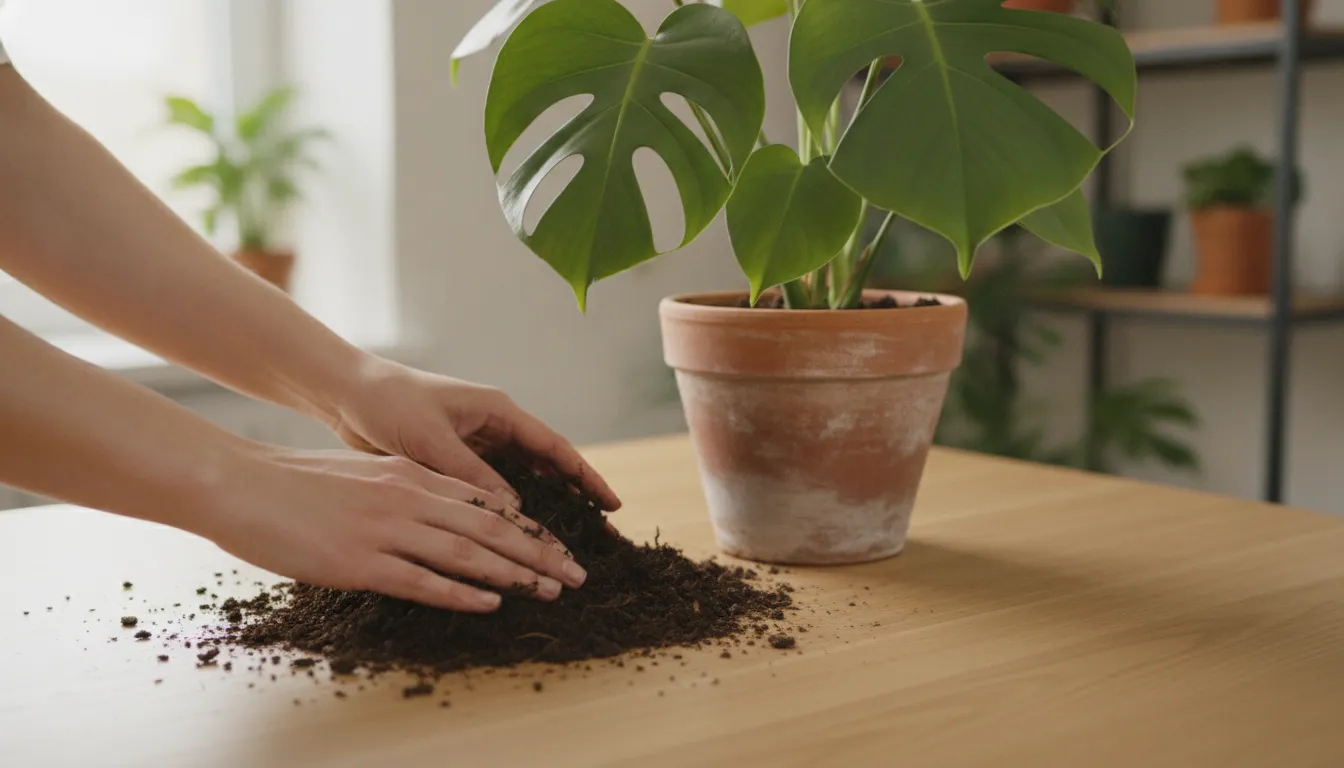
The clearest way to think about the two is supply versus support. Fertilizer supplies the raw nutritional materials. A biostimulant may help the plant make better use of nutrients that are already present or have been applied. But it does not turn an underfed plant into a well-fed one by itself. mitogrow should be described accurately as a biostimulant or plant fuel, not as fertilizer. Its customer materials identify a blend that includes IBA, sea kelp, B vitamins, and mycorrhizae. But those ingredients do not change the product's category or eliminate the need for sound indoor plant care.
That distinction also helps prevent a common mistake: reaching for more inputs when the real problem is excess. Too much fertilizer can cause salt accumulation in the growing medium, which may contribute to leaf-tip burn or wilting. Start with the plant's light, water, drainage, and root conditions. Then use fertilizer for nutrition and a biostimulant for supplemental plant support, each for its intended purpose.
Can You Use Both on Houseplants?
Yes. A fertilizer and a biostimulant can have complementary roles in a houseplant routine, because they address different needs. Fertilizer supplies essential nutrients that plants use for growth. A biostimulant supports natural processes associated with nutrient uptake, nutrient-use efficiency, and tolerance to nonliving stresses. It does not directly provide essential nutrients in the way fertilizer does. Learn more about how biostimulants work.
Start with the growing conditions
Before adding either product, look at the basics. Is the plant receiving enough light for its species? Is the potting mix staying wet for too long, or drying out completely? Could compacted soil, poor drainage, pests, or damaged roots explain the symptoms? Yellow leaves, slow growth, and wilting do not automatically mean a plant needs more nutrients. Adding fertilizer to a plant already stressed by excess water or root problems can make recovery harder.
Use each product for its intended job
If your plant has a genuine nutrition need, choose a fertilizer appropriate for houseplants and follow its label exactly. The label should guide the amount, dilution, application method, and timing. More is not better. Excess fertilizer can build salts in the growing medium and contribute to leaf-tip burn or wilting. Fertilization is commonly reduced or paused during winter when many indoor plants slow their growth, although your plant's species and growing conditions still matter. See the product label rather than treating a calendar as a substitute for observation.
A biostimulant should be evaluated separately and used according to its own label. It is a supplemental plant-care tool, not a replacement for suitable light, water. Or fertilizer when nutrients are lacking. mitogrow describes its formula as plant fuel designed to support plant health and resilience. If you want to evaluate that option for your indoor collection, you can explore mitogrow.
The safest approach is to correct the clearest environmental problem first, then add only the product that serves an identified need. When both fit the situation, keep their roles distinct, follow both labels, and monitor the plant over time instead of expecting an instant change.
The Simplest Indoor Plant Care Routine Using Both
A simple routine works best when it starts with the plant's environment, not a product. Use the following process to decide what your indoor plant needs and to avoid adding too much at once.
-
Observe the plant and its environment
Check the light, leaves, pot, and growing medium before you apply anything. Look for signs of overly wet soil, severe dryness, yellowing, leaf-tip damage, pests, or sudden changes in growth. Feel the growing medium according to the plant's needs rather than watering by the calendar. If light is inadequate or drainage is poor, correct that first. Fertilizer or a biostimulant cannot compensate for a persistently unsuitable environment.
-
Correct the basic conditions
Move the plant only if its current light is clearly unsuitable, improve drainage when needed, and remove obvious sources of stress. Make one meaningful change at a time when possible. This makes it easier to tell whether the plant is responding and reduces the risk of reacting to every symptom with another product. For a broader care checklist, follow this potted plant maintenance guide.
-
Use fertilizer during active growth when appropriate
Fertilizer supplies essential nutrients, so use it when the plant is actively growing and appears to need supplemental nutrition. Houseplants are generally fertilized during spring and summer, then fertilization is reduced or stopped as growth slows in winter, according to University of Maryland Extension guidance. Always follow the product label. Do not increase the concentration or frequency because a plant looks weak. Excess fertilizer can cause salt buildup, leaf-tip burn, or wilting.
-
Apply the biostimulant as directed
A biostimulant supports natural processes related to nutrient use and stress tolerance; it does not replace light, water, or fertilizer when nutrients are lacking. Apply mitogrow according to its label and keep its role separate from plant food. Do not invent a dose, combine products in the same container, or assume that more will work faster. If you use both, follow each label's directions and watch how the plant responds.
-
Track changes and adjust patiently
Record the date, light conditions, watering observations, and products used. Recheck the plant over time instead of expecting overnight recovery. In winter, reduce feeding as growth slows and pay attention to drier indoor air or changing light. A stressed plant may need time to stabilize. If roots are damaged, pests are present, or symptoms worsen, pause experimentation and identify that underlying problem before adding another treatment.
Explore mitogrow Pots & Planters for your indoor collection
Frequently Asked Questions
What is the difference between a biostimulant and a fertilizer?
Fertilizer supplies essential nutrients, including nitrogen, phosphorus, and potassium. A biostimulant supports natural plant processes related to nutrient uptake, nutrient-use efficiency, or tolerance to environmental stress. But it is not a fertilizer and does not supply essential nutrients in large amounts. Learn more from UMass Extension.
Do indoor plants really need fertilizer?
Many indoor plants benefit from fertilizer because they need a continuing supply of essential nutrients for growth. However, the need and amount depend on the plant, potting medium, light, and growth rate. Fertilizer is generally most useful during active growth rather than as a year-round default. The University of Maryland Extension recommends fertilizing during spring and summer.
Can I use fertilizer and a biostimulant together for indoor plants?
Yes. They serve different roles and can be complementary: fertilizer provides nutrients, while a biostimulant may help support the plant's ability to use available nutrients and manage environmental stress. Follow each product's label directions, and do not use a biostimulant to replace needed nutrition, light, or water.
Which houseplants should not be fertilized?
There is no single list of houseplants that must never receive fertilizer. Avoid routine feeding when a plant is dormant or not actively growing, and pause if it shows signs associated with excess fertilizer, such as leaf-tip burn or wilting. Check the care guidance for the specific species before resuming.
How often should I fertilize indoor plants?
Use the product label and your plant's active-growth pattern rather than applying on an automatic schedule. Many houseplants need less or no fertilizer during winter, when growth slows. Applying too much can cause salt buildup in the soil, leaf-tip burn, or wilting, so a conservative routine is safer than frequent feeding. See the University of Maryland Extension guidance.
Ready to Explore a Biostimulant for Your Indoor Plants?
Once your plants have consistent light, water, and nutrition. A biostimulant can be a thoughtful addition to your care routine. mitogrow is designed to support plant processes without replacing fertilizer or the fundamentals of indoor care. To explore mitogrow's plant biostimulant for indoor plant care, visit mitogrow and learn whether it fits your routine.